In short ⚡
High value cargo transportation involves moving goods whose unit value, theft attractiveness, or sensitivity make any incident financially brutal, requiring extra layers of security, insurance, and compliance beyond standard freight. It focuses on controlling risk at handoffs with robust packaging, clear chain of custody, tailored insurance, strict customs documentation, active tracking, and vetted high-security logistics partners.In this article, you will find how to identify high value cargo, choose secure carriers and modes, structure insurance and liability, design shipment security plans, optimize packaging and labeling, manage customs and brokers, and add advanced tracking, escorts, and controlled facilities to protect valuable freight end-to-end.
We hope you’ll find this article genuinely useful, but remember, if you ever feel lost at any step, whether it’s finding a supplier, validating quality, managing international shipping or customs, DocShipper can handle it all for you!
What counts as high value cargo and why it needs extra protection
High value cargo transportation starts with a simple reality, once the unit value rises, your loss per incident becomes brutal.
You’ve probably already felt it, the same supply chain that works for “regular” SKUs suddenly breaks when you ship a small box worth more than a pallet of commodity goods.
Here’s the thing, “high value” isn’t only about price, it’s also about how easy the cargo is to steal, resell, damage, or delay.
From experience in freight forwarding and shipment security, you’ll notice fast that risk grows at handoffs, not on paper, cross-docking, warehouse staging, trucking transfers, and last-mile delivery are where things slip.
Siam Shipping Advice
Request a tailored risk assessment before booking, so controls match value, not assumptions.
Typical high value goods and risk scenarios
Last quarter, we saw a “routine” carton of smartphones treated like standard parcels at a distribution center, it sat in an unmonitored staging lane for 40 minutes, and that was enough.
That’s why high value cargo transportation needs you to think in scenarios, not just in routes.
Typical categories that often qualify as high value freight include the obvious ones, plus a few that surprise first-time importers.
This quick list helps you map what usually triggers high security freight requirements.
- Consumer electronics, phones, laptops, chips, camera modules, high resale value and compact
- Luxury goods, watches, handbags, branded apparel, theft and counterfeit substitution risks
- Pharma and biotech, vaccines, specialty drugs, cold chain excursions turn into total loss
- Industrial components, aviation parts, precision bearings, sensors, delayed supply equals line stoppage
- Jewelry and precious materials, obvious target, strict custody expectations
- High-end spare parts, small items with high urgency, often moved via express lanes
Risk scenarios are usually boring, and that’s why they’re dangerous.
Misdeclared cartons, “helpful” relabeling, packaging that screams value, or a driver making an unplanned stop can undo your best procurement work.
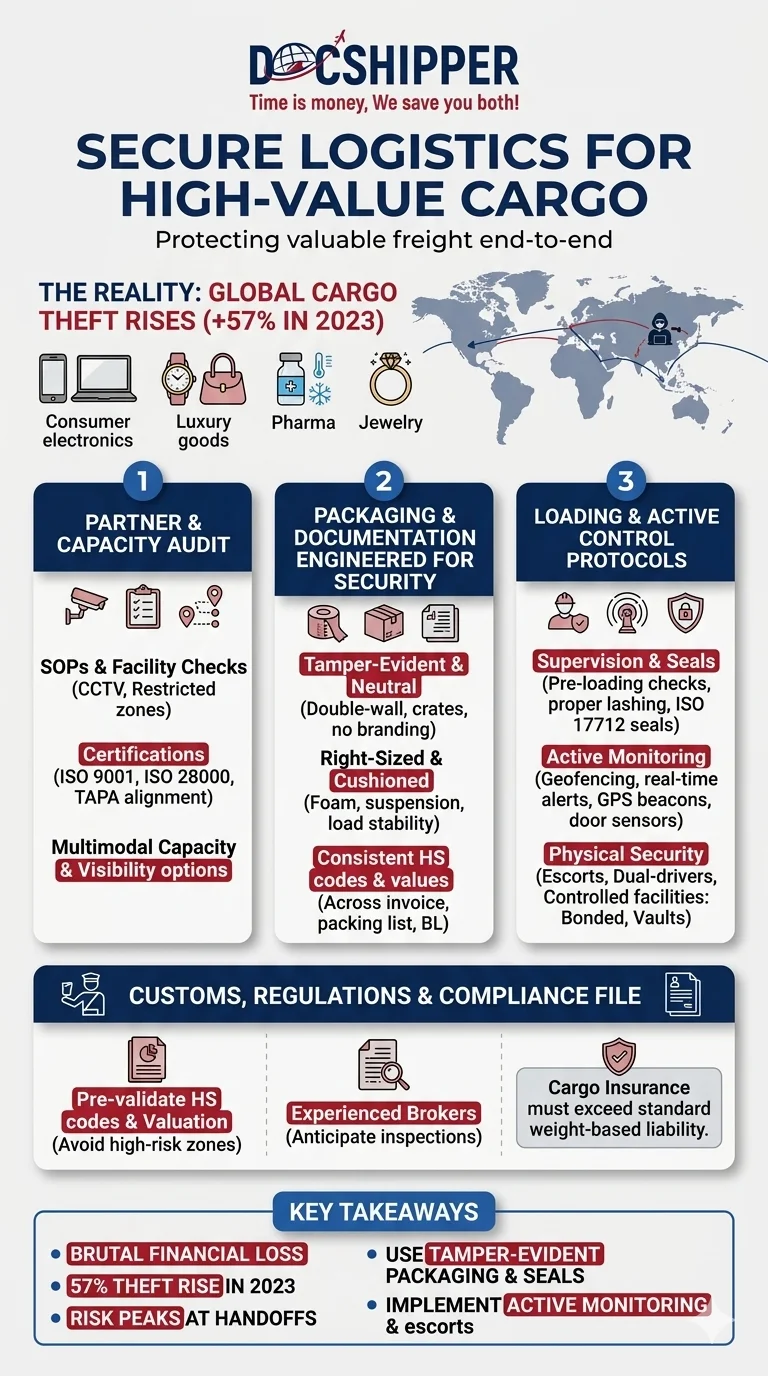
It also matches what specialized media and theft databases keep reporting, cargo theft keeps rising and organized crews love predictable lanes, as highlighted by CNBC with 57% in 2023.
Key security and compliance challenges you must manage
Don’t assume your carrier’s “standard process” equals shipment security for high value goods transport.
In high value cargo transportation, your biggest challenges usually sit at the intersection of security, paperwork, and liability.
To make it operational, use this checklist before you book, it catches the issues that cause most disputes and delays.
- Incoterms clarity, who controls pickup, main carriage, and insurance, and who pays when something goes wrong
- Declared value alignment, commercial invoice, packing list, and freight invoice must match reality
- HS code and tariff classification, errors can trigger inspections, seizures, or duty re-assessments
- Chain of custody, named handover points, signatures, photo proof, and access control at each node
- Warehouse controls, CCTV coverage, cage storage, restricted zones, and audited inventory management
- Exception handling, what happens if the truck misses a slot, a flight rolls, or a container is flagged
You’ll get stuck here if you treat compliance like a separate department.
Customs clearance, security screening, and carrier acceptance rules directly shape your route optimization and delivery lead time.
How to choose the right partner for high value freight
High value cargo transportation isn’t the moment to pick a provider based on a nice rate sheet.
You need a partner who can run secure logistics best practices transporting valuable goods, and prove it with processes, not promises.
We’ve seen “cheap and fast” offers collapse when the first exception hits, a missed cutoff, a damaged seal, or a customs query.
This is where a strong 3PL or freight forwarding setup, and sometimes a 4PL control tower, makes the difference.
Siam Shipping Info
Audit your 3PL capabilities, from SOPs to SLAs, before trusting them with high value freight.
Security capabilities, reliability and certifications to check
We once inherited a shipment after a supplier booked a “secure” trucker that didn’t even control driver subcontracting, the POD was clean, the cargo wasn’t.
In high value cargo transportation, you should vet capabilities the way you’d vet a factory, evidence first.
Use this quick workflow to structure carrier selection and avoid getting distracted by marketing terms like “premium handling”.
Partner vetting workflow:
- Step 1, request their security SOPs, chain-of-custody steps, and escalation matrix
- Step 2, verify facility controls, CCTV retention, access logs, cage storage, bonded warehouse options
- Step 3, check recognized standards, ISO 9001 for process control, ISO 28000 for supply chain security, or TAPA alignment where relevant
- Step 4, confirm driver and subcontractor policy, background checks, route deviation rules, parking rules
- Step 5, validate claims history and response time, how fast they investigate, how they document incidents
For air and ocean lanes, you’ll also want to see how they manage cargo handling at terminals and how they coordinate with screening and security requirements.
That’s where a clear SLA becomes your leverage, measurable scan events, time-to-alert, and incident reporting timelines.
Capacity, transit time, and international expertise
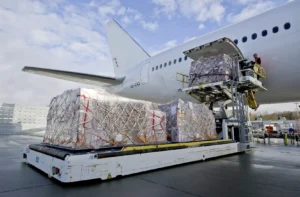
Want a practical tip, always ask what happens on the day capacity disappears.
High value freight often moves on tight launches, replenishment cycles, or warranty commitments, a one-day delay can cost more than the freight itself.
To keep high value cargo transportation stable, you need a provider that can orchestrate multimodal transport and switch modes without breaking custody.
This comparison table helps you pressure-test options before you lock your booking.
| Decision factor | What “good” looks like | What to watch out for |
| Capacity commitment | Blocked space agreements, priority uplift, planned consolidation | “Best effort” with no alternatives when flights roll or vessels blank |
| Transit time control | Defined cutoffs, buffer planning, route optimization, contingency lanes | Promises that ignore peak season, customs holds, or last-mile constraints |
| International execution | Strong customs brokerage network, clean documentation, local contacts | No ownership of origin/destination partners, slow exception handling |
| Visibility | Tracking and tracing milestones, proactive alerts, geofencing options | Only “departed/arrived” updates, no scan trail across handoffs |
When mode choice matters, you can align service to risk, Ocean shipping can be stable for certain high value goods in sealed containers, while air reduces time-in-transit but increases touchpoints at terminals.

Balancing cost, service level and sustainability goals
Are you optimizing for the cheapest freight quote, or for the cheapest landed risk?
High value cargo transportation forces that question because “low cost” can quietly mean more cross-docks, more subcontracting, and weaker shipment security.
One sentence you can use in negotiations, “We’ll pay for measurable controls, not vague premium service.”
To keep decisions clean, score providers against service level agreement metrics, not opinions.
- Cost, base rate, surcharges, screening fees, storage, and exception fees
- Service level, scan compliance, on-time delivery, damage ratio, incident response time
- Security, controlled parking, sealed processes, monitored facilities, escort options
- Sustainability, consolidation strategy, load planning, realistic modal mix, fewer empty miles
For sustainability, you don’t need to compromise on high security freight.
You can often improve both by reducing handoffs, tightening consolidation windows, and using the right packaging cube to maximize utilization.
For broader benchmarks and trade lane dynamics, UNCTAD’s reporting on global trade and logistics constraints helps explain why capacity and variability keep pressuring your supply chain management choices.
Insurance and liability for high value cargo
High value cargo transportation without the right insurance is basically betting your margin on one clean trip.
You’ve probably dealt with carriers pointing to “limited liability” after an incident, and that’s exactly how disputes start.
Insurance also influences how you document value, how you pack, and how you prove chain of custody when something goes missing.
If you’re unsure where to begin, cargo insurance should be treated as a design choice, not a checkbox.
Siam Shipping Alert
Align coverage, value declaration, and documentation before the first pallet moves.
When standard liability is not enough
We once saw a consignee assume the carrier would “make it right” after a partial theft, then discover the liability cap covered a fraction of one carton.
That’s the trap, liability regimes (by mode) and forwarder terms rarely match your high value cargo exposure.
In high value goods transport, standard liability often depends on weight, not value, and it may exclude theft, mysterious disappearance, or inadequate packaging claims.
Before you ship, align these three documents, because insurers will ask for them during the claims file.
- Commercial invoice and proof of value
- Packing list with carton count, weights, serials when applicable
- Bill of lading or airwaybill, showing terms, parties, and transport mode
If you want a neutral reference point on what’s commonly covered, MSC provides an overview of typical cargo insurance.
Matching coverage to cargo value, route and risk profile
Here’s a direct tip, insure the risk you actually run, not the risk your spreadsheet assumes.
High value cargo transportation changes by lane, season, and touchpoints, a direct flight into a controlled airport isn’t the same as a multi-stop move with overnight trucking.
Use this short checklist to brief your broker or forwarder so coverage matches your shipment security plan.
- Declared cargo value per carton and per shipment, including currency and terms
- Route and mode, trucking, air freight, ocean freight, multimodal transfers, and planned stops
- Packaging method, tamper-evident seals, crating, palletization, shock indicators
- Storage exposure, bonded warehouse time, port storage, distribution center dwell time
- Claims process, notice deadlines, required evidence, surveyor involvement
If you want to see what “good” looks like end-to-end, DocShipper details a practical insurance process.
Once coverage is set, lock your internal playbook, who photographs cartons, who logs seal numbers, and who escalates within 30 minutes if tracking goes dark.
Shipment security planning and communication
High value cargo transportation works best when you treat it like an operation, not a booking.
This is the moment most importers get stuck, everyone assumes “someone else” is managing shipment security until the first exception lands.
You don’t need a 40-page document, you need a plan your warehouse, carrier, and consignee will actually follow.
Siam Shipping Advice
Co-build a clear, executable protocol with your provider before dispatch.
Building a shipment security plan with your provider
We once handled a high value freight move where the only security instruction was “call before delivery”, the driver arrived early, couldn’t reach anyone, and left the freight at a reception desk.
That’s how high value cargo becomes low-control cargo.
To keep high security freight consistent, write a shipment security plan that’s specific enough to execute and short enough to read.
Use this workflow as your baseline and tailor it per lane.
Shipment security planning workflow:
- Step 1, define the risk profile, theft attractiveness, temperature sensitivity, fragility, lead time criticality
- Step 2, map custody points, origin pickup, consolidation, export handling, main carriage, import, last-mile delivery
- Step 3, assign controls per point, seals, cage storage, two-person handling, photo evidence, geofencing
- Step 4, set communication rules, who calls whom, when, and what counts as an exception
- Step 5, confirm incident response, stop shipment authority, police report triggers, insurer notification timing
We recommend you store that plan next to your shipping documents, so it travels with the shipment and doesn’t live only in email threads.
Real-time visibility, communication and exception handling
Want to avoid surprises? Decide in advance what “silent tracking” means and how fast you react.
In high value cargo transportation, visibility is a control tool, not a nice dashboard.
At minimum, you need tracking and tracing events that match your chain of custody, pickup scan, warehouse in/out, departure, arrival, out-for-delivery, POD with identity confirmation.
These are practical options you can combine depending on value and route risk.
- Carrier milestone tracking plus proof-of-handover photos at each transfer
- Device-based monitoring, GPS beacons, door sensors, temperature loggers for sensitive goods
- Item-level identification for selective SKUs using RFID tags in controlled lanes
One institution worth keeping in mind is the WCO, because customs security frameworks and data quality expectations influence how smoothly shipments move when they’re flagged for inspection.
If an exception happens, don’t improvise, pause movement, secure the cargo, document everything, then notify the right parties in the right order.
Packaging and labeling to protect high value goods
High value cargo transportation often fails in the simplest place, the box.
You can negotiate rates and pick a premium service, but poor packaging and sloppy labels still trigger damage, mishandling, and inspection delays.
In high value goods transport, packaging is part security device, part compliance tool, part handling instruction.
Siam Shipping Advice
Engineer boxes, seals, and labels to deter theft and reduce inspections before cargo leaves the warehouse.
Selecting robust materials and tamper-evident solutions
We once watched a “secure” shipment arrive with perfect outer tape, but the carton seams had been carefully re-glued after access.
That’s why you want packaging that shows evidence of interference, not packaging that looks tough.
For high value cargo transportation, choose materials that survive stacking, humidity swings, and repeated handling without opening opportunities for pilferage.
Here’s a short checklist you can hand to your supplier or co-packer before production.
- Double-wall corrugate or crates for heavy or fragile SKUs
- Tamper-evident tape and uniquely numbered seals recorded on the packing list
- Neutral outer appearance, avoid brand names and SKU hints on master cartons
- Right-sized packaging to reduce void fill and movement, less damage and fewer claims disputes
- Box engineering that resists “easy open”, consider custom auto lock boxes for controlled packing lines
If you’re adding seals, make them auditable, record seal IDs at packing, at pickup, and at delivery, no gaps.
Internal cushioning, crating and load stability inside the box
Direct tip, assume your carton will drop once and get compressed for hours.
High value cargo transportation needs internal protection designed around real handling forces, not optimistic warehouse behavior.
For fragile and premium items, you’ll get better outcomes when you combine cushioning with load stability, so nothing shifts when the truck brakes or a pallet is tilted.
This table gives you a fast way to match protection method to risk.
| Risk | Practical solution | Operational note |
| Shock and drops | Molded foam, EPE, suspension packaging | Test pack-outs, then lock the spec for every supplier line |
| Compression | Corner boards, stronger cartons, inner frames | Design for stacking in a consolidation pallet |
| Vibration | Foam density tuning, isolation inserts | Common on long-haul trucking and rail freight legs |
| Tampering | Inner bags, sealed inner cartons, serialized labels | Make inspection re-pack easy, or you’ll get messy reseals |
If you use pallets, lock stability with proper stretch wrap, strapping, and edge protection, then document the pallet build with photos for claims defense.
Critical labels and documentation to reduce handling risks
What do handlers do when they can’t understand your carton markings in three seconds?
They guess, and that’s how high value freight gets turned upside down, placed near liquids, or routed to the wrong cage.
In high value cargo transportation, labeling is also a compliance signal, it supports customs clearance and reduces “manual checks” caused by confusion.
This short list covers labels and documents that reduce handling risk without advertising value.
- Handling symbols where justified, orientation, fragile, keep dry, lithium battery marks when applicable
- Serialized carton IDs tied to your packing list, useful for inventory management and discrepancies
- Discreet security dots using systems like Dot Labels: to mark validated cartons
- International shipping label basics following guides such as International Shipping Labels:
On the paperwork side, keep HS code, carton count, weights, and consignee details consistent across invoice, packing list, and transport documents.
If you’re shipping internationally, make sure your team aligns with custom rules early, because customs mismatches create the very inspections you’re trying to avoid.
Looking for a Reliable Shipping & Sourcing Partner?
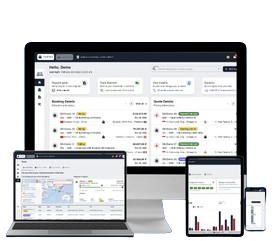
DocShipper Platform
One platform. Your entire supply chain
Sourcing, freight, customs & documents, all centralised, all visible, 24/7.
Secure loading, lashing and choice of transport mode
When it comes to high value cargo transportation, security does not start on the road or in the air, it starts at the loading dock. You can have the best insurance and tracking in place, but if your cargo is poorly secured inside the truck or container, you are already exposed.
In our experience at DocShipper, most incidents involving valuable freight happen during loading and transfer phases, not during long-haul transit. Let us explain what you should control before the doors even close.
Siam Shipping Alert
Supervise loading, validate lashing, and document seals before doors close.
Safe loading, unloading and cargo securement methods
We once handled a shipment of luxury electronics where everything looked perfect on paper. Yet during unloading, one pallet shifted because the lashing angles were wrong, and you can guess the outcome. That shipment taught the client that high value cargo transportation demands discipline at every physical touchpoint.
You need a clear loading supervision protocol with photos, seal numbers, and a documented lashing plan. Never assume the warehouse team “knows what to do” with high-value freight.
Here is a practical loading workflow you can apply:
- Pre-loading inspection: check container or truck condition, floor integrity, and absence of hidden compartments.
- Load plan validation: confirm weight distribution and center of gravity.
- Proper lashing and blocking: use straps, anti-slip mats, wooden blocking, and steel bars where required.
- Seal application: apply high-security ISO 17712 compliant seals.
- Photo documentation: capture cargo positioning, seal number, and vehicle plate.
You should also control unloading with the same rigor. Theft often happens during temporary storage or cross-docking.
Before approving a facility, use this quick checklist to reduce risk during handling:
- Is CCTV covering all loading bays with recording retention of at least 30 days?
- Are access controls in place with badge or biometric systems?
- Is there a documented chain of custody for keys and seals?
- Are staff background checks performed?
According to the World Customs Organization, cargo theft and tampering frequently occur in unsecured logistics zones, which is why you cannot treat handling as a secondary concern in high value cargo transportation.
Comparing road, sea and air for high security freight
Which mode is actually the safest for high value cargo transportation? The honest answer is, it depends on your risk profile, not just your budget.
You will need to weigh transit time, exposure points, and infrastructure reliability. A shorter transit does not always mean lower risk if the route crosses sensitive areas.
This comparison will help you see the trade-offs clearly:
| Mode | Security Level | Main Risks | Best Use Case |
| Road | Medium to High, depends on route | Theft during stops, hijacking | Regional deliveries with escort or GPS monitoring |
| Sea | High in sealed containers | Port congestion, inspection delays | Heavy high-value machinery with sealed FCL |
| Air | Very High | Airport handling risks, cost | Luxury goods, pharma, urgent electronics |
From experience, you will often combine modes. For example, secure trucking with geofencing to the airport, then air freight for the long haul.
Always ask yourself one question before choosing: where is the weakest link in this route? That is where your security budget should go.
Customs, regulations and compliant documentation
Customs clearance is one of the most underestimated aspects of high value cargo transportation. A simple documentation error can block your shipment in a bonded area, increasing exposure and storage costs.
You have probably faced this before. Your cargo arrives on time, but it sits for days because of a minor HS code mismatch or valuation question.
Siam Shipping Info
Pre-validate HS codes and valuation to avoid inspections that trap high value cargo.
How customs rules impact high value goods transport
We once supported a client shipping luxury watches whose declared value triggered an automatic inspection. Because the paperwork was perfectly aligned, the inspection lasted hours instead of weeks. That is how critical documentation is in high value cargo transportation.
You must align commercial invoice, packing list, certificate of origin, and declared Incoterms precisely. Any inconsistency raises red flags.
Pay close attention to these sensitive areas:
- HS classification accuracy, especially for dual-use or controlled goods.
- Customs valuation method, aligned with WTO Customs Valuation Agreement principles.
- Export control compliance for electronics, defense-related or advanced tech items.
- Temporary import or ATA Carnet when applicable.
High declared value also increases scrutiny. Customs authorities may require proof of transaction value or payment confirmation.
If you want to reduce friction, prepare a compliance file before shipment:
- Validated HS code
- Signed commercial contract
- Insurance certificate
- Proof of payment or LC copy
- Any required export or import licenses
This proactive approach reduces the chance that your high-value freight gets stuck in a high-risk zone.
Working with brokers to avoid delays and seizures
Let us be direct. In high value cargo transportation, a weak customs broker can cost you more than a damaged pallet.
You need a broker who understands both the product and the regulatory environment of your destination country. Not all brokers are equal.
Here is what you should verify before appointing one:
- Licensed and authorized by local customs authorities.
- Experience with similar high-value commodities.
- Clear escalation process for inspections.
- Strong relationship with port or airport officials.
At DocShipper, we coordinate closely with vetted brokers to anticipate inspections rather than react to them. You will benefit from synchronized documentation review before cargo departure.
Seizures often happen because of small inconsistencies. Tight coordination between you, your forwarder, and your broker makes all the difference.
Value-added services to protect your freight end-to-end
Standard transport is rarely enough for high value cargo transportation. If your cargo is worth hundreds of thousands or millions, you should think in terms of layered protection.
You are not just moving goods. You are managing exposure at every kilometer.
Siam Shipping Info
Add active monitoring, escorts, and controlled facilities when cargo value justifies enhanced security.
Advanced tracking, geofencing and 24/7 monitoring
A client once told us, “We already have GPS, that’s enough.” Two weeks later, a truck deviated from its planned route for 40 minutes. Because there was no active monitoring, nobody reacted. In high value cargo transportation, passive tracking is not real security.
You should implement active monitoring systems with real-time alerts and defined escalation procedures.
Here is how an effective monitoring setup looks:
- Real-time GPS tracking with minute-level updates.
- Geofencing alerts for route deviation or unauthorized stops.
- Temperature and shock sensors for sensitive goods.
- 24/7 control tower with immediate response protocol.
The International Air Transport Association highlights the importance of end-to-end visibility for valuable air cargo, and the same logic applies across all modes.
You should also define who gets alerted first, within how many minutes, and what action is triggered. Without a response plan, tracking is just data.
Escorts, controlled facilities and specialized handling
For extremely high-value shipments, physical deterrence changes the equation. In certain corridors, visible security is more effective than any hidden device.
You can deploy armed escorts, secure convoy systems, or dual-driver policies for road transport. This is common for luxury goods, pharmaceuticals, or precious metals.
Controlled facilities add another layer:
- Bonded warehouses with restricted access.
- Vault rooms for jewelry or precious items.
- Temperature-controlled secure areas for biotech products.
- Background-checked staff with limited handling rights.
We once arranged a shipment of high-end medical devices where the cargo never stayed overnight in an unsecured location. Each transfer point was pre-approved and monitored.
That level of discipline may seem excessive, until you compare it to the potential financial and reputational loss.
Conclusion
High value cargo transportation is not about one single protective measure. It is about stacking multiple layers of security, compliance, and operational discipline so that one weakness does not compromise the entire shipment.
You control risk by controlling details.
Here are the key takeaways you should remember:
- Supervise loading and unloading with documented lashing and seal control.
- Select the right transport mode based on route risk, not just cost.
- Prepare flawless customs documentation to avoid delays and inspections.
- Work with experienced brokers and vetted partners for high-value goods.
- Implement active tracking and monitoring, not just basic GPS.
- Add physical security layers when cargo value justifies it.
If you approach your next shipment with this structured mindset, you will turn risk into controlled exposure instead of uncertainty. And that is exactly how high-value freight should be managed.
FAQ | High value cargo transportation: how to secure, insure and control your valuable freight
You don’t need them to become logistics experts, but you must “upgrade” their behavior with simple, non‑negotiable rules:
This way you raise the bar at origin without needing a full warehouse overhaul.
- Give them a 1‑page packing & loading SOP:
- exact box type, seals, labels, photos required before pickup
- how pallets must be built and wrapped
- Make photo proof mandatory:
- 4 sides of each pallet + top, plus a close‑up of seal numbers
- Run a pilot:
- test 1–2 shipments, review damages, mislabels, customs questions
- adjust the SOP and lock it in as part of the purchase contract
- Add spot checks:
- random inspections at origin warehouse, reject non‑compliant packs
The pattern is always the same: they think “we’re insured” and only discover the gaps after a loss. Watch for these traps:
Before the next move, ask your broker to walk you through: “In which exact situations would this policy NOT pay?”
- Under‑declaring value to save premium → payout is capped at the declared amount
- Not covering the full journey → storage legs, pre‑carriage, and post‑carriage left uninsured
- Weak documentation → no detailed packing list, no serial numbers, no photos of cargo condition
- Ignoring exclusions → theft, temperature deviation, or “mysterious disappearance” not covered
- Missing time limits → claims rejected because the carrier and insurer were notified too late
You can’t always avoid sensitive corridors, but you can de‑risk them methodically:
Document these rules in the shipment security plan so the carrier isn’t improvising.
- Do a lane risk scan:
- known theft hotspots, preferred hijack hours, typical MO (rest‑area theft, fake police, etc.)
- Adjust operations, not just insurance:
- drive only during daylight where possible
- pre‑approved fuel and rest stops, no “ad hoc” parking
- Layer controls:
- GPS with geofencing + active monitoring
- dual drivers or escorts on the most exposed legs
- sealed, unmarked vehicles and neutral paperwork
- Shorten exposure:
- minimize dwell time near borders, ports, unsecured depots
- use direct services instead of multiple cross‑docks
Your goal is to make the chain of custody defensible with evidence, not assumptions:
With this trace, you can often pinpoint the exact leg where pilferage occurred and support your claim.
- Standardize handover checks:
- count cartons and check seal numbers at each transfer
- require signatures + printed name + timestamp
- Use structured photo evidence:
- photos at packing, after palletizing, after loading, at arrival and at opening
- Track carton identity:
- serialized labels linked to the packing list, so you can show which pieces went missing
- Preserve packaging:
- keep damaged cartons, seals, and stretch wrap for surveyors
- Align reporting:
- log anomalies immediately (broken seal, missing carton, torn wrap) in a shared incident form
You don’t need a legal encyclopedia; you need a 1–2 page checklist your team follows under stress:
Review this playbook once or twice a year using real incidents or drills, and update based on what actually happened.
- Immediate actions (0–30 minutes):
- stop movement, secure the vehicle or warehouse zone
- notify internal security/logistics lead and the carrier dispatch
- Evidence capture:
- photos of doors, locks, seals, lashing, surrounding area
- screenshots of GPS trace and timestamps
- External notifications:
- local police (file a report number), insurer, and, if relevant, customs/border authorities
- Documentation:
- list of missing items vs. packing list, driver statement, witness contacts
- Communication:
- pre‑approved templates for informing customer and management
Reverse flows are often much weaker than outbound, and thieves know it. Tighten them with a few rules:
Treat high‑value returns like mini outbound shipments, not miscellaneous parcels.
- Standardize return packaging:
- send pre‑approved boxes, labels, and tamper‑evident tape to customers or stores
- Control who can ship what:
- returns must be booked through your portal or RMA system, not ad hoc couriers
- Fix the carrier and service level:
- use the same vetted partners and insured services you use for outbound shipments
- Track at item level:
- require serial or IMEI capture at dispatch and at receipt, so “lost in returns” is traceable
- Centralize receiving:
- have a secure, clearly identified inbound point with CCTV and count‑on‑arrival procedures
Need Help with
Logistics or Sourcing ?
First, we secure the right products from the right suppliers at the right price by managing the sourcing process from start to finish. Then, we simplify your shipping experience - from pickup to final delivery - ensuring any product, anywhere, is delivered at highly competitive prices.
Fill the Form
Prefer email? Send us your inquiry, and we’ll get back to you as soon as possible.
Contact Us