Freight Shipping Between Thailand and India | Rates – Transit Times – Taxes

Shipping between Thailand and India looks simple on paper, but the gap between a supplier in Bangkok and a warehouse near Mumbai often hides delays, paperwork friction, and unexpected port charges.

If you’re planning freight from Thailand to India, you need clear numbers on transit times, duties, and routing options, not generic theory, because one wrong assumption at origin or destination can shift your entire margin. This guide gives you the operational reality, whether you’re moving a few CBM, full containers, or specialized cargo.

What is the most suitable method of transport between Thailand and India?

If you’re shipping standard commercial cargo from Laem Chabang to Nhava Sheva, sea freight is usually your baseline for cost efficiency, especially for full containers or consolidated LCL with flexible timelines, while air freight from Suvarnabhumi to major Indian airports makes sense when your priority is speed, high-value goods, or tight production schedules.

You should decide based on four things, your cargo volume, delivery deadline, sensitivity to duties and storage, and how predictable your supply chain must be, and if you’re unsure, we can check real-time capacity, rates, and port congestion to help you choose the right option before you commit, then we’ll break each mode down in detail in the sections below.

Sea freight between Thailand and India

Overview – Ocean cargo from Thailand to India

India’s geography and position, makes it an incredible pivot between Europe, the Middle East and South-East Asia. Its triangular shape penetrating the Indian Ocean makes of India the greatest peninsula in the world with 7517 kilometres of coastline. This linked with its tremendous population and economy, explains the amount of big ports that are boarding its coasts. The Ministry of Shipping announced that 95% of the international trades in volume and 70% in value are made via ocean freight. The biggest ports in terms of TEU are the ports of Jawaharlal Neru and Chennai.

All your goods departing from the ports located in the Gulf of Thailand will have the same itinerary in order to join India. Firstly, they will go south to join Singapore’s shore. Then, they will go north-west by crossing the Malacca strait.

Multiple routes are possible to take after, depending where is the final place of destination.

  • If they are going to Kolkata and North-east India, the vessel will go through the Andaman sea.
  • If you’re joining Chennai and the East-coast, the ship will cross the Bay of Bengal to rally the destination.
  • Finally, if your goods should arrive on Mumbai or the west-coast, the vessel will go straight west to join the south of Sri Lanka and go along the west coast onto the port of arrival.

Main shipping ports in India

Jawaharlal Nehru Port (JNPT / Nhava Sheva)

Location and Volume: Located on the west coast of India near Mumbai in Maharashtra, JNPT is India’s largest container port, handling over 6 million TEUs annually and accounting for approximately 55% of India’s total container traffic.

Key Trading Partners and Strategic Importance: The United States, China, UAE, and Southeast Asian countries — including Thailand — are among its primary trading partners. Its location adjacent to Mumbai, India’s commercial capital, gives it unmatched connectivity to the country’s largest consumer and industrial market.

Context for Businesses: If your goods are destined for western or northern India — Mumbai, Delhi, Pune, Ahmedabad, or Surat — JNPT is almost always your most efficient entry point. The port connects to India’s national highway and rail network, offering strong inland distribution options. Most Thailand–India FCL shipments on the west coast route arrive here.

Mundra Port

Location and Volume: Located in Gujarat on India’s northwest coast, Mundra is India’s largest private port and one of the fastest-growing container terminals in Asia, handling over 7 million TEUs annually.

Key Trading Partners and Strategic Importance: Mundra serves as the primary gateway for trade with the Middle East, Africa, and Southeast Asia. Its proximity to major industrial zones in Gujarat and Rajasthan, as well as road and rail connections to Delhi and northern India, makes it a strong alternative to JNPT for west and north India distribution.

Context for Businesses: For cargo destined for Delhi, Rajasthan, Gujarat, or Punjab, Mundra can offer faster and cheaper inland distribution than routing through JNPT. Many Thailand-based exporters targeting the north Indian market are increasingly routing through Mundra. Compare total landed cost including inland trucking before choosing between JNPT and Mundra.

Chennai Port

Location and Volume: Located on the Bay of Bengal on India’s east coast, Chennai Port handles over 1.5 million TEUs annually and is the primary container gateway for southern and eastern India.

Key Trading Partners and Strategic Importance: Thailand, Singapore, Malaysia, and East Asian countries are major trading partners. Chennai is the hub for India’s automotive industry — it hosts manufacturing plants for Hyundai, BMW, Ford, and Renault, making it a critical port for automotive components and finished vehicles.

Context for Businesses: For cargo destined for Tamil Nadu, Andhra Pradesh, Karnataka, or the broader South India market, Chennai is your natural entry point. Transit times from Laem Chabang to Chennai are among the shortest on the Thailand–India corridor, typically 10 days, making it an attractive option when timelines are tight.

Kattupalli Port

Location and Volume: Located 25 kilometres north of Chennai, Kattupalli is a modern container and multi-purpose terminal that has emerged as a significant alternative to Chennai Port. It handles growing volumes of container and project cargo.

Key Trading Partners and Strategic Importance: Closely linked to the Chennai industrial corridor, Kattupalli serves automotive, petrochemical, and general manufacturing sectors. Its uncongested berths and modern handling equipment make it attractive for time-sensitive cargo.

Context for Businesses: If Chennai Port is experiencing congestion — which occurs periodically during peak season — Kattupalli offers a practical alternative with similar inland connectivity and marginally faster vessel turnaround times.

Kolkata Port (Syama Prasad Mookerjee Port)

Location and Volume: Located on the Hooghly River in West Bengal, Kolkata is India’s oldest major port and handles over 700,000 TEUs annually. It serves as the primary maritime gateway for eastern India and landlocked Nepal and Bhutan. Key Trading Partners and Strategic Importance: Thailand, Bangladesh, Southeast Asian countries, and China are primary partners. Kolkata’s strategic position makes it essential for trade flowing into northeastern India, Nepal, and Bhutan. It also connects to India’s inland waterway network. Context for Businesses: For cargo destined for eastern India — West Bengal, Bihar, Jharkhand, Odisha — or for transshipment to Nepal and Bhutan, Kolkata is the most practical entry port. Note that the river approach limits vessel size, so large FCL shipments may need to tranship at Haldia or another feeder port. Add 1 to 3 extra days to transit estimates for the river leg.

Visakhapatnam Port (Vizag)

Location and Volume: Located on the east coast in Andhra Pradesh, Visakhapatnam handles approximately 70 million tonnes of cargo annually, with significant container and bulk operations. It is India’s deepest landlocked port.

Key Trading Partners and Strategic Importance: Southeast Asia, China, and Australia are key partners. The port serves major industrial zones in Andhra Pradesh and Telangana, with strong connectivity to the steel, fertiliser, and oil refining sectors.

Context for Businesses: For cargo destined for Andhra Pradesh, Telangana, or parts of Odisha, Vizag offers a viable alternative to Chennai for east coast delivery. Its deepwater infrastructure makes it well-suited for bulk cargo and oversized industrial shipments from Thailand.

Kandla Port (Deendayal Port)

Location and Volume: Located in Gujarat near the Gulf of Kutch, Kandla is one of India’s largest ports by total cargo volume, handling over 100 million tonnes annually. It specialises in bulk cargo, petroleum, and chemicals.

Key Trading Partners and Strategic Importance: The Middle East, Southeast Asia, and Africa are primary partners. Kandla is the gateway for energy and chemical imports serving western and northwestern India.

Context for Businesses: For bulk cargo, petroleum products, chemicals, or industrial raw materials from Thailand, Kandla offers specialist infrastructure that general container ports cannot match. For standard containerised cargo, JNPT or Mundra are more practical options for the same region.

Main shipping ports in Thailand

Port of Laem Chabang

Location and Volume: Located in Chonburi Province approximately 130 kilometres southeast of Bangkok, Laem Chabang is Thailand’s largest and busiest container port, handling over 8.4 million TEUs annually. It is the primary export gateway for Thailand’s Eastern Economic Corridor and connects to the national rail and road network.

Key Trading Partners and Strategic Importance: India is a growing and strategically important trading partner for Laem Chabang, alongside China, Japan, and the United States. The port benefits from direct vessel services to major Indian west and east coast ports, making it the default departure point for Thailand–India freight.

Context for Businesses: Virtually all significant FCL and LCL export shipments from Thailand to India depart from Laem Chabang. Its scale ensures the widest carrier choice, most competitive rates, and highest sailing frequency of any Thai port. If your supplier is located in Bangkok, Rayong, Chonburi, or the Eastern Seaboard, this is your natural export port.

Port of Bangkok

Location and Volume: Situated on the Chao Phraya River in central Bangkok, this port handles approximately 1.8 million TEUs annually and serves as a secondary container gateway primarily for Bangkok-based exporters and smaller volume shipments.

Key Trading Partners and Strategic Importance: Primarily serves regional trade to Southeast Asian neighbours, India, and China. Its central Bangkok location provides direct access to the capital’s industrial and commercial zones without requiring long inland trucking runs.

Context for Businesses: For smaller LCL shipments or cargo produced in central Bangkok, Bangkok Port can simplify the pre-carriage leg of your India-bound shipment. However, vessel size limitations and lower sailing frequency compared to Laem Chabang mean that most significant commercial shipments to India will still depart from Laem Chabang.

Map Ta Phut Port

Location and Volume: Located in Rayong Province on Thailand’s Eastern Seaboard, Map Ta Phut handles approximately 30 million tonnes of cargo annually. It specialises in industrial bulk cargo, particularly petrochemicals, liquefied gases, and chemical products.

Key Trading Partners and Strategic Importance: Japan, India, South Korea, and China are key partners for Map Ta Phut’s bulk and industrial trade flows. India’s chemical and fertiliser sectors are significant buyers of products exported through this terminal.

Context for Businesses: For exporters of industrial chemicals, petrochemical products, fertilisers, or bulk materials destined for Indian ports like Kandla, Visakhapatnam, or Ennore, Map Ta Phut’s specialist infrastructure provides significant handling advantages over a general container port.

Phuket and Songkhla Ports

Location and Volume: Both ports serve the southern regions of Thailand and see lower container volumes compared to eastern ports, but play an important role for regional cargo and as departure points for cargo originating in southern Thailand and destined for India’s western or southern coast.

Key Trading Partners and Strategic Importance: Their geographic position on the western coast of the Thai-Malay peninsula gives them shorter sailing distances to Indian ports, particularly on the west coast. Transit times from Phuket and Songkhla to Chennai and Mumbai are consistently lower than from Bangkok-area ports, as reflected in the transit time table above.

Context for Businesses: If your goods originate in southern Thailand — rubber, seafood, or agricultural products from Surat Thani, Nakhon Si Thammarat, or Songkhla province — these ports eliminate the need for long inland pre-carriage to Laem Chabang and offer shorter sea transit times to Indian destinations.

Siam Shipping Info

If you’re sending goods from Phuket or Ranong (west-coast of Thailand), they will directly go near the north of Sumatra and join India after.

SIAM Shipping has collaborators positioned in every major port of Thailand. Thanks to them, we’re proud to deliver a complete range of sea freight services to India. We can plan LCL (less than a container) and FCL (Full container) for 20’, 40’, and 40’ HQ containers. For special goods, we’re also able to arrange reefer containers, bulk cargos, or RoRo.

Here is a table that defines average transit times between the largest Thai and Indian ports. Smaller ports may have slightly higher times due to lower traffic volumes:

Port of DischargeBangkok / Laem ChabangPhuketSongkhla
Kandla14 days11 days13 days
Paradip10 days7 days9 days
JNPT17 days10 days12 days
Mumbai17 days9 days11 days
Visakhapatnam12 days6 days9 days
Chennai10 days7 days9 days
Kolkata15 days7 days9 days
Krishnapatnam10 days7 days9 days
Mangalore11 days8 days10 days
Tuticorin10 days7 days9 days

*Please note that these transit times are indicative for Thailand–India routes.

Should I choose FCL or LCL when shipping from Thailand to India?

The decision between Full Container Load (FCL) and Less than Container Load (LCL) directly affects your freight cost, transit time, cargo risk, and customs processing speed. On the Thailand–India corridor — a well-served short-haul sea route — both options are operationally viable, but the right choice depends on your shipment size and supply chain rhythm.

Full Container Load (FCL)

Definition: FCL means you book an entire container — a 20ft, 40ft, or 40ft High Cube — exclusively for your cargo. No other shipper’s goods share the space. The container is sealed at your supplier’s premises or at the Thai port, and remains sealed until it reaches its Indian destination.

When to use FCL: FCL becomes cost-effective once your shipment exceeds approximately 13 to 15 CBM. At that volume, the per-CBM cost of a full container is lower than LCL consolidation rates, and you gain significant advantages in terms of transit time, cargo security, and customs clearance speed.

Example: A Bangkok-based rubber product manufacturer shipping 800 cartons of industrial rubber components — approximately 22 CBM, 9 tonnes — to a distributor in Pune would use FCL. The 20ft container is stuffed at the factory, sealed, and moves directly from Laem Chabang to JNPT without being opened. No co-loading risk, no intermediate handling, predictable transit time of 17 to 19 days door-to-door.

Key advantages on the Thailand–India route:

  • Lower per-CBM cost at volumes above 15 m³
  • Faster customs clearance in India since only your documents are processed — no waiting for co-consignees
  • Reduced damage risk on a journey that may involve transshipment at Singapore or Colombo
  • Better suited for high-value goods, fragile items, or cargo requiring specific temperature or humidity conditions

Key disadvantages:

  • Not cost-effective for volumes below 13–15 CBM — you pay for unused space
  • Requires sufficient volume and lead time to justify the commitment
 
Less than Container Load (LCL)

Definition: LCL means your cargo shares container space with shipments from other unrelated shippers. You pay only for the cubic metres your consignment occupies. A consolidation agent groups multiple LCL shipments together in Thailand, and a corresponding deconsolidation depot in India breaks the container down for individual delivery.

When to use LCL: LCL is the right choice when your shipment is under 13 to 15 CBM. It is also the standard approach for businesses testing new Indian buyers, shipping product samples, or managing frequent small-batch replenishment orders.

Example: A Chiang Mai handicraft exporter sending 5 CBM of wooden home décor pieces to a retail buyer in Bangalore would use LCL. Booking a 20ft container for 5 CBM would mean paying for four times the space required. With LCL, they pay for exactly 5 CBM and share the container with other exporters’ goods, keeping freight costs proportional to the actual shipment size.

Key advantages on the Thailand–India route:

  • Cost-effective for shipments below 15 m³
  • No need to wait until you accumulate a full container — ship as frequently as your buyer requires
  • Lower upfront commitment — good for new trading relationships or variable order volumes

Key disadvantages:

  • Higher per-CBM rate than FCL once all consolidation charges are included
  • Typically 3 to 5 days slower than FCL due to consolidation waiting time at origin and deconsolidation at Indian destination
  • Cargo is handled multiple times — at the Thai CFS (Container Freight Station), during transshipment if applicable, and at the Indian CFS — increasing the risk of minor damage
  • Indian customs clearance for LCL can take longer as multiple consignees’ documents are processed together at the CFS

Special transportation services between Thailand and India

Reefer Containers

Reefer containers maintain a precisely controlled temperature throughout the journey, from loading in Thailand to delivery in India. They are essential for perishable food products — fresh and frozen seafood, tropical fruits, processed food — as well as pharmaceutical raw materials and temperature-sensitive chemicals. Thailand is one of Asia’s largest seafood and food exporters, and India is a growing market for Thai food products, making reefer an active and important service on this corridor. Siam Shipping arranges reefer FCL and reefer LCL services with temperature monitoring from port of origin to destination.

Out of Gauge (OOG) Containers

OOG cargo exceeds the standard internal dimensions of a regular container and requires specialised equipment. Two container types handle OOG cargo. Open Top Containers have no fixed roof, allowing loading of cargo that exceeds standard height — machinery, large fabricated structures, or tall industrial equipment. Flat Rack Containers have no side walls or roof and accommodate cargo that cannot be loaded into any enclosed container type — oversized industrial plant, construction machinery, or pre-fabricated building components. For Thailand–India OOG shipments, we coordinate vessel booking, loading engineering, and Indian port handling for oversized cargo.

Roll-on/Roll-off (RoRo)

RoRo vessels transport wheeled and self-propelled cargo — cars, trucks, buses, agricultural machinery, and construction equipment — by driving them directly onto the vessel deck. Thailand exports significant volumes of vehicles and automotive equipment to India, and India’s growing domestic market for agricultural and construction machinery makes this a commercially relevant service on the corridor. RoRo is generally the safest and most efficient method for wheeled cargo, avoiding the crane lifts and lashing requirements of flat rack transport.

Bulk Cargo

Bulk carriers transport large volumes of solid or liquid bulk materials — grains, sugar, rubber, minerals, chemicals, or petroleum products — loaded directly into the vessel hold without containerisation. Thailand is a major bulk exporter of natural rubber, sugar, rice, and cassava, all of which flow in significant volumes to India. For bulk cargo, Map Ta Phut and Laem Chabang both have bulk handling facilities, and Indian bulk-capable ports including Kandla, Visakhapatnam, and Ennore are the typical destinations.

How much does sea freight from Thailand to India cost?

The cost of sea freight between Thailand and India depends on several variables: the container type and size, the specific port pair, the carrier and service selected, and current market conditions at the time of booking. Rates fluctuate regularly and are best confirmed with a real-time quote, but the following framework helps you understand what you will be paying for and why.

Container rates (FCL) For a 20-foot container (1 TEU) from Laem Chabang to major Indian ports, market rates in 2026 typically range from approximately USD 400 to USD 1,200 depending on the destination port, carrier, and season. West coast Indian ports (JNPT, Mundra) are generally competitive. East coast destinations (Chennai, Kolkata) may carry slightly different rates depending on vessel service availability. These are ocean freight components only — additional charges apply on top.

How to estimate your LCL freight cost For LCL shipments, you need three pieces of information: your cargo volume in CBM, your gross weight in tonnes, and your origin and destination port pair.

The paying unit (PU) for LCL sea freight is determined by comparing your volume and weight and charging whichever is higher, based on the standard sea freight equivalence of 1 tonne = 1 m³.

Step 1 – Determine your Paying Unit (PU): Compare your cargo volume (in m³) and cargo weight (in tonnes). Whichever figure is higher becomes your Paying Unit.

Example: A shipment of 8 m³ and 6 tonnes → PU = 8 (volume is higher). A shipment of 4 m³ and 7 tonnes → PU = 7 (weight is higher).

Step 2 – Calculate base freight: Multiply your PU by the per-unit rate quoted by the carrier or freight forwarder.

Step 3 – Calculate net freight: Apply applicable surcharges to arrive at total ocean freight cost.


Tariff surcharges that may apply on Thailand–India freight

SurchargeWhat it covers
Bunker Adjustment Factor (BAF)Fluctuations in vessel fuel costs — reviewed monthly or quarterly
Peak Season Surcharge (PSS)Applied during high-demand periods, typically Q3 and Q4
Port Congestion Surcharge (CGS)Applied when destination Indian ports experience heavy traffic
Security Surcharge (SCS)Covers port and vessel security compliance costs
Terminal Handling Charge (THC)Applied at both origin Thai port and destination Indian port — separate from ocean freight
Documentation FeeCarrier administration charges for bill of lading and cargo documentation
Inland HaulageTrucking from your supplier’s premises to the Thai port — quoted separately


Siam Shipping Advice

To have precise rates and transit times for your Sea freight from Thailand to India, don’t hesitate to contact our SIAM Experts.

Air freight between Thailand et Russia


Air freight will be an interesting freight solution for you because both countries have numerous international airports that are serving the major cities. Thailand and India are strongly bonded by air. Many direct lines are linking both countries. Several Indian Airlines possess branches and daily flights going from Thailand to India or vice versa.

A cargo plane will usually join the two countries in less than 10 hours door-to-door. An express air freight (courier) will deliver your goods to India in less than three days usually. A normal air freight will allow to transfer your goods in 6 days at the most.

We putted a lot of time and effort to negotiate attractive rates and services with Indian and Thai Airlines. This permit us to present you a complete range of Air freight services. Courier services (Express), Normal Air freight, Delivery at the Airport terminal, Air freight coupled with trucking… A lot of options and freight combinations are offering to you.

Classic vs Express air freight

There are two main categories of air freight between Thailand and India, and understanding the difference helps you match the service to your cargo’s actual requirements.

Classic air freight uses cargo space available on board commercial passenger and freighter aircraft operated by airlines including Thai Airways, IndiGo, Air India, Singapore Airlines Cargo, Emirates SkyCargo, and Qatar Airways Cargo. It is arranged through cargo agents and is best suited for shipments where 3 to 6 days transit is acceptable and cost efficiency is more important than absolute speed.

Express air freight uses dedicated cargo aircraft operated by global courier companies — FedEx, DHL Express, UPS, and TNT. These services offer door-to-door collection and delivery with integrated customs clearance, real-time tracking, and guaranteed delivery timelines. Transit from Bangkok to major Indian cities is typically 2 to 3 days door-to-door. Express is priced at a significant premium over standard air cargo and is most justified for high-value goods, urgent replenishment, or shipments where the cost of delay exceeds the cost of premium freight.

Main airports in India for cargo from Thailand

Indira Gandhi International Airport, Delhi (DEL)

Cargo Volume: India’s busiest airport for international cargo, handling over 1 million tonnes annually. Delhi’s cargo terminals connect to the country’s largest consumer market and northern India’s manufacturing zones.

Key Trading Partners: Southeast Asia, China, UAE, and Europe. Strong demand for Thai food products, electronics, and auto parts.

Context for Businesses: For cargo destined for Delhi, Uttar Pradesh, Punjab, Haryana, or Rajasthan, IGI Airport is the most direct air freight entry point. Its large cargo handling capacity means it handles most product types including perishables, pharmaceuticals, and oversized items.

Chhatrapati Shivaji Maharaj International Airport, Mumbai (BOM)

Cargo Volume: India’s second busiest cargo airport, handling approximately 800,000 tonnes annually. Serves western India’s most important commercial and financial centre.

Key Trading Partners: UAE, Southeast Asia, USA, and UK. Strong in pharmaceuticals, textiles, gems and jewellery, and perishables.

Context for Businesses: For cargo destined for Mumbai, Pune, Nashik, or western Maharashtra, BOM is the primary air freight gateway. It is particularly well-connected to Bangkok via direct and one-stop services with high frequency.

Chennai International Airport (MAA)

Cargo Volume: South India’s primary cargo airport, handling over 300,000 tonnes annually. Serves the Tamil Nadu industrial corridor including automotive, electronics, and textiles.

Key Trading Partners: Southeast Asia, Middle East, and East Asia. Strong Thailand–Chennai air connectivity given the historical trade ties between the two countries.

Context for Businesses: For cargo destined for Tamil Nadu, Karnataka, Andhra Pradesh, or Telangana, Chennai airport is your most efficient Indian air gateway. Multiple daily services operate between Bangkok and Chennai, providing strong capacity and competitive rates.

Kempegowda International Airport, Bangalore (BLR)

Cargo Volume: Rapidly growing cargo hub handling over 400,000 tonnes annually. Bangalore is India’s technology capital with a booming demand for electronics components, semiconductors, and high-value manufactured goods.

Key Trading Partners: USA, Singapore, UAE, and Southeast Asia. Strong in electronics, aerospace components, perishables, and pharmaceuticals.

Context for Businesses: For cargo destined for Karnataka’s technology clusters or for pharmaceutical manufacturers in the Hyderabad-Bangalore belt, BLR offers growing flight frequency from Bangkok and dedicated cargo handling capabilities.

Chhatrapati Sambhajinagar Airport, Hyderabad / Rajiv Gandhi International Airport (HYD)

Cargo Volume: Handles approximately 200,000 tonnes of cargo annually. Serves the pharmaceutical, biotechnology, and IT sectors centred in Hyderabad.

Key Trading Partners: USA, Middle East, and Southeast Asia. Strong in pharmaceuticals, chemicals, and electronics.

Context for Businesses: For pharmaceutical or chemical shipments from Thailand destined for Hyderabad’s drug manufacturing clusters — one of India’s largest — HYD airport provides specialised cold-chain and pharma handling facilities.

Netaji Subhas Chandra Bose International Airport, Kolkata (CCU)

Cargo Volume: Handles approximately 100,000 tonnes of cargo annually. Serves eastern India and provides connectivity for Nepal and Bhutan transshipments.

Key Trading Partners: Southeast Asia, Bangladesh, and Middle East.

Context for Businesses: For air cargo destined for eastern India — West Bengal, Bihar, Odisha — or for onward movement to Nepal and Bhutan, Kolkata airport provides the most direct air freight routing from Bangkok.


Main airports in Thailand for India-bound air freight

Suvarnabhumi Airport (BKK)

Thailand’s primary international cargo hub handling approximately 10 million tonnes annually. Offers the widest range of airlines, cargo services, and handling facilities for air freight to India. All major Indian air cargo routes originate here, including direct services to Delhi, Mumbai, Chennai, Bangalore, and Kolkata.

Don Mueang Airport (DMK)

Thailand’s second international airport, primarily serving low-cost carriers and domestic routes. Handles approximately 700,000 tonnes of cargo annually. Some express courier consolidations and smaller cargo movements for India route via Don Mueang, but Suvarnabhumi handles the majority of international air cargo.

Chiang Mai International Airport (CNX)

Serves northern Thailand and handles approximately 16,000 tonnes of cargo annually. For exporters based in northern Thailand, Chiang Mai can be used as the origin airport for domestic onward movement to Suvarnabhumi, or for direct regional connections. Most India-bound cargo from Chiang Mai is pre-positioned to Bangkok by truck or domestic air for international departure.

Air freight transit times — Thailand to India

Service typeEstimated transit time
Direct flight BKK to DEL, BOM, or MAAApproximately 3 to 5 hours flight time; 1 to 2 days airport to airport
Standard air cargo (one-stop routing)Approximately 3 to 6 days airport to airport
Express courier door to doorApproximately 2 to 4 days depending on Indian destination city

Note: These times cover airport-to-airport movement. Indian customs clearance typically adds 1 to 3 additional working days, depending on the product, documentation completeness, and current customs examination rates at the destination airport.

Air freight cost — Thailand to India

Service typeIndicative range
Standard air cargo (above 100 kg)Market-dependent, quoted per kg based on chargeable weight
Small shipment (below 100 kg)Higher per-kg rate due to minimum charge application
Express courierPremium tariff; depends on dimensions, weight, and service level

Air freight pricing on the Thailand–India route is influenced by seasonal demand peaks (Diwali restocking in Q3, garment season in Q1), fuel price fluctuations, and airport capacity at major Indian hubs. Always confirm rates within 48 hours of your intended booking to avoid rate changes. Contact us for a real-time quote.

Advantages and disadvantages of air freight on the Thailand–India route

Advantages:

  • Speed — airport-to-airport in 1 to 6 days versus 10 to 17 days by sea
  • Strong geographical coverage — direct or one-stop connections to all major Indian cities
  • Lower risk of cargo damage compared to sea freight, particularly for fragile, sensitive, or high-value goods
  • Reduced warehousing and working capital requirements — faster movement means less time in transit inventory

Disadvantages:

  • Significantly higher cost than sea freight — typically 4 to 8 times more expensive per kg
  • Weight and dimension limitations — very heavy or oversized cargo cannot be airfreighted
  • Airport security and screening requirements can add processing time, particularly for regulated goods such as pharmaceuticals, electronics, or lithium batteries
  • Less suitable for bulk or low-value goods where the freight cost would exceed the product’s commercial value

How to calculate volumetric weight for air freight to India

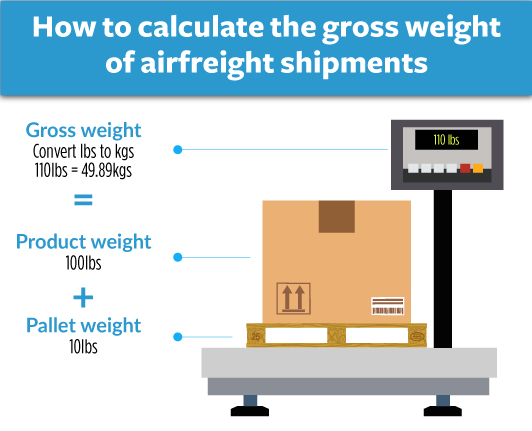
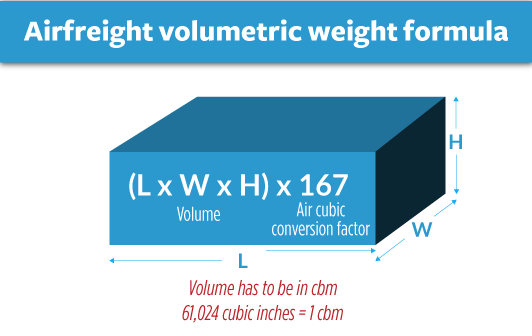
Airlines charge based on whichever is higher between the actual gross weight and the volumetric weight of your shipment. This is particularly important for Thailand’s most common air export categories — garments, handicrafts, food packaging, and plastic goods — which are often light but voluminous.

For standard air cargo: Volumetric weight = (Length × Width × Height in cm) ÷ 6,000

For express courier (DHL, FedEx, UPS, TNT): Volumetric weight = (Length × Width × Height in cm) ÷ 5,000

Worked example: A Thai garment exporter ships a box of silk scarves from Bangkok to Mumbai. The box measures 70 cm × 50 cm × 40 cm and has a gross weight of 12 kg.

  • Air cargo volumetric weight: (70 × 50 × 40) ÷ 6,000 = 23.3 kg → billed on 23.3 kg
  • Express courier volumetric weight: (70 × 50 × 40) ÷ 5,000 = 28 kg → billed on 28 kg

In both cases, the volumetric weight is nearly double the actual gross weight. This is typical for garments and textiles. Understanding this calculation before booking prevents billing surprises and helps you optimise packaging to reduce chargeable weight.

Road freight between Thailand and India

Road freight between Thailand and India will go through similar itineraries as rail freight to link the two countries. Roads in Thailand and India are well-designed and maintained, but in Myanmar and Bangladesh they still require improvements.

Compared to sea freight, transit times for road freight are halved, but prices are multiplied by 3 or 4 at least. Road freight is also riskier, with a greater chance of delays. Depending on your goods and priorities, we will compare sea and road freight rates to find the most suitable option.

Here is a table of average transit times between major Thai and Indian cities by truck:

 Bangkok / PattayaChiang MaiUdon ThaniPhuket / Hat Yai
Mumbai6 days6 days6 days7 days
Delhi5 days5 days5 days6 days
Bangalore6 days6 days6 days7 days
Kolkata4 days4 days4 days5 days
Chennai6 days6 days6 days7 days
Hyderabad6 days6 days6 days7 days
Ahmedabad6 days6 days7 days8 days
Pune6 days6 days6 days7 days
Surat6 days6 days6 days7 days
Kanpur5 days4 days4 days5 days

*Please note that these transit times are indicative for Thailand–India routes.

Rail freight between Thailand and India

Thailand doesn’t have common borders with India. To transfer them by rail freight, they will go through Myanmar, sometimes Bangladesh and then join the territory of India on the east. rail freight in india The Trans-Asian Railway is a project firstly thought in the early 1950’s by the United Nations, wishing to create a great rail network between Europe and Asia to ease international trades in the world. It was also established to help develop landlocked countries like Afghanistan, Laos and Mongolia.
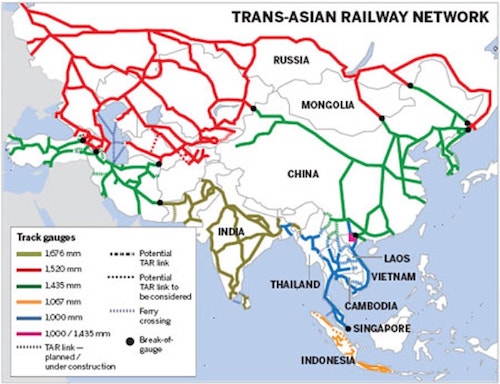
Because of decades of political conflicts and wars in Asia, and also the huge development of sea and air freight during the second half of the 20th century, the TAR has never been greatly achieved yet. One part of the project, “The southern corridor”, was to link Eastern Europe to South East Asia via India and Thailand. But gaps are still remaining between India and Myanmar and Myanmar and Thailand. This explains why India and Thailand are poorly linked by rail routes, and that most of the train traffic between the two countries is used for passenger’s wagons. For all of these reasons, rail freight is usually 5 times more expensive than sea freight, with greater transit time.

It will be a reliable option for you only on very particular occasions.

Here is a table of the regular transit times between the biggest Thai and Indian cities by rail freight:

Bangkok / Pattaya Chiang Mai Udon Thani Phuket / Hat Yai
Mumbai12 days12 days13 days14 days
Delhi10 days10 days11 days12 days
Bangalore12 days12 days13 days14 days
Kolkata8 days8 days9 days10 days
Chennai12 days12 days12 days14 days
Hyderabad12 days11 days12 days14 days
Ahmedabad12 days11 days12 days14 days
Pune12 days12 days13 days14 days
Surat12 days12 days12 days14 days
Kanpur9 days9 days10 days11 days

Door-to-door delivery between Thailand and India

Door-to-door shipping covers the complete logistics chain under a single contract — supplier or factory pickup in Thailand, export customs clearance, international freight by sea or air, Indian import customs clearance, and final delivery to your buyer’s warehouse or business address in India. You have one point of contact, one freight invoice, and one party accountable for the entire journey.

Why use door-to-door on the Thailand–India route?

The Thailand–India corridor involves two countries with distinct customs processes, multiple potential transshipment points, and the complexity of navigating Indian import regulations — including GST assessment, BIS certification requirements for certain product categories, and FSSAI compliance for food items. Managing these elements separately across a Thai freight agent, an Indian customs broker, and a last-mile delivery company multiplies the chances of miscommunication, document errors, and delays.

Door-to-door consolidates all of this under one operator who understands both ends of the route.

Single point of accountability: One contact manages everything from factory gate in Thailand to delivery address in India. When something needs following up — a customs query, a vessel schedule change, a delivery confirmation — you make one call.

Export and import compliance management: Our team handles Thai export documentation including the export declaration, certificate of origin, and any commodity-specific export permits. On the Indian side, we manage Bill of Entry filing, duty payment coordination, and liaison with Indian Customs on any examination or query.

AIFTA and ASEAN-India FTA documentation: Under the ASEAN-India Free Trade Agreement, goods of Thai origin may qualify for preferential import duty rates in India. This requires a correctly completed Certificate of Origin (Form AI) issued by an authorised Thai authority. We coordinate this certificate as part of the door-to-door service, ensuring you capture the duty savings you are entitled to.

Specialised cargo handling: For reefer cargo, oversized items, or fragile goods, door-to-door service includes specialised handling instructions communicated end-to-end, so your packaging, temperature settings, or handling requirements are respected at every stage without relying on you to relay them across multiple parties.

What does door-to-door typically include on the Thailand–India route?

  • Factory or warehouse pickup anywhere in Thailand
  • Packing and cargo preparation (optional)
  • Thai export customs clearance including Certificate of Origin
  • Sea freight (FCL or LCL) from Laem Chabang or Bangkok, or air freight from Suvarnabhumi
  • Transshipment coordination if applicable (Singapore, Colombo, or Port Klang)
  • Indian port arrival handling and terminal charges
  • Indian import customs clearance including Bill of Entry filing, duty payment management, and examination liaison
  • Last-mile delivery by truck to your buyer’s address anywhere in India

DocShipper manages door-to-door shipments on the Thailand–India corridor regularly. Contact us for a free quote within 24 hours.

What duties and taxes will I pay for my goods ?

Thanks to the ASEAN-India Free Trade Area (AIFTA), 90% of the tariff barriers applicable have been eliminated on both ways. This corresponds of a total elimination of 96% of the trade barriers between the two countries.

*In total tariff barriers over 4,000 product lines have been eliminated.

This allows to ease trades between the two regions and we’ve seen a growth on Indian investments in Thailand during the last five years.

Import duties from Thailand to India

Tariffs and Taxes

India is aligned with the Harmonized Tariff System (HTS) for imported and exported goods coming from members states of the Association of Southeast Asian Nations (ASEAN).

Here is the composition of an HS Code, you can now see what an HS code is and what does it mean.
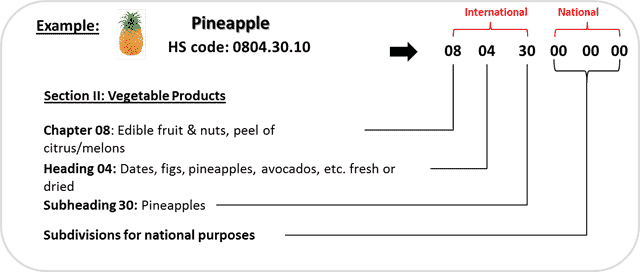
hs-code-example

hs code customs india

If you know the HS code of your goods, write it in the searching bar. If you don’t know the HS code, type key words to designate your goods in the “Product” bar. 

Once the search has been done, you will reach a page showing tax information regarding your goods. Let’s continue with the pineapple example:
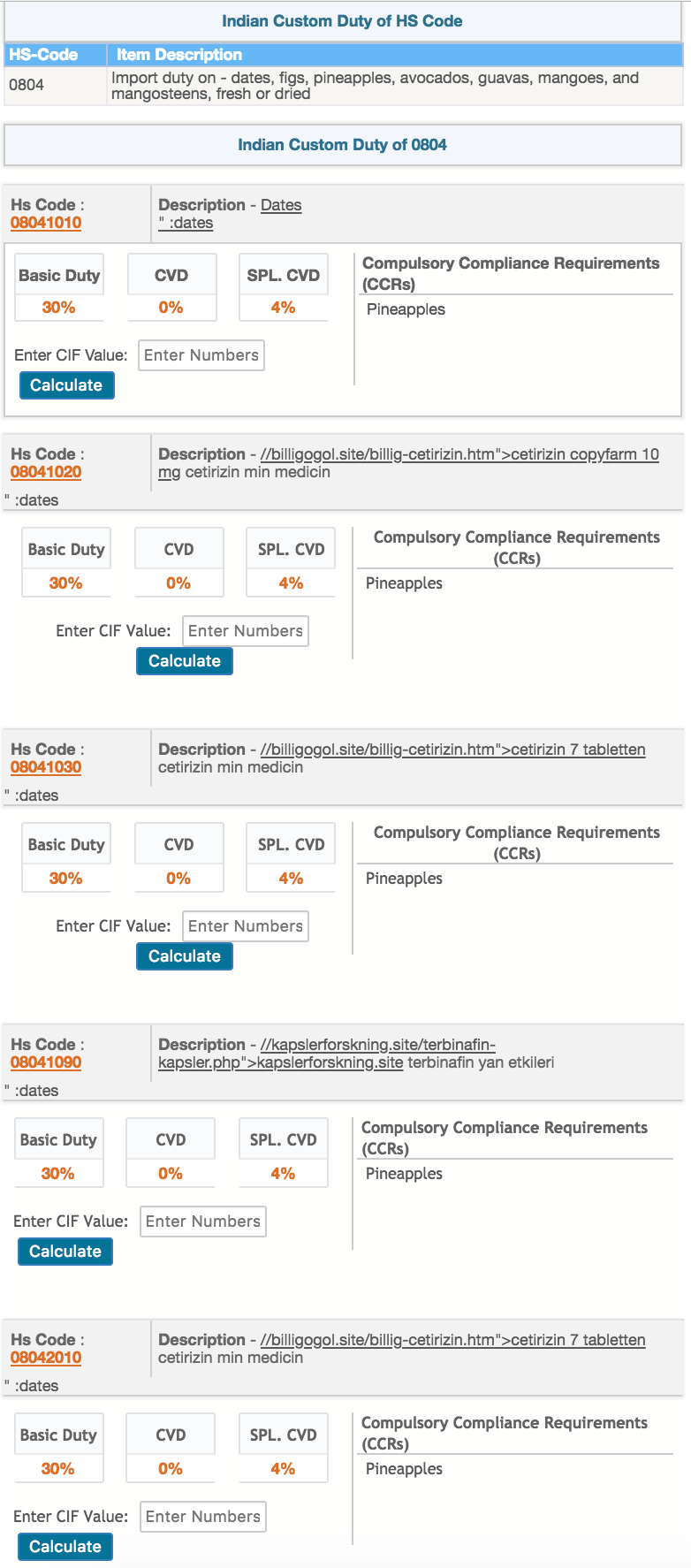
customs tariff in india

Required documents for customs clearance in India

Commercial Invoice

The primary valuation document for Indian customs. Must state seller and buyer details, full product description with Indian ITC-HS code, quantity, unit price, total CIF value, currency, and Incoterm. Indian customs scrutinises declared values and will cross-reference against market intelligence databases. Ensure your invoice value is accurate and consistent with your packing list and shipping documents in every detail.

Bill of Lading (sea freight) or Air Waybill (air freight)

The transport contract and cargo receipt issued by the carrier. For sea freight, the original Bill of Lading is typically required to release cargo at the Indian port — a telex release or express release is acceptable for most Indian ports if agreed with your carrier in advance. Retain the original carefully and coordinate release timing with your Indian customs broker.

Packing List

A detailed document listing every item in the shipment by quantity, dimensions, gross weight, net weight, and package type. Indian customs uses the packing list to verify physical contents against the commercial invoice. Any discrepancy between the two documents is grounds for examination and potential reclassification. Every line on the invoice must correspond precisely to the packing list.

Certificate of Origin — Form AI (AIFTA)

For Thai-origin goods to benefit from preferential duty rates under the ASEAN-India Free Trade Agreement, a Form AI Certificate of Origin must be issued by an authorised Thai authority — typically the Department of Foreign Trade (DFT) of Thailand. This document must be presented to Indian customs at the time of import clearance. Without it, standard MFN duty rates apply. Request this document from your Thai supplier or freight forwarder well before the shipment departs, as it must be issued based on production evidence.

Bill of Entry

The Bill of Entry is the formal import declaration filed with Indian customs by your Indian customs broker. It triggers the assessment and payment of import duties. There are three types: Bill of Entry for Home Consumption (for goods being cleared immediately), Bill of Entry for Warehousing (if storing under bond), and Bill of Entry for Ex-Bond (clearing from bond). Your Indian customs broker files this on your behalf but you should review it for accuracy before submission.

Import Licence or Permit

Certain product categories require an import licence or specific permit from Indian authorities before customs clearance. Categories include pharmaceuticals (CDSCO registration), food products (FSSAI registration and import clearance), electronics and IT products (BIS mandatory certification for specific items), agricultural goods (phytosanitary certificate and plant quarantine clearance), and chemicals (regulatory approvals). Identify licensing requirements for your specific product category before shipment. Missing a mandatory certification means your cargo is held at the Indian port until it is obtained — which can take weeks and incur significant storage charges.

Phytosanitary Certificate (for agricultural and food products)

Issued by Thailand’s Department of Agriculture, this certificate confirms that plant-based products meet India’s phytosanitary import requirements. Required for fresh produce, seeds, grains, processed agricultural goods, and some plant-derived ingredients. India’s Plant Quarantine authority (under the Ministry of Agriculture) performs checks on arrival — having the certificate prepared before departure avoids inspection delays.

FSSAI Import Clearance (for food products)

The Food Safety and Standards Authority of India (FSSAI) regulates all food imports. Thai food exporters must ensure their products are registered or notified with FSSAI and that the required import clearance is in place before cargo arrives at the Indian port. FSSAI checks apply to all food items including packaged foods, beverages, spices, seafood, and food ingredients. Non-compliance results in cargo being detained pending FSSAI clearance or, in some cases, refused entry.

How to calculate customs duties and taxes when importing from Thailand to India

Understanding your duty liability before your shipment moves gives you control over your landed cost and prevents budget surprises at Indian customs. India’s import duty structure has multiple components, and the calculation is not as simple as applying a single percentage to your invoice value. Work through these six steps before confirming your order.


Step 1 – Identify the Country of Origin

For goods manufactured in Thailand, the country of origin is Thailand. This matters for two reasons on this route.

First, India and Thailand are both members of the ASEAN-India Free Trade Area (AIFTA). Under AIFTA, goods of Thai origin may qualify for significantly reduced or zero import duty rates when accompanied by a valid Certificate of Origin (Form AI). Without this certificate, standard Most Favoured Nation (MFN) rates apply — which are consistently higher.

Second, the country of origin determines whether any anti-dumping or safeguard measures apply to your product. India has active anti-dumping measures on some product categories originating from specific countries. Confirm that no such measures apply to your Thai-origin goods before proceeding.


Step 2 – Find the HS Code

India uses an 8-digit ITC-HS (Indian Trade Classification based on Harmonized System) code for all imports. The first 6 digits align with the international Harmonized System; the last 2 digits are India-specific sub-classifications.

Ask your Thai supplier for the HS code they use on Thai export documentation. Then verify the correct Indian import classification independently using the Indian Customs Tariff tool or the Central Board of Indirect Taxes and Customs (CBIC) database. A mismatch between the HS code declared and the actual product is one of the most common causes of Indian customs examination and duty reassessment.

For food, agricultural, and regulated products, the Indian classification may differ from the Thai export classification. Always verify the Indian side independently.


Step 3 – Calculate the Customs Value (CIF)

India calculates import duty on the CIF value — Cost of goods + Insurance + Freight — to the Indian port of entry. This is not the same as your invoice price alone.

Example:

  • Goods value (commercial invoice): $10,000
  • Sea freight from Laem Chabang to JNPT: $800
  • Marine insurance: $120
  • CIF customs value: $10,920

All subsequent duty and tax calculations are applied to $10,920, not $10,000. Failing to include freight and insurance in the customs value is a common declaration error that can result in reassessment, penalties, and delays.


Step 4 – Determine the Applicable Duty Rate

India’s import tariff structure has three main layers for most products:

Basic Customs Duty (BCD): The primary import tariff, applied as a percentage of the CIF value. Rates vary significantly by product — from 0% for certain raw materials and capital goods to 20% or higher for finished consumer goods, automobiles, and agricultural products. Under AIFTA, the BCD rate may be reduced or eliminated for Thai-origin goods with a valid Form AI certificate.

Social Welfare Surcharge (SWS): A 10% surcharge applied on top of the Basic Customs Duty amount. It is not applied directly to the CIF value but to the duty amount.

To find your applicable rate: Check the CBIC tariff schedule for your ITC-HS code. Identify both the standard MFN BCD rate and the AIFTA preferential rate. The difference can be significant — for many manufactured goods, AIFTA reduces BCD from 10–15% down to 0–5%.


Step 5 – Calculate GST (Goods and Services Tax)

India applies Integrated GST (IGST) to all imports. IGST replaces the old CVD (Countervailing Duty) and SAD (Special Additional Duty) that applied before India’s 2017 GST reform.

IGST is calculated on an expanded base: CIF value + Basic Customs Duty + Social Welfare Surcharge. Common IGST rates for imported goods are 5%, 12%, 18%, or 28% depending on the product category.

Example using the expanded base: If CIF = $10,920, BCD = $1,092 (10%), SWS = $109 (10% of BCD), then:

  • IGST base = $10,920 + $1,092 + $109 = $12,121
  • IGST at 18% = $2,182

The good news: IGST paid on imports is a creditable input tax for Indian businesses registered under GST. Your Indian buyer can claim it back as an input tax credit against their output GST liability, which effectively makes IGST a cash flow item rather than a permanent cost for GST-registered importers.


Step 6 – Calculate the Total Customs Cost

Formula:

  1. Basic Customs Duty (BCD) = CIF Value × BCD rate
  2. Social Welfare Surcharge (SWS) = BCD × 10%
  3. IGST Base = CIF + BCD + SWS
  4. IGST = IGST Base × applicable GST rate
  5. Total Customs Cost = BCD + SWS + IGST

The customs services

Customs contact in India

Thai Customs

thailand-customs-logo

Official name: Customs Department of Thailand

Official website: Thai Customs Website

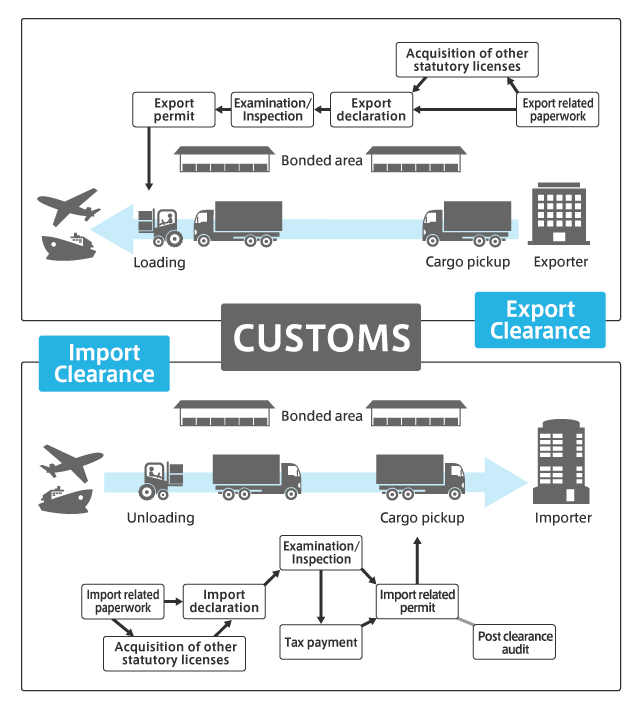
Customs process

import-custom-clearance-process

Prohibited & Restricted Items

Drugs

Drug Contraband

Explosives

Explosives

Biohazard

Biohazard

Chemicals

Chemicals

Corrosive

Corrosive

Counterfeit

Counterfeit

Ivory

Ivory

Batteries

Batteries

Flammable

Flammable

Firearms

Firearms

Prescription Drugs

Drugs

Counterfeit Notes

Counterfeit Notes

Poison

Poison

Pornography

Pornography

Knife

Knife

Tobacco

Tobacco

Gambling

Gambling

Hazardous

Hazardous

Prohibited and restricted items when importing into India from Thailand

Prohibited items — may not be imported under any circumstances:

  • Narcotic drugs and psychotropic substances not authorised by government permit
  • Weapons, firearms, and ammunition without specific licence from the Ministry of Home Affairs
  • Explosives and related materials
  • Counterfeit currency and counterfeit goods
  • Obscene or pornographic material
  • Goods bearing false trade descriptions or infringing intellectual property rights
  • Ivory and products derived from endangered species protected under CITES
  • Items from countries subject to UN or Indian government sanctions

Restricted items — require specific permits, licences, or certifications:

  • Pharmaceuticals and medical devices: require CDSCO (Central Drugs Standard Control Organisation) registration or import licence
  • Food products: require FSSAI (Food Safety and Standards Authority of India) import clearance
  • Agricultural and plant products: require phytosanitary certificate and NPPO (National Plant Protection Organisation) clearance
  • Electronics and IT equipment covered by BIS mandatory certification orders: require BIS registration
  • Chemicals including pesticides and industrial chemicals: require approval from relevant regulatory authorities
  • Radio and wireless communication equipment: require WPC (Wireless Planning and Coordination Wing) type approval
  • Tobacco and tobacco products: subject to strict labelling requirements and import licensing
  • Precious metals, gems, and jewellery: subject to import duty structure and documentation requirements specific to this sector
  • Loose lithium batteries: subject to IATA and IMDG transport restrictions — must be declared correctly and may not be shipped loose without specific handling arrangements

India’s list of restricted items is regularly updated. Before confirming production with your Thai supplier, verify whether your specific product category requires any Indian import permit, certification, or pre-shipment approval. Discovering a missing certificate after goods have arrived at an Indian port results in storage charges, detention fees, and potential destruction of cargo. Pre-shipment compliance verification takes hours; post-arrival remediation can take weeks.

Thailand–India trade and economic relationship

Thailand and India share one of the most dynamic bilateral trade relationships in Asia, underpinned by geographic proximity, complementary economic structures, and a strengthening institutional framework through ASEAN-India cooperation.

Trade value and trajectory Bilateral trade between Thailand and India has grown consistently and reached approximately USD 15 billion in recent years, with both governments targeting further expansion under the broader ASEAN-India framework. India is among Thailand’s top ten trading partners, and Thailand is India’s second largest ASEAN trading partner after Vietnam.

What Thailand exports to India Thailand’s main exports to India reflect its strengths in manufacturing, agriculture, and technology. Key categories include:

  • Automotive parts and components: Thailand is one of Asia’s largest automotive manufacturing hubs, and its parts flow into India’s vehicle assembly sector
  • Machinery and mechanical equipment: Industrial machinery, precision equipment, and manufacturing tools
  • Electronics and electrical components: Circuit boards, semiconductors, consumer electronics, and electrical appliances
  • Natural rubber and rubber products: Thailand is the world’s largest natural rubber producer; India is among its largest buyers
  • Processed food and agricultural products: Canned goods, frozen seafood, tropical fruit products, condiments, and food ingredients
  • Chemicals and plastics: Industrial chemicals, plastic raw materials, and packaging materials
  • Gems and jewellery: Thailand is a global centre for gem cutting and jewellery manufacturing, with significant export flows to India’s retail and re-export market

What India exports to Thailand India’s exports to Thailand are diversified and growing:

  • Machinery and engineering goods: Capital equipment and industrial machinery
  • Pharmaceuticals: India is one of the world’s largest generic pharmaceutical producers, and Thai importers source a range of medications and pharmaceutical inputs
  • Iron and steel products: Semi-finished and finished steel products for Thailand’s construction and manufacturing sectors
  • Chemicals: Industrial chemicals and organic compounds
  • Textiles and yarn: Indian cotton yarn and fabric are inputs for Thailand’s garment sector
  • Gems and precious stones: Rough diamonds and gemstones for Thailand’s gem processing industry

The ASEAN-India Free Trade Agreement (AIFTA) In force since 2010, AIFTA has progressively eliminated tariffs on approximately 80% of traded goods between ASEAN members — including Thailand — and India. Under the agreement, Thailand benefits from preferential tariff treatment for its exports to India across a wide range of product categories. For importers, this means significant duty savings are available provided the correct Form AI Certificate of Origin accompanies each shipment.

Regional Comprehensive Economic Partnership (RCEP) India was an original participant in RCEP negotiations but ultimately chose not to join the agreement when it was signed in 2020. As a result, RCEP does not currently apply to India–Thailand trade. AIFTA remains the operative preferential trade framework.

Investment ties Indian companies have invested significantly in Thailand’s pharmaceutical, IT, and food processing sectors. Thai companies have established operations in India in the automotive, food, and retail sectors. This cross-investment pattern strengthens the bilateral trade corridor by creating demand for intra-company goods movement.

Practical implication for shippers The AIFTA framework means that Thai-origin goods competing with Chinese or other-origin alternatives in the Indian market may carry a tariff advantage. Ensure your Thai supplier understands the importance of Form AI Certificate of Origin documentation — this single document is often the difference between being price-competitive and being priced out of the Indian market.

Additional logistics services

Venture beyond shipping and customs with SIAM Shipping! Explore our wide array of additional logistics services, ensuring your supply chain operation runs smoothly from start to finish. Let's take care of everything, together.

1 Warehousing and storage
1

Warehousing and storage

Finding the right warehouse for your goods can feel like a treasure hunt—a steady temperature for your delicate items is a must. Storing chocolates? You wouldn’t want a meltdown! For a stress-free solution that considers all conditions, explore our warehousing services, designed to keep your goods in prime condition.
img
2 Packaging and repackaging
2

Packaging and repackaging

Inherent challenges in shipping from China to France make quality packaging vital. Having a reliable agent can help ensure your wine barrels or electronics are suitably packed and repacked, reducing the risk of damages. Whether it's ceramics securely cushioned or machinery components assembly-segregated, great packaging caters to every product. Find out more about securing your cargo on our dedicated page: Freight packaging.
img
3 Cargo insurance
3

Cargo insurance

Contrary to fire insurance limited to premises, transport insurance is your flotation device over rough trade seas. Imagine sending a pricey, custom-built machinery and it gets damaged in transit. Ouch! But, with cargo insurance, you're covered and can breeze through such setbacks. It's the booster dose of prevention to keep your trade immunity sky-high.
img
4 Personal effects shipping
4

Personal effects shipping

Moving precious belongings from China to France? No worries, we manage fragile or bulky items with extra care, ensuring they reach your new French home intact. Like Aunt Mei's porcelain vase, we pack, transport, and deliver with professionalism. Save time and energy for croissants and vin rouge!
img

FAQ | Freight between Thailand and India

Transit time between Thailand and India depends heavily on the ports you choose and whether the service is direct or via transshipment.

For ocean freight in 2026, port-to-port transit from Laem Chabang or Bangkok to major Indian ports such as Nhava Sheva, Mundra or Chennai typically ranges between 10 and 18 days for FCL shipments. Some direct services are faster, but that is not the full story.

You also need to factor in:

  • 3 to 7 days export handling and vessel cut-off in Thailand
  • 2 to 5 days average customs clearance in India for compliant commercial imports
  • Additional time for Kolkata or inland deliveries

Door-to-door, most importers should realistically plan for 18 to 28 days depending on routing and clearance readiness.

Air freight usually moves airport-to-airport in 3 to 6 days, but recent regional instability has pushed rates up and capacity fluctuates. For urgent cargo, we recommend building at least a one-week operational buffer including customs and last-mile delivery.

If your production schedule is tight, this is where most shipments get delayed, not at sea, but in documentation or Indian customs processing.