


Freight Shipping between Thailand and Sweden | Rates – Transit times – Duties and Taxes

The first thing we always tell people is this: distance changes everything, and when you’re dealing with shipping between Thailand and Sweden, you’re moving cargo across continents, climate zones, and two very different customs systems. You’re not just comparing freight rates, you’re deciding how your timeline, cash flow, Incoterms, and documentation will interact over thousands of kilometers. From experience, most issues don’t come from transport itself, they come from small planning gaps that show up later at customs or during transshipment. In this Destination guide, we will cover freight options, transit logic, customs clearance, duties and taxes, and the practical checkpoints you should review before confirming your shipment from Thailand to Sweden.

Which are the different modes of transportation between Thailand and Sweden?

If you’re shipping full containers or heavy cargo, you’ll usually choose sea freight from Laem Chabang Port to the Port of Gothenburg for cost efficiency. If you’re moving urgent or high‑value goods, air freight from Suvarnabhumi Airport to Stockholm Arlanda gives you speed but at a higher price.

You can also combine sea and road across Europe when flexibility matters, especially for inland delivery in Sweden. If you’re unsure, you can contact our team and we’ll help you decide based on real-time capacity, rates, and market conditions, then we’ll break each option down in more detail below.

How can Siam Shipping help you

Experience stress-free shipping from Thailand to Sweden with DocShipper. We handle everything, from organizing transport to customs clearance, ensuring your goods reach effortlessly. Need assistance or a free estimate in less than 24 hours? Reach out to our on-call consultants. We’re always ready to help you sail smoothly in the world of international business. Let’s get started!

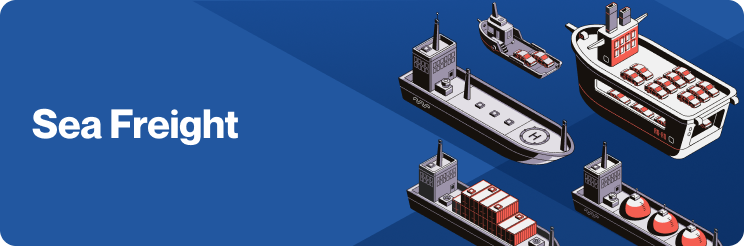
Sea freight from Thailand to Sweden

If you are planning sea freight from Thailand to Sweden, the first thing you should decide is simple, does your cargo justify time in exchange for cost efficiency. On this maritime transport Thailand Sweden route, ocean freight makes sense when you ship heavy, bulky, or container-sized volumes and you can accept a lead time of several weeks. If you are moving urgent spare parts or high-value goods with tight deadlines, you will likely feel the limits of ocean freight very quickly.

You will notice that container shipping between Thailand and Sweden is widely used for industrial goods, furniture, automotive parts, retail products, and machinery. It is structurally cheaper per cubic meter than air freight, but you must plan ahead. Miss your vessel cut-off in Laem Chabang and you can easily lose a full week. Underestimate customs clearance in Sweden and your container can sit at the terminal generating storage.

Here is the real trade-off. With international shipping Thailand to Sweden by sea, you gain cost control and container flexibility, FCL or LCL, but you accept operational friction such as port handling, documentation checks, and possible transshipment in Europe. If your priority is stability and predictable budgeting, ocean freight is often the right backbone for your supply chain. If speed is critical, it is not.

Which Incoterms should you use?

When you organize ocean freight Thailand to Sweden, your choice of Incoterm will define who controls the shipment and who absorbs the risk when something goes wrong. In practice, we often see importers choose FOB Thailand port because it gives you control of the main freight while your supplier handles export clearance and loading at origin. This keeps things balanced and transparent.

If you buy under CIF Sweden port, your supplier chooses the carrier and includes freight and basic insurance. It may look convenient, but you lose visibility on routing, transit time, and real freight cost. Many importers later realize they paid more than expected or cannot control delays.

The comparison between EXW vs DAP for international sea freight is where mistakes often happen. With EXW, you take responsibility from your supplier’s door in Thailand. That means you handle export formalities, which can be tricky without local coordination. With DAP Sweden, your supplier manages transport up to your address, but you still handle import clearance and duties. You must clearly understand where risk transfers and who issues the Bill of Lading (B/L). If you need faster document circulation, a telex release Bill of Lading can avoid courier delays and reduce demurrage risk at destination.

Main ports to know in Thailand and Sweden

Port choice directly affects your inland trucking cost, vessel frequency, and risk of delay. Here are the main seaports in Thailand and main seaports in Sweden that actually matter for this trade lane.

  • Laem Chabang, Thailand, The country’s primary deep-sea container hub. You will find the widest carrier network here for port-to-port shipping Thailand Sweden, and better schedule stability compared to smaller ports.
  • Bangkok Port, Closer to central industrial zones but with draft limitations. You may face feeder connections instead of direct long-haul vessels.
  • Map Ta Phut, Relevant if you ship petrochemicals or industrial cargo. Not the first choice for standard containerized consumer goods.
  • Port of Gothenburg, Sweden’s main container gateway. If you want strong rail and road connections into Scandinavia, this is usually your safest entry point.
  • Helsingborg, Efficient for southern Sweden distribution and regional flows within Northern Europe.
  • Stockholm, More passenger-oriented, but usable for certain cargo flows depending on your final delivery point.

If your final delivery is inland, remember that your choice between Gothenburg and a southern port can significantly change your domestic trucking cost. Port selection is not just about vessel arrival, it shapes your total landed cost.

Transit times: How long does it take to ship from Thailand to Sweden?

If you are asking how long does sea freight take from Thailand to Sweden, you should expect an average ocean leg of several weeks, depending on routing and transshipment. Below is a realistic planning overview for sea transit time Thailand to Sweden.

Port of Loading Port of Discharge FCL Transit Time LCL Transit Time
Laem Chabang Gothenburg 30 to 40 days 35 to 45 days
Bangkok Gothenburg 35 to 45 days 40 to 50 days
Laem Chabang Helsingborg 32 to 42 days 38 to 48 days

In practice, your ocean freight lead time Thailand Sweden depends on whether your shipment sails direct or via transshipment hubs such as Singapore or a major European port. LCL shipping Thailand to Sweden usually adds extra days because of consolidation at origin and deconsolidation at destination.

You should also factor in seasonal peaks. Before summer and year-end holidays in Europe, space tightens and vessels can roll cargo to the next sailing. Port congestion in major European hubs can also extend total transit time beyond the pure sea leg. Always read transit time as port-to-port only, not door-to-door.

Shipping rates: how much does a sea freight shipment cost from Thailand to Sweden?

If you are budgeting sea freight rates Thailand to Sweden, you need to separate LCL and FCL logic. Below are indicative planning ranges for container shipping cost Thailand Sweden. These are market-based estimates and fluctuate with demand, fuel prices, and capacity.

Mode Specification Estimated Range (USD)
LCL 1 to 5 CBM 80 to 150 USD per CBM
FCL 20ft container 2,000 to 3,500 USD
FCL 40ft container 3,000 to 5,000 USD

For FCL shipping Thailand to Sweden, your cost mainly depends on container size, sailing frequency, and market season. For LCL shipping Thailand to Sweden, your cost per CBM is influenced by consolidation volumes and minimum charges. Remember that ocean freight is only one part of the equation. Inland trucking, customs clearance, insurance, and terminal handling often reshape your final landed cost.

How to estimate your sea freight cost before requesting a quote

If you want to understand how to estimate ocean freight cost before asking for a freight quote Thailand to Sweden, start with four elements, total volume in CBM, gross weight, chosen Incoterm, and exact origin and destination addresses.

For LCL, carriers charge per cubic meter or per ton, whichever is higher. For example, if you ship 4 CBM weighing 2 tons, you are charged on 4 revenue tons because 1 CBM equals 1 revenue ton in sea freight calculation. If the rate is 100 USD per CBM, your base ocean freight would be around 400 USD, before origin and destination charges.

For FCL, you pay per container. If your cargo fills 28 CBM, you should compare LCL versus a 20ft container. Sometimes the price gap is smaller than you expect, and full container load vs less than container load becomes a strategic choice about control and risk, not just price.

Be careful with very low offers. A cheap port-to-port shipping Thailand Sweden rate may exclude local charges, documentation fee sea freight, or terminal handling charges. Always calculate your total landed cost. If you share your packing list and Incoterm with us, we can provide a clear, route-specific quotation within 24 hours.

Surcharges and hidden cost drivers to watch for

The first surprise usually comes from destination charges in Sweden. Even if your supplier prepaid ocean freight, you will still face terminal handling charges (THC), documentation fee sea freight, and customs brokerage.

The second risk is time. Demurrage and detention apply if your container stays too long at port or outside the terminal. A delayed customs declaration or missing original Bill of Lading can quickly trigger storage costs.

Finally, market surcharges can reshape your budget. The bunker adjustment factor (BAF) reflects fuel price fluctuations. During high-demand periods, carriers may apply a peak season surcharge (PSS). These are not penalties, they are market-driven adjustments, but you should anticipate them when planning annual contracts.

Should I choose FCL or LCL when shipping between Thailand and Sweden?

Embarking on the venture of freight shipping between Thailand and Sweden? Your journey starts with getting to grips with Full Container Load (FCL) and Less than Container Load (LCL) or consolidation. Your choice between the two determines your cost and delivery time, playing a vital role in the triumph of your shipping endeavor.

Curious about getting the most bang for your buck, or swift and cost-effective delivery? Let’s demystify these options to give you the clarity you need to make a confident, rewarding shipping decision. Get ready to unravel these sea freight essentials.

Full container load (FCL)


Definition: FCL (Full Container Load) shipping is a type of sea freight transport where a container is exclusively used for a single shipment. You get an entire container - be it a 20'ft or 40'ft container - to yourself, without sharing space with other shippers. When to Use: FCL shipping is an excellent choice when your cargo is over the threshold of 13/14/15 CBM. It's economical for high-volume shipments, and with your goods exclusively occupying the space, they remain in a sealed container from origin to destination, enhancing your cargo's safety. Example: Let's say, as a Thai manufacturer, you received a large order - around 400 chairs - to be shipped to Sweden. Your FCL shipping quote suggests that utilizing a 20'ft FCL container would comfortably accommodate your shipment, optimize your shipping cost efficiency, and securely deliver the order in the original condition. Cost Implications: Although pricier than LCL (Less Container Load), FCL proves to be cheaper per unit as the shipment volume increases. You pay a flat fee per container, regardless of whether it’s fully loaded or not, making it a cost-effective choice for high volume goods.

Less container load (LCL)

Definition: Less than Container Load (LCL) transport is when your shipment doesn't require a full container, sharing space with goods from other shippers. When to Use: This option is particularly useful when your shipment's volume is between 1 and 14 CBM. LCL shipment could mean cost efficiency and more flexibility, allowing businesses to transport smaller quantities without waiting to fill a full container. Example: For instance, if you're a Swedish retailer importing artisanal goods from Thailand. Your order quantity might not always fill a full shipping container. Instead of waiting or ordering more goods than necessary, you can opt for LCL freight. This way, you can keep your inventory lean while still meeting market demand. Cost Implications: While the cost per unit of space is typically higher in LCL than Full Container Load (FCL), it doesn't necessitate paying for unused space in a container. However, remember that LCL involves more handling due to consolidation at the origin port and deconsolidation at the destination port, which might increase the risk of damage to goods and can possibly incur additional charges.

Hassle-free shipping

Struggling with the cargo shipping maze between Thailand and Sweden? Let DocShipper handle the complexities. As experienced freight forwarders, we understand the factors that influence your choice: cost, delivery time, and cargo size. Our ocean freight experts work tirelessly to advise you on the best approach - consolidation or full container load. Ready to transform your shipping experience? Reach out to us for a free, no-obligation estimate, paving the way for a hassle-free shipping journey.

Step-by-step: how a sea freight shipment usually works on this route

When you organize sea freight step by step process between Thailand and Sweden, you are coordinating multiple actors across two continents. The sea leg is only one part of the chain. Most delays happen at documentation stage or during port handling, not while the container is at sea. Here is what actually happens when we manage your shipment as your freight forwarder Thailand to Sweden.

  1. We confirm your Incoterm, cargo details, and choose the most suitable sailing and container type.
  2. We arrange pickup at your supplier in Thailand if you book door-to-port sea freight or full door-to-door.
  3. Your cargo is delivered to the origin terminal and export customs clearance is completed.
  4. The carrier issues the Bill of Lading and we verify all details before vessel departure.
  5. The container sails, often via transshipment hub, toward Sweden.
  6. Before arrival, we prepare import documentation and coordinate customs clearance.
  7. The container is discharged at the Swedish port and terminal handling is completed.
  8. We arrange final delivery if you selected port-to-door ocean shipping or multimodal transport Thailand to Sweden.

If you plan properly and validate documents early, this route runs smoothly. If paperwork is inconsistent or cargo details are inaccurate, this is where timelines slip.

Special sea freight solutions

Out of Gauge and project cargo

If your cargo exceeds standard container dimensions, out of gauge cargo by sea is the solution. We use flat rack or open top containers for machinery, generators, or oversized equipment. For heavy industrial moves, project cargo shipping Thailand Sweden requires route surveys, lifting plans, and close coordination with port terminals.

Reefer containers

If you export food, pharmaceuticals, or temperature-sensitive chemicals, a reefer container Thailand to Sweden maintains controlled temperature during the entire voyage. You must define temperature range precisely and verify power availability during transshipment.

RoRo and bulk options

If you ship vehicles or wheeled machinery, RoRo services can be more practical than containerization. For raw materials shipped unpackaged, bulk vessels may be relevant depending on volume.

Every cargo profile is different. Whether you need LCL consolidation services, specific FCL container options, or tailored cargo insurance for ocean freight, we design the solution around your operational priorities. Share your shipment details and we will advise you on the most efficient setup for this corridor.

Should I choose FCL or LCL when shipping between Thailand and Sweden?

If your cargo fills most of a container, you will generally prefer FCL because you control the space and reduce handling risk. If your shipment is smaller, LCL allows you to share container space and optimize cost. The right choice depends on your volume, budget, and sensitivity to transit time.

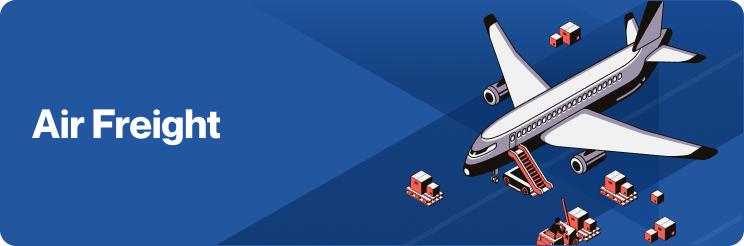
Air freight from Thailand to Sweden

You choose air freight from Thailand to Sweden when time matters more than volume. If you are moving electronics, high-value components, urgent replenishment stock, or perishable goods air freight Thailand Sweden, air is often the right call. If you are shipping bulky, low-margin cargo with no deadline, you will usually overpay by flying it.

Here is what you need to know. It is fast, but it is not automatic. You deal with cut-off times, air freight security screening, cargo handling at airport, and chargeable weight. Many shippers believe it always takes 1 to 3 days, that it is always too expensive, or that they pay based on real weight only. In reality, delays often come from late supplier readiness, poor export packing for air cargo, or incomplete air freight customs documents. This is where most costs quietly increase.

Air cargo vs express: how should you ship on this route?

When you compare air cargo vs express courier Thailand Sweden, you are really choosing between control and simplicity. Standard air cargo Thailand to Sweden means your shipment travels under an airline air waybill, usually consolidated with other freight. Express means an integrator handles pickup, flight, customs, and final delivery under one system.

Think of it this way. If you want flexibility on airports, better rates for heavier loads, or a tailored door-to-door air freight service, standard air freight makes sense. If you have small cartons, urgent samples, or no in-house logistics team, express air freight Thailand to Sweden may feel easier. The right option depends on your volume, urgency, and how much visibility and cost control you expect.

Should you choose air cargo from Thailand to Sweden?

If your shipment is above 100 to 150 kg, or close to 1 CBM, standard standard air freight Thailand to Sweden usually becomes more competitive. This is especially true for B2B flows, repeat shipments, or when you need airport-to-airport air cargo with structured pickup and delivery on both sides.

Before booking, you should have dimensions, total weight, HS code, Incoterm, preferred airports, ready date, and clear cargo description. If your goods fall under dangerous goods by air (DGR) or temperature controlled air cargo, you also need compliant packing and declarations under IATA cargo standards.

Most mistakes happen here. You assume airport-to-airport includes delivery. It does not. You miss the airline cut-off and lose a full day. You forget minimum charges or destination handling. On this route, planning your air freight booking process 2 to 4 days before cargo readiness avoids last-minute rate spikes.

Extracted Image

Should you choose express air freight from Thailand to Sweden?

You choose express air freight Thailand to Sweden when you ship small parcels, usually below 100 kg, and you want speed with minimal coordination. It works well for samples, spare parts, e-commerce, or time-critical air freight Thailand Sweden when you cannot manage multiple service providers.

The trade-off is control. Express couriers bundle pickup, customs, and delivery, but you have less visibility on cost breakdown. Reweigh and remeasure adjustments are common if your volumetric weight is underestimated. You may also assume duties are included when the Incoterm says otherwise.

Express is a good option if you want simplicity and your shipment is compact and urgent. It becomes risky if your cartons are light but bulky, poorly packed, or if you need special handling like perishable goods air freight Thailand Sweden with strict temperature control.

Extracted Image

Main airports to know in Thailand and Sweden

  • Suvarnabhumi Airport, Bangkok – The primary international cargo gateway and the backbone of most international air freight services Thailand Sweden. You get the widest airline choice and better consolidation options, but peak season congestion can affect uplift.
  • Don Mueang International Airport, Bangkok – Often used for regional and express flows. If your supplier is near central Bangkok, trucking costs can be competitive, but long-haul capacity is more limited.
  • Phuket International Airport – Relevant if you export seafood or southern Thailand production. Useful for regional uplift, though many long-haul shipments still connect via Bangkok.
  • Stockholm Arlanda Airport – Sweden’s main cargo hub and the default entry point for most air shipping between Thailand and Sweden. Strong customs infrastructure and good national distribution links.
  • Göteborg Landvetter Airport – Strategic if your final delivery is in western Sweden. You may reduce inland trucking time compared to Stockholm, depending on your consignee location.
  • Malmö Airport – Useful for southern Sweden and cross-border access to Denmark. Often relevant if your supply chain extends into the Oresund region.

Your airport choice directly affects total cost. Pre-carriage in Thailand, final trucking in Sweden, and whether you choose direct flight vs transshipment air cargo all influence your real lead time.

Main airports to know in Thailand and Sweden

  • Suvarnabhumi Airport, Bangkok – The main export platform with the highest long-haul connectivity. Ideal for consolidated and direct flight vs transshipment air cargo options.
  • Stockholm Arlanda Airport – Primary import gateway with structured cargo handling at airport and national distribution coverage.
  • Göteborg Landvetter Airport – Efficient alternative for western Sweden, sometimes reducing last-mile trucking time and cost.

On this corridor, most flows move Bangkok to Stockholm. If you select a secondary airport, you should verify capacity, customs clearance capability, and local handling before confirming your booking.

Transit times: how long does air freight take from Thailand to Sweden?

Service type Estimated transit time
Standard air cargo (direct or 1 stop) 3 to 6 days airport to airport
Express courier service 2 to 4 days door to door

If you ask, how long does air freight take from Thailand to Sweden, the short answer is a few days, not counting supplier preparation. Your real air freight transit time Thailand to Sweden depends on flight availability, whether you use direct flight vs transshipment air cargo, and how early your cargo reaches the terminal before cut-off.

Most delays come from three areas. First, late delivery to the airport and missed cut-off. Second, additional air freight security screening or document checks. Third, seasonal capacity pressure, especially before holidays. Always calculate your total air cargo lead time Thailand Sweden from factory ready date to final delivery, not from flight departure only.

Shipping rates: how much does air freight cost from Thailand to Sweden?

Your air freight rates Thailand to Sweden are quoted per chargeable kilogram. On this lane, you typically see a wide market range depending on season, capacity, and fuel conditions. Express services are usually higher per kg than standard consolidated cargo.

If you are estimating your air cargo cost per kg Thailand Sweden, focus on four drivers. First, your chargeable weight. Second, your carton dimensions and packing density. Third, urgency and available space on the flight. Fourth, the chosen airports and whether you include pickup and final delivery.

You should also budget for origin handling, documentation, customs clearance, and possible inspection fees. The first thing we always tell clients is this, your packing design often changes your rate more than the airline itself.

What is the difference between volumetric and gross weight?

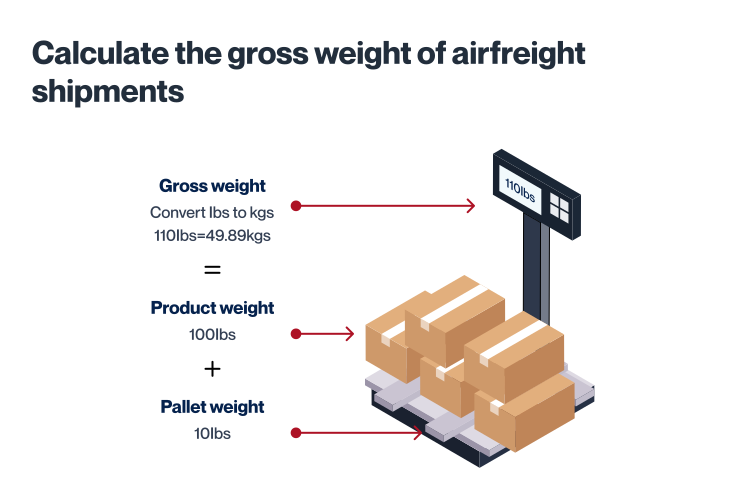
When you book air freight from Thailand to Sweden, the airline charges you based on the higher of gross weight or volumetric weight. Gross weight is what your cargo actually weighs on a scale. Volumetric weight reflects the space your cargo occupies in the aircraft. Because aircraft space is limited, light but bulky cargo can cost more than you expect.

Definitions:

  • Gross weight – The real weight of your goods including packaging.
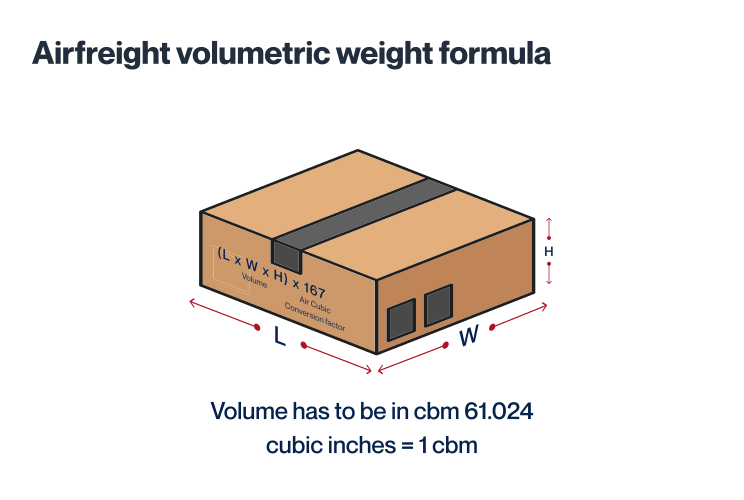
  • Volumetric weight – A calculated weight based on dimensions.
  • Chargeable weight – The higher of gross or volumetric weight.
  • Air waybill (AWB) – The transport document issued for your shipment, either as a house air waybill (HAWB) or master air waybill (MAWB).

How to calculate:
Length (cm) × Width (cm) × Height (cm) ÷ 6000 = Volumetric weight in kg for standard air cargo.
For express, divide by 5000 instead.

Service Conversion rule
Air cargo 1 m³ = 167 kg, divisor 6000
Express courier 1 m³ = 200 kg, divisor 5000

Example: If your carton measures 50 × 50 × 50 cm, the volumetric weight in air cargo is 50 × 50 × 50 ÷ 6000 = about 21 kg. If the real weight is 18 kg, you will be charged on 21 kg.

Common mistakes: You underestimate box size, you ignore pallets in the calculation, or you compare express and cargo without adjusting the divisor. A simple chargeable weight calculation before booking helps you avoid surprises and negotiate from a stronger position.

Door to door between Thailand and Sweden

Door to Door shipping streamlines global logistics, taking your cargo from heartland Thailand right to your Swedish doorstep. This complete package bundles together transportation, customs clearance, and delivery, easing the hassle while saving time and effort. Let’s unbox the benefits this remarkable shipping method can offer for your Thailand-Sweden route. Ready? Let’s dive in!

Overview – Door to Door

Shipping between Thailand and Sweden can feel like navigating a maze, but our door-to-door service simplifies this endeavor significantly. No need to juggle multiple logistic partners, we handle everything – pick up at origin, customs clearance, and delivery. You enjoy peace of mind, budget predictability, and stress-free logistics solutions our clients appreciate greatly.

On the flip side, fewer shipment tracking opportunities may disappoint some. But remember, both destination countries have specific, challenging customs procedures. Thus, keeping it all under one umbrella can alleviate these complexities. Explore why door-to-door shipping could be your game-changing decision.

Why should I use a Door to Door service between Thailand and Sweden?

Feeling like logistics have turned you into a juggling act? Well, let that be a worry of the past. Door to Door service between Thailand and Sweden might be your logistics hero. Here are five reasons why you should consider it.

1. Stress-Free Logistics: With Door to Door service, you can wave goodbye to the complex task of coordinating different shipping steps. The service takes care of everything from picking up your goods to delivering them to the final address.

2. Timely Delivery: Urgent shipments require a reliable solution. This service not only promises trackable, swift delivery but ensures your goods are transported with punctuality, keeping business timelines intact.

3. Specialized Handling: Got complex cargo? Door to Door service comes with the expertise to handle it all. From fragile items to bulky goods, dedicated professionals ensure your items are in safe hands throughout the journey.

4. Convenience: Because who doesn’t want more of it? The service goes the extra mile (literally!) handling trucking at both origin and destination. You get to focus on your business, leaving the logistics headache to the experts.

5. Comprehensive Coverage: Forget worrying about customs, documentation, or dealing with multiple transport providers. Everything is handled by a single, accountable entity which delivers your goods from – you guessed it – door to door.

Let’s hear it for smoother, stress-free logistics!

DocShipper – Door to Door specialist between Thailand and Sweden

Experience stress-free, door to door shipping from Thailand to Sweden with DocShipper. As experts in the field, we meticulously manage every aspect of your goods transportation – packing, transport, customs, and choosing the ideal shipping method. Our exceptional proficiency ensures smooth processes while a dedicated Account Executive provides personalized guidance all along. Reach out for a no-obligation, free estimate in less than 24 hours or consult with our experts at no cost. Trust us, you won’t have to lift a finger!

Customs clearance in Sweden for goods imported from Thailand

When you handle customs clearance in Sweden for goods from Thailand, you directly impact your landed cost, your delivery timeline, and who is legally responsible for the shipment. Duties, import VAT Sweden, inspections, and document checks all sit between your cargo and final release. We coordinate the full import customs process Sweden from Thailand for you, including the declaration and interaction with Swedish Customs.

You will notice that most delays on this route come from wrong HS codes, inconsistent commercial invoice data, or missing proof of origin documents. Small errors create storage fees, inspection holds, or reassessments of value. Below, you will see how to calculate your exposure and how the customs clearance step by step Thailand to Sweden really works in practice.

How to calculate duties & taxes when importing from Thailand to Sweden?

To calculate customs duties Thailand to Sweden, you need five inputs: the country of origin, the correct HS code classification, the customs value calculation method, the applicable import tariff Sweden, and any additional taxes. If one of these is wrong, your landed cost calculation Thailand to Sweden will be off.

You should also expect the final assessed amount to differ slightly from early estimates if freight costs change, if Customs adjusts the valuation basis, or if preferential origin treatment is rejected. Be careful with cheap freight quotes that ignore VAT or additional measures. The first thing we always tell you is this, you must separate transport cost from customs exposure.

Step 0 – Quick checks before you calculate

  • Confirm who acts as Importer of Record in Sweden and holds the liability.
  • Check which Incoterm applies and who controls the customs declaration Sweden.
  • Verify whether your shipment qualifies for any low-value or simplified clearance procedure.

Step 1 – Identify the Country of Origin

Your duty rate depends on the real country of origin rules, not the country of export. If your goods are manufactured in Thailand, you may explore preferential origin treatment, but only if you can provide valid proof of origin documents such as a certificate of origin Thailand.

You should never confuse origin with shipping country. If production happened elsewhere and only transited through Thailand, Swedish Customs can challenge your declaration during risk assessment or even in a post-clearance audit preparation. This step determines whether reduced tariffs or trade defense measures apply.

Step 2 – Find the HS Code of your product

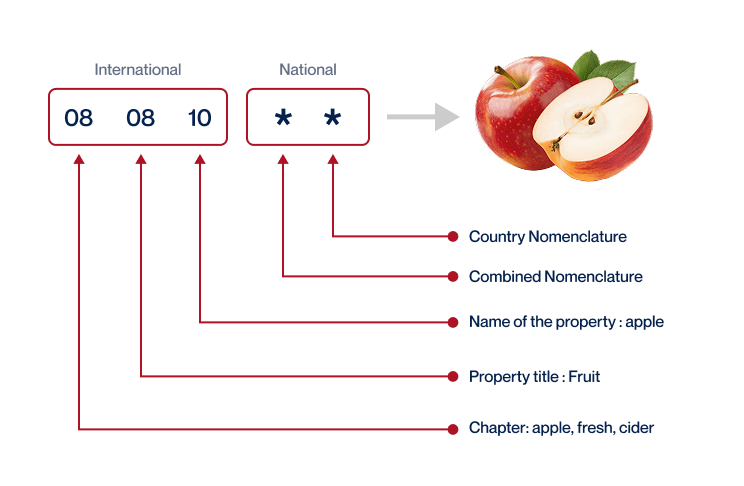
Your HS code classification decides your duty rate, VAT treatment, and whether restrictions apply. One wrong digit can trigger reassessment, penalties, or inspection. This is where many importers lose time and money.

You can start with a harmonized system code lookup using the EU database at TARIC. Search by product description, review section and chapter notes, and compare with similar goods already cleared in the EU. From experience, you should also review binding tariff information decisions if your product is technical.

If your HS code is wrong, you risk paying too much duty or too little. In the second case, you expose yourself to reassessment during customs compliance for importers checks. If you are unsure, we provide tariff classification assistance before shipment.

Here’s an infographic showing you how to read an HS code.

Step 3 – Calculate the Customs Value

Swedish Customs normally use the transaction value as the customs valuation basis. In practical terms, you start with the price on your commercial invoice for customs, then adjust it according to the Incoterm and any additional costs that must be included.

If you buy goods for 1,000 USD under FOB terms and you pay 200 USD freight and 50 USD insurance to Sweden, your customs value becomes 1,250 USD. If you supply tooling, pay royalties, or provide assists not listed on the invoice, you may need to add them. This is where many importers underestimate their exposure.

You should always align the customs value with your packing list for customs clearance and transport documents. Inconsistencies are a common trigger for customs inspection process and value adjustment.

Extracted Image

Step 4 – Figure out the applicable Import Tariff in Sweden

The import tariff Sweden is the percentage of duty applied to your customs value based on your HS code and origin.

You can follow a simple method:

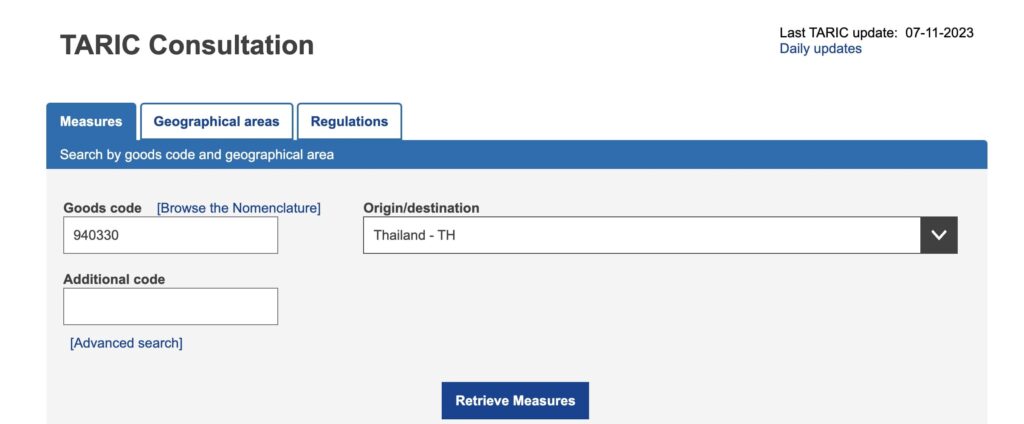
  1. Open the official TARIC database.
  2. Enter your HS code.
  3. Check the duty rate applicable to Thailand as country of origin.

When you review the result, look for:

  • Standard third-country duty rate.
  • Any preferential origin treatment conditions.
  • Additional measures such as anti-dumping.
  • Specific document requirements linked to the code.

If your customs value is 1,250 USD and the duty rate is 5 percent, your duty would be 62.50 USD. You then carry this forward into your import taxes in Sweden for Thai goods calculation.

On this route, you should pay attention to whether your supplier can genuinely support preferential claims. If you are unsure, we can review your tariff exposure before you ship.

Step 5 – Consider other Import Duties and Taxes in Sweden

After customs duty, you calculate import VAT Sweden. VAT is generally applied to the customs value plus duty and certain additional costs. If your customs value is 1,250 USD and duty is 62.50 USD, VAT is calculated on 1,312.50 USD.

You may also face excise duty on specific goods or trade defense measures depending on the product category. This is where a detailed import documentation checklist Thailand to Sweden becomes critical.

  • Confirm VAT registration and EORI number for Sweden importers.
  • Verify whether your goods fall under excise or controlled regimes.
  • Check if temporary import procedure or inward processing regime could apply.
  • Validate all supporting documents before filing.

Step 6 – Calculate the Customs Duties

The basic formula is simple:

Duty = customs value × duty rate
VAT = VAT base × VAT rate

If your customs value is 1,250 USD and the duty rate is 5 percent, duty equals 62.50 USD. If VAT applies on 1,312.50 USD, you multiply that amount by the Swedish VAT rate to determine the payable VAT.

You normally pay duties and VAT at the time of customs declaration Sweden, either directly or through your customs broker in Sweden. Once payment or guarantee is accepted, you obtain the release of goods from customs. Delays usually happen if documents do not match, if pre-arrival customs filing was incorrect, or if Customs selects your shipment for inspection.

Does DocShipper charge customs fees?

Though DocShipper is a customs broker in Thailand and Sweden, we don’t charge customs duties – those fees go straight to policymakers in government. What we bill for is the customs clearance process: handling paperwork, coordinating shipments, and ensuring compliance with laws. We transparently provide you with the customs invoice, so rest assured, you’re only paying your fair government dues. Think of it this way, if customs duties are the restaurant bill, then the customs clearance fees are the tip for the server – you’re paying for their professional service.

Contact Details for Customs Authorities

Thailand Customs

Thailand Customs logo

Official name: The Thailand Customs Department

Official website: www.customs.go.th/

Sweden Customs

Swedish Customs (Tullverket) logo

Official name: Swedish Customs (Tullverket)

Official website: www.tullverket.se/en

Required documents for customs clearance in Sweden

When you import from Thailand into Sweden, you’ll notice fast that customs issues rarely come from “the border” itself. They come from inconsistent paperwork. Your invoice, transport document, and declarations must match line by line, same shipper, same consignee, same values, same product descriptions. If one detail conflicts, your shipment can be stopped for clarification. Here’s the checklist we use with our own clients to avoid that scenario.

Commercial Invoice

The commercial invoice is the official document that shows what you are buying and how much you are paying.

Swedish Customs uses it to calculate duties, VAT, and verify the declared customs value under EU rules.

Example: “100 cartons of LED lighting fixtures, HS code 9405, total value EUR 48,000, FOB Laem Chabang.”

Common mistake: declaring a value that does not match the payment terms or omitting freight and insurance when required for customs valuation.

Bill of Lading or Air Waybill

This is the transport document issued by the carrier that proves the goods were shipped.

Customs and your broker use it to confirm routing, consignee details, and transport mode from Thailand to Sweden.

Example: A sea Bill of Lading showing Laem Chabang to Gothenburg, with you listed as consignee.

Common mistake: consignee name on the Bill of Lading not matching the importer registered in Sweden.

Packing List

The packing list details how your goods are physically packed, cartons, pallets, weights, and dimensions.

Customs uses it to perform risk assessments and physical inspections if needed.

Example: 10 pallets, each with 50 cartons, gross weight 8,200 kg total.

Common mistake: weight discrepancies between the packing list and the transport document.

Import Declaration and EORI Registration

The import declaration is the electronic filing submitted to Swedish Customs through the EU customs system.

You must have a valid EORI number to import into Sweden, otherwise customs will not release your goods.

Example: Your Swedish company’s EORI starting with SE, used by your broker for the customs entry.

Common mistake: trying to import without an active EORI registration or using the wrong entity’s number.

Certificate of Origin

The certificate of origin states where your goods were manufactured.

Sweden applies the EU Common Customs Tariff, and origin determines the duty rate and whether trade measures apply.

Example: Goods manufactured in Thailand accompanied by a non-preferential certificate issued by a Thai chamber of commerce.

Common mistake: assuming Thai origin gives you preferential duty treatment in the EU when no free trade agreement is in force.

CE Marking and Product Compliance Documents

If your products fall under EU harmonized regulations, you must provide compliance documentation such as a Declaration of Conformity.

Swedish authorities can request proof that your goods meet EU safety, health, or environmental standards before release.

Example: CE Declaration of Conformity for electrical equipment or machinery.

Common mistake: shipping regulated goods without technical files or EU-compliant labeling, which can trigger market surveillance controls.

Step-by-step: how customs clearance usually works on this route

If you want to understand the import customs process Sweden from Thailand in real terms, you need to see the operational flow. The sequence can differ depending on the airport or port of entry, your Incoterm, and whether you use a bonded warehouse Sweden. Below is how we typically coordinate it.

  1. Before departure, you collect the commercial invoice for customs, packing list for customs clearance, and confirm HS code classification.
  2. You verify origin and secure certificate of origin Thailand if preferential treatment is claimed.
  3. We arrange pre-arrival customs filing in Sweden when possible to reduce dwell time.
  4. Upon arrival, we lodge the customs declaration Sweden, often using the single administrative document (SAD) format.
  5. Swedish Customs perform automated customs risk assessment, which may trigger document review or physical customs inspection process.
  6. If selected for inspection, you provide additional proof of origin documents or valuation support. This is one of the main moments of truth where errors increase cost.
  7. Once duties and import VAT Sweden are secured or paid, Customs issue the release of goods from customs.
  8. Your cargo is delivered to your warehouse or moved to a bonded warehouse Sweden if you defer clearance.

If you plan correctly, clearance can be routine. If documents are inconsistent, delays and storage charges accumulate quickly. That is why you should treat customs compliance for importers as part of your sourcing strategy, not as a last-minute task.

Packing List

Your packing list for customs clearance must clearly show quantities, net and gross weight, dimensions, and packaging type. Swedish Customs compare it with your customs declaration Sweden and transport document.

If weights or quantities differ from the commercial invoice for customs, you increase the likelihood of a customs inspection process. You should always make sure your supplier in Thailand signs off on consistent data before departure.

Commercial Invoice

Your commercial invoice for customs is the foundation of your customs value calculation method. It must state the seller and buyer details, Incoterm, currency, unit price, total value, and a clear product description linked to your HS code classification.

If your invoice is vague, for example listing only “parts” or “samples”, Swedish Customs may question your valuation basis. You should ensure alignment with the packing list for customs clearance and transport documents to avoid reassessment.

Certificate of Origin

If you claim preferential origin treatment for Thai goods, you need valid proof of origin documents. A certificate of origin Thailand can support reduced duties, but only if the country of origin rules are genuinely met.

If Customs later determine that origin criteria were not satisfied, you may face retroactive duty claims during post-clearance audit preparation. You should verify origin compliance before shipment, not after arrival.

Certificate of Conformity (CE standard)

If your product falls under EU harmonized legislation, you must ensure CE compliance before import. Customs may request evidence that your goods meet safety, health, or environmental standards.

If CE marking is missing where required, your goods can be blocked at the border and denied release of goods from customs. You should confirm regulatory scope during sourcing in Thailand.

Your EORI number (Economic Operator Registration Identification)

You need an EORI number for Sweden importers to lodge a customs declaration Sweden. Without it, you cannot legally act as Importer of Record within the EU.

You should apply through Swedish Customs before your first shipment. If you forget this step, your cargo may sit at the port or airport while you complete registration, generating storage costs.

Get Started with Siam Shipping

Nervous about customs clearance between Thailand and Sweden? Let DocShipper handle it. Expertise in paperwork, tariff codes, and customs duties – we’ve got it all! Don’t let complex procedures stall your business. Reach out to us today, and receive a cost-effective, tailored quote within 24 hours. Your smooth shipment journey starts with DocShipper!

Prohibited and Restricted items when importing into Sweden

Before you ship, you should verify whether your goods fall under restricted categories such as controlled chemicals, dual-use items, or excise goods. Some products require prior authorization or specific licenses.

If you ignore this check, your shipment can be stopped during the customs inspection process. Always confirm regulatory status as part of your import documentation checklist Thailand to Sweden.

Prohibited and restricted items when importing into Sweden

Before you ship from Thailand, you need to separate two things clearly. Restricted means your goods are allowed in, but only if you meet specific conditions such as licenses, health certificates, or inspections. Prohibited means the goods should not enter at all and may be seized or destroyed.

This is the step many first-time importers skip, and it’s usually where costly surprises happen.

Restricted products

  • Food and agricultural products, require health certificates and border inspections.
  • Plants and wooden packaging, subject to phytosanitary controls.
  • Animal products, veterinary checks and EU sanitary approval required.
  • Electronics and machinery, must comply with EU CE regulations.
  • Chemicals and cosmetics, REACH registration or ingredient compliance may apply.
  • Medical devices, EU conformity assessment and authorized representative required.
  • Dual-use goods, export control review depending on technical specifications.

Prohibited products

  • Counterfeit goods and IP-infringing products.
  • Illegal narcotics and psychotropic substances.
  • Endangered species products without CITES authorization.
  • Certain weapons and military-grade equipment without authorization.
  • Hazardous waste shipments not compliant with EU regulations.

If you are unsure about your product classification, you should confirm the correct HS code and check EU import conditions before booking freight. From experience, a 15-minute compliance check before departure saves weeks of storage and inspection delays in Sweden.

Trade agreements and preferential duties for imports from Thailand to Sweden

When you import into Sweden, you are importing into the European Union. That means the EU Common Customs Tariff applies, not a separate Swedish tariff.

As of 2026, there is no free trade agreement in force between Thailand and the European Union. Negotiations have resumed in recent years, but until an agreement is concluded and implemented, your goods from Thailand enter Sweden under standard Most Favoured Nation duty rates.

This has two practical consequences for you. First, you should calculate duties based on the EU tariff for your specific HS code. Second, a Thai Certificate of Origin does not automatically grant preferential duty treatment.

You should also check whether your product is subject to any EU trade defense measures such as anti-dumping duties. These apply to specific product categories and origins, and they can significantly affect your landed cost.

The first thing we always tell importers on this route is simple. Before you confirm your purchase contract in Thailand, verify the exact HS classification and the EU duty rate that applies in Sweden. Your margin depends on it.

Your first steps with Siam Shipping

If you want clarity on how to calculate import duties Thailand to Sweden and structure your landed cost calculation Thailand to Sweden correctly, you should start before the goods leave the factory. We review your HS code classification, valuation basis, and document set so you avoid preventable issues.

Whether you need a customs broker in Sweden, support with temporary import procedure, or full coordination of customs clearance step by step Thailand to Sweden, we align transport and compliance from day one. Reach out and you will know exactly where you stand before your cargo reaches Swedish Customs.

More than shipping

Additional logistics services

1 Warehousing
1

Warehousing

Finding reliable storage when shipping goods between Thailand and Sweden might feel like a minefield. Let's not forget the key role of temperature control for sensitive goods. The good news? We've cracked the code on warehousing solutions tailored to your unique needs. More info on our dedicated page: Warehousing.
img
2 Packing
2

Packing

When shipping goods from Thailand to Sweden, correctly packaging and repackaging your items is key to their safe delivery. A trustworthy agent, like ours, ensures your products are secured, whether it's delicate ceramics or heavy machinery. For example, antiques require custom crates, while electronics need anti-static bubble wrap. More info on our dedicated page: Freight packaging.
img
3 Transport Insurance
3

Transport Insurance

Cargo insurance is your safeguard during the unpredictable shipping journey, going steps beyond ordinary fire insurance. It provides a safety net against mishaps such as transit damage, theft, or lost goods. For instance, if an ocean storm damages your shipment of handmade Thai silk bound for Stockholm, cargo insurance can save your business from big losses. Protect your investment and have peace of mind. More info on our dedicated page: Cargo Insurance.
img
4 Household goods shipping
4

Household goods shipping

Moving treasured items from Thailand to Sweden? Our Personal Effects Shipping ensures your cherished, fragile, or bulky goods are cared for like our own. Imagine shipping your grandmother's piano or vintage wine collection with extreme professional delicacy. Plus, bulky items like furniture are no match for our honed flexibility. For peace of mind when it matters most, get more info on our dedicated page: Shipping Personal Belongings.
img
5 Procurement in Thailand
5

Procurement in Thailand

Looking to source goods from Asia or East Europe? DocShipper is your ally, assisting you in identifying suitable suppliers and managing the entire procurement process. We make overcoming language barriers our business, guiding you every inch of the way. Consider the Thai local firm seeking Swedish sustainable pine; we facilitate that logistical leap with ease. Intrigued? Dive deeper into our approach on our dedicated page: Sourcing services.

img
6 Quality Control
6

Quality Control

Quality control is vital in shipping goods from Thailand to Sweden, mitigating risks of delivering sub-standard products. Imagine custom-made Thai silk reaching Swedish retailers only to find an off-color dye - a disastrous scenario thwarted by strict quality inspections. Ensure your goods satisfy both Thai and Swedish standards with our detailed checks. More info on our dedicated page: Quality Inspection.
img
7 Conformité des produits aux normes
7

Conformité des produits aux normes

Product compliance can make or break your cargo's journey. Our lab tests grant certifications, validating that your products meet all necessary regulations. Imagine having your tech devices stalled because of non-compliant batteries. Avoid such mishaps and ship confidently. More info on our dedicated page: Product Compliance Services.

img