In short ⚡
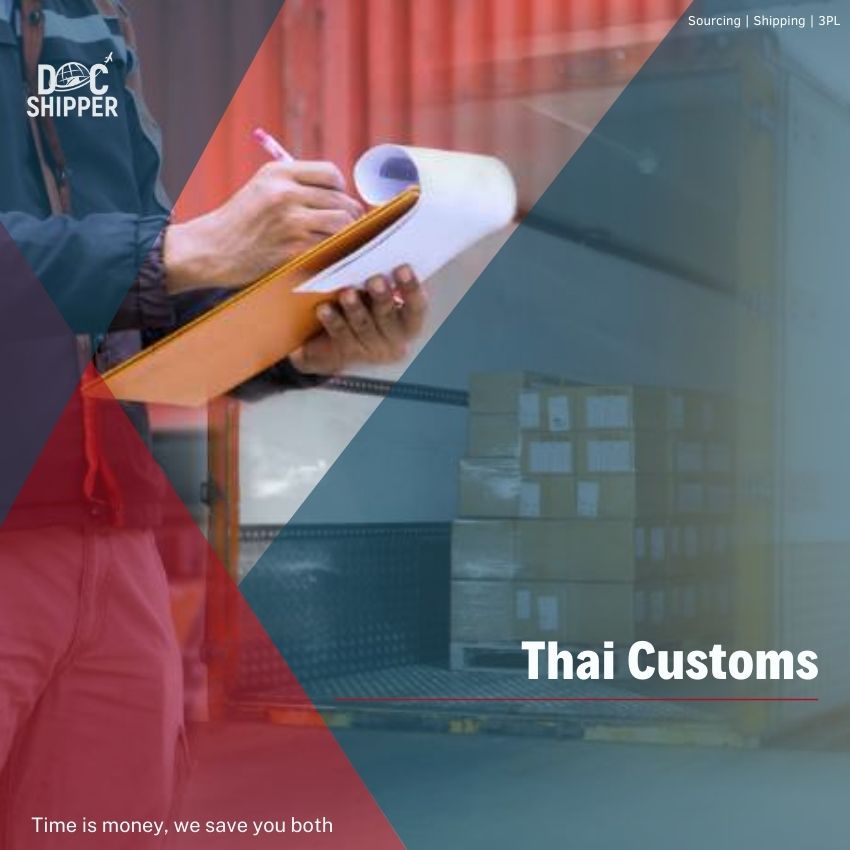
Thai customs are the rules, procedures, and controls applied by the Thai Customs Department to regulate imports and exports, including document checks, HS code classification, valuation, and inspections that determine duty, VAT, and release. For businesses, accurate paperwork, correct HS codes, and proper permits are essential to avoid seizures, fines, and significant clearance delays.In this article, you will find how Thai customs clearance works, the role of restricted and prohibited items, required documents and timelines, and how to calculate duty rates and landed cost to keep your supply chain compliant.
We hope you’ll find this article genuinely useful, but remember, if you ever feel lost at any step, whether it’s finding a supplier, validating quality, managing international shipping or customs, DocShipper can handle it all for you!
How Thai customs work for importers and exporters
If you’ve ever felt thai customs can be unpredictable, you’re not imagining it.
In practice, clearance speed depends on how clean your tariff classification, documents, and shipment story are, across freight forwarding, cargo handling, and your broader supply chain management.
We’ve seen the same container clear in hours one week, then stall the next, simply because the Harmonized System code changed, or the packing list didn’t match palletization reality in the warehouse.
- Your paperwork drives your risk profile, commercial invoice, packing list, bill of lading, airway bill, and permits must align line by line.
- Your Incoterms shape liability, duties, insurance, and who controls clearance, especially on DDP vs FOB vs CIF moves.
- Your logistics setup matters, containerization choices, freight consolidation, drayage scheduling, and even cross docking can affect inspection timing.
Workflow (what usually happens in customs clearance Thailand)
1) You confirm HS code, value, origin, and Incoterms with your supplier, before the carrier contract is locked.
2) You prepare documents, then your customs broker files the entry in the electronic system.
3) Customs selects a channel, document check, scan, or physical exam, then you pay customs duties and taxes.
4) Release happens, then your 3PL handles warehousing, inventory management, and last mile delivery, or you arrange intermodal transport onward.
Checklist (before your cargo even arrives)
- Commercial invoice values match the payment terms, including any tooling, molds, or assists.
- Packing list matches reality, cartons, weights, dimensions, and SKU descriptions.
- Bill of lading or airway bill matches shipper, consignee, and notify party details.
- HS code proposal validated, not guessed, plus any applicable certificates of origin.
- Freight insurance confirmed and aligned with Incoterms and risk transfer.
- Shipment tracking plan set, so you don’t discover a hold after the free time is gone.
Roles and powers of Thai customs at ports, airports, and borders
At Laem Chabang, Suvarnabhumi, or a land border, thailand customs officers do more than stamp releases.
They can demand additional evidence of value, challenge your tariff classification, order scanning, open cartons, or detain cargo if something doesn’t add up.
From experience, here’s the scenario that catches importers off guard.
Your supplier “helps” by writing a vague description like “parts” on the commercial invoice, your freight brokerage team files with a generic HS code, and the exam team finds branded electronics inside, then the shipment gets held while you scramble for correct documentation and sometimes a license.
- Control of inspections, x-ray, physical checks, sampling, and sometimes lab testing depending on the product.
- Authority to re-assess value, if the declared price looks inconsistent with market benchmarks or prior entries.
- Enforcement, seizure, fines, and prosecution when prohibited goods or misdeclarations are found.
- Release conditions, you may need extra permits, corrected invoices, or updated transport documents to get out of the port.
You’ll notice fast that your operational choices impact risk.
Messy load planning, last minute freight consolidation changes, or repacking in a bonded area can create discrepancies that trigger more scrutiny.
For compliance signals and enforcement standards, we align our processes with the expectations typically applied by the Thai Customs Department at major gateways.
Key laws, agencies, and systems behind customs clearance in Thailand
Under thai customs regulations, your clearance isn’t just “Customs vs you”.
It’s a coordinated gate where other agencies can require approvals, and where the electronic filing system won’t forgive small data mistakes.
Here’s the thing, the legal side and the logistics side collide.
We’ve handled air shipments where everything looked perfect for transportation, route optimization, and transit time, but the entry stalled because the product required an agency permit that wasn’t arranged before the airway bill was issued.
- Customs laws and procedures, valuation, origin rules, tariff classification, and audit rights.
- Partner government agencies, product-specific controls like food, pharma, telecom, cosmetics, and agriculture.
- Electronic clearance systems, declarations, supporting documents, and payment confirmation must be consistent.
When we act as your logistics provider, we don’t treat customs as a standalone step.
We connect supplier onboarding, inspection planning, multimodal transport, and customs clearance Thailand so you don’t lose lead time at the worst possible moment.
| What you manage alone | What a broker and forwarder manage with you |
| Supplier document quality, invoice descriptions, and pricing logic | Tariff classification support, entry filing, and clearance coordination |
| Commercial decisions on Incoterms and letter of credit wording | Carrier contract details, bill of lading or airway bill consistency checks |
| Internal timelines and inventory planning | Port release follow-up, drayage booking, warehousing, and delivery scheduling |
Looking for a Reliable Shipping & Sourcing Partner?


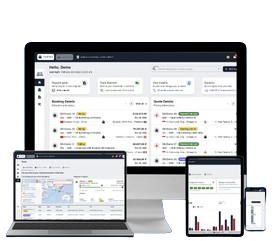
DocShipper Platform
One platform. Your entire supply chain
Sourcing, freight, customs & documents, all centralised, all visible, 24/7.
What you must know about prohibited and restricted items in Thailand
This is where most thai customs nightmares start, not with freight rates or shipping quotes, but with what’s inside the cartons.
Thailand draws a hard line between prohibited goods and restricted goods, and if you mix them up, your containerization plan won’t save you.
We’ve seen importers negotiate great pricing and perfect lead time, then lose weeks because a “small promo item” in the same master carton triggered a restricted goods check.
That’s why you want product-level screening before you book the vessel, not after your shipment tracking shows “arrived”.
Checklist (screening products before you ship)
- Verify exact product function and composition, not just supplier marketing names.
- Confirm HS code, then validate if any agency controls apply to that code or description.
- Check labeling requirements and language needs before production, not at destination.
- Separate risky SKUs into distinct shipments when possible, to avoid full-load holds.
- Plan permits early, some licenses must be approved before the cargo departs.
Thailand customs prohibited items list and legal consequences
With thailand customs restricted items discussions, people often forget there are also outright prohibited goods.
If prohibited items show up in your shipment, Thai Customs can seize them, and you may face fines or criminal exposure depending on the category and intent.
A real-world pattern we see is “sample creep”.
Your supplier tosses in free samples to be helpful, the packing list never mentions them, and during inspection Customs finds an item that falls under a banned category, then your entire shipment gets detained while liability is assessed.
- Typical prohibited categories, narcotics, certain weapons and ammunition, counterfeit goods, and items violating intellectual property enforcement.
- Key business risk, seizure plus delayed release of the rest of the cargo, even if most SKUs are compliant.
- Downstream impact, missed production slots, stockouts, and expensive emergency air freight to recover lead time.
If you’re unsure, don’t rely on a supplier’s “we’ve shipped it before”.
We validate the product file, descriptions, and supporting evidence upfront so your import export flow doesn’t turn into a compliance firefight.
Thailand customs restricted items, permits, and import license procedures
Most operational pain sits in thailand customs restricted items, goods you can import, but only with the right permissions.
That includes categories controlled by partner agencies, and the documentation burden can be heavier than the transportation itself.
Here’s the classic headache.
You ship a mixed SKU order under one bill of lading, one item needs a permit, and suddenly the whole container sits in the terminal while you rush an application that should’ve been started before the vessel departed.
- What “restricted” usually means, you need a permit, license, registration, or specific labeling and standards compliance.
- Common triggers, wireless or telecom equipment, cosmetics, food supplements, medical items, chemicals, and certain machinery.
- Documentation you’ll often need, product specs, test reports, certificates, invoices, and sometimes manufacturer authorization.
Workflow (permit-first approach we use at DocShipper)
1) You share product data, photos, spec sheets, and intended use, before booking freight.
2) We confirm HS code options and compliance flags, then identify which agency approval applies.
3) You apply for permits or we coordinate with your appointed parties, then we lock the shipping plan and documents.
4) We file the entry, manage customs clearance Thailand, and coordinate cargo release, drayage, and warehousing.
When you work with us, you don’t just get a customs broker style service.
You get a coordinated 3PL and freight forwarding team that connects compliance, freight consolidation, inventory management, and delivery, so restricted goods don’t break your supply chain at the border.
Siam Shipping Advice
Have your documents and HS codes pre-validated by our licensed partners, and secure faster release with fewer inspections and storage charges.
Customs clearance in Thailand: documents, steps, and timelines
When you ship to Thailand, you must treat customs clearance as a controlled process, not a formality. Thai customs require precise documentation and accurate declarations, otherwise your cargo can be delayed, inspected, or seized.
You are responsible for the accuracy of every figure declared, even if your supplier prepared the paperwork. This is why working with an experienced broker is often the difference between smooth clearance and weeks of storage fees.
| Document | Who issues it | Why it matters |
| Commercial Invoice | Supplier | Determines customs value and duty calculation |
| Packing List | Supplier | Used for physical inspection and cargo verification |
| Bill of Lading / Air Waybill | Carrier | Proof of shipment and transport contract |
| Import License, if required | Relevant Thai authority | Mandatory for restricted goods |
| Certificate of Origin | Exporter or Chamber of Commerce | Used to apply preferential duty rates under FTA |
Clearance in Thailand is processed electronically through the e-Customs system. However, inspections can still be triggered based on risk profiling or product category.
- Pre-arrival document preparation and HS code validation
- Electronic submission of customs declaration
- Duty and VAT assessment by Thai Customs
- Payment of duties and taxes
- Inspection, if selected
- Release order and cargo pickup
Standard clearance takes 1 to 3 working days for compliant shipments. If your file is incomplete or your HS code is disputed, you can expect delays of 5 to 10 days or more.
With DocShipper, we validate your HS classification, cross-check licensing requirements, and coordinate directly with licensed Thai brokers. You reduce risk exposure before your goods even depart.
Siam Shipping Info
Ask us for a full duty and VAT simulation before placing your PO, and gain total visibility on your real import cost in Thailand.
Thailand customs duty rates and how to calculate your landed cost
Thailand applies ad valorem duties based on the HS code classification of your goods. If you misclassify, you either overpay or expose yourself to retroactive penalties.
Most imports are subject to customs duty plus 7 percent VAT. Certain products also face excise tax or specific duties depending on their nature.
| Cost component | Calculation basis |
| Customs Duty | CIF value × duty rate |
| VAT | (CIF + Duty) × 7% |
| Excise Tax, if applicable | Product-specific formula |
| Customs Fees | Administrative and broker charges |
The CIF value includes product cost, insurance, and freight. You must ensure freight and insurance are correctly declared, even under FOB terms.
Duty rates in Thailand generally range from 0% to 80% depending on product category. Many industrial goods benefit from reduced tariffs under ASEAN or bilateral free trade agreements.
- Confirm correct HS code at 8 or 10-digit level
- Check applicable duty rate in Thai Customs Tariff
- Verify FTA eligibility and Certificate of Origin requirements
- Add freight and insurance to determine CIF
- Apply VAT on top of duty-inclusive value
If you want predictable margins, you must calculate landed cost before placing your purchase order. At DocShipper, we simulate your full import cost structure so you avoid margin erosion.
Conclusion
If you plan to import into Thailand, you cannot afford approximation. Customs compliance directly impacts your cash flow, delivery timelines, and legal exposure.
- Prepare complete and accurate documentation before shipment
- Validate HS codes to prevent disputes and penalties
- Check prohibited and restricted status before production
- Calculate full landed cost including duty and VAT
- Work with a licensed customs broker to manage clearance risk
With DocShipper expertise, you secure your supply chain from factory to final delivery. We manage sourcing, freight, customs clearance, and compliance so you can scale in Thailand with confidence.
FAQ | Thai customs guide for businesses: avoid seizures, delays, and surprise duty costs
You must declare every item in your shipment, its true customs value, and its correct HS code. That includes commercial samples, “free” promo items, replacement parts sent at zero price, and any items your supplier added last minute. If something is inside the carton, it must appear on the commercial invoice and packing list, with a realistic value, otherwise Customs can treat it as an undeclared import and detain or seize the goods.
Thailand bans a number of goods outright, such as narcotics, certain weapons and explosives, counterfeit and pirated products, and materials considered obscene or offensive to public order. From a business standpoint, anything that is clearly illegal to import under Thai law (for example fake branded electronics or forged documents) should never be loaded on the vessel. If your supply chain even “tests” these items in a live shipment, Customs can seize the cargo and pursue fines or criminal charges.
Yes. Free samples, gifts, and promotional inserts still need to be listed on your documents with a description and a reasonable customs value, even if you are not charging your customer. Thai Customs assesses duty based on value, not on your sales price, so “no charge” items that are not declared can look like smuggling or misdeclaration during inspection.
The most common issue is mixing risky items into the same cartons or pallets as regular goods, then not updating the packing list. When Customs opens the box and finds undeclared or restricted products, they can hold the whole shipment. To reduce this risk, instruct suppliers to pack restricted or sensitive SKUs separately, label them clearly, and update all documents before the bill of lading or airway bill is issued.
Customs can remove and seize the prohibited item and then decide what to do with the rest of the cargo. In practice, the entire shipment is often detained while officers check whether there was intentional misdeclaration. You may face storage costs, fines, and a much stricter risk profile for future imports, even if only one SKU was problematic. This is why you should forbid suppliers from adding any “bonus” items without written approval and updated paperwork.
Start with the exact HS code and technical specs, then verify controls with the relevant Thai authority (for example, FDA for food and supplements, NBTC for telecom, or Ministry of Industry for certain chemicals). A practical approach is to share your product sheet, photos, and intended use with a local broker, who can confirm which agency approval or import license applies and whether you should split that SKU into a separate shipment to avoid delaying other goods.
Generic descriptions are a red flag. If the invoice only says “parts” or “accessories”, but x‑ray images or a physical check show branded electronics, cosmetics, or other controlled items, Customs may suspect incorrect classification or undervaluation. Always use clear, technical descriptions that match the HS code and what’s actually inside the box; this makes it much easier for your broker to defend the declaration if Customs challenges it.
Need Help with
Logistics or Sourcing ?
First, we secure the right products from the right suppliers at the right price by managing the sourcing process from start to finish. Then, we simplify your shipping experience - from pickup to final delivery - ensuring any product, anywhere, is delivered at highly competitive prices.


Fill the Form
Prefer email? Send us your inquiry, and we’ll get back to you as soon as possible.
Contact Us