In short ⚡
Shipping in Thailand is the process of moving goods within the country and across ASEAN using a mix of road, sea, air, rail, warehousing, and customs solutions optimized for cost, transit time, and reliability. It leverages Thailand’s strategic ports, airports, and logistics infrastructure, plus local freight forwarders, to coordinate documentation, packing, insurance, and multimodal transport end to end.In this article, you will find a breakdown of Thailand’s main transport modes, warehousing and bonded storage, air and ocean freight choices (FCL, LCL, break bulk), packing and ISPM 15 rules, quality control and insurance, and how a Thai freight forwarder coordinates customs and door-to-door shipping.
We hope you’ll find this article genuinely useful, but remember, if you ever feel lost at any step, whether it’s finding a supplier, validating quality, managing international shipping or customs, DocShipper can handle it all for you!
Why Thailand is a strategic logistics hub in ASEAN
Shipping in Thailand feels straightforward the moment you plug into the country’s logistics backbone, ports, airports, and industrial corridors that were built for export-heavy supply chains.
Here’s the thing, Thailand isn’t only a manufacturing base, it’s a regional distribution platform where you can plan domestic delivery and cross-border moves from the same playbook.
From experience, the “easy part” is finding carriers, the hard part is aligning customs clearance, shipment scheduling, and lead time so your freight rate doesn’t explode after one missed cut-off.
To frame your options quickly, here are the main reasons Thailand keeps showing up in ASEAN supply chain management plans, including those published by ASEAN.
- Gateway positioning for cross-border road freight to Cambodia, Laos, Myanmar, and Malaysia, plus onward connectivity to Singapore.
- Strong containerization ecosystem with frequent sailings, cargo consolidation, and predictable port of loading, port of discharge flows.
- Mature 3PL and freight forwarding agent market for multimodal transport, freight brokerage, and shipment tracking.
- Scalable warehousing including cross-docking, palletization, and bonded warehouse setups to manage duty payment timing.
We’ve seen importers get stuck right here, they assume “Thailand is efficient” means documentation will fix itself.
It won’t.
If your harmonized system code and tariff classification don’t match what’s on your packing list and import declaration, you’ll feel it in delays and inspections.
Siam Shipping Alert
Let us audit your HS codes, documents, and cut-offs before delays and inspections hit your margins.
Key shipping options in Thailand: road, sea, air, and rail
Shipping in Thailand usually comes down to one question, are you optimizing for transit time, cost, or reliability across handovers.
You’ll notice fast that logistics optimization isn’t about picking one mode, it’s about controlling the interfaces, cargo handling at pickup, documentation at export, and the last-mile delivery at destination.
We once handled a consumer goods move where the supplier booked “cheap” trucking to the port, arrived after the terminal cut-off, and the whole container rolled to the next vessel.
That single mistake turned a solid plan into a 7-day slip, plus storage and rebooking fees.
To help you choose a transport mode without guessing, use this comparison as a starting point.
| Mode | Best for | Typical strengths | Watch-outs |
| Road freight | Domestic distribution, cross-border within ASEAN | Flexible pickup times, direct routing, good for last-mile delivery | Border queues, axle limits, paperwork gaps on export documentation |
| Ocean freight | Bulk, heavy cargo, stable lead times | Lowest cost per unit, easy cargo consolidation (LCL) | Port cut-offs, demurrage, bill of lading accuracy |
| Air freight | Time-critical, high value, urgent replenishment | Fast transit time, predictable schedules | Chargeable weight surprises, packing/labeling compliance |
| Rail (where applicable) | Some regional lanes and inland corridors | Stable linehaul, lower emissions than road | Terminal constraints, limited door-to-door flexibility |
Siam Shipping Advice
We coordinate trucking, port cut-offs, and bookings so one missed handover does not derail your schedule.
Domestic trucking and nationwide distribution
Last month, we saw a Bangkok warehouse dispatch miss a retail delivery window because the shipper assumed “same-day” meant any pickup time would work.
For Shipping in Thailand, domestic trucking runs smoothly when you plan the pickup slot, loading manifest, and delivery appointment as one sequence.
You can move freight with anything from a small van to a 10-wheel truck, but you’ll want to match your cargo type to the right body, dry, curtain-side, reefer, or tail-lift.
To keep control, run your domestic workflow like this.
Step-by-step domestic trucking workflow
1) Confirm cargo specs, dimensions, weight, and palletization plan.
2) Set pickup time and loading resources, forklift, dock, labor.
3) Issue shipping labels and finalize packing list for receiving.
4) Track linehaul and confirm delivery appointment for last-mile delivery.
5) Close POD and reconcile accessorials against the freight contract.
Cross-border road freight within ASEAN
Tip: treat borders like mini-customs projects, not like a longer domestic trip.
With Shipping in Thailand across ASEAN by road, your biggest lever is documentation readiness, a clean export documentation pack, the right incoterms, and consistent tariff classification.
You’ve probably dealt with drivers arriving at a checkpoint with mismatched paperwork.
That’s where your customs broker and freight forwarding agent earn their keep, aligning the export entry, import declaration, and duty payment plan so the truck doesn’t sit idle.
Before you confirm any cross-border booking, use this quick checklist to avoid the most common blockers.
- Incoterms confirmed in writing, including who handles customs clearance and insurance.
- HS code and cargo description aligned across invoice, packing list, and permits.
- Shipment scheduling includes realistic border crossing times and driver hours.
- Proof of cargo insurance matches lane, value, and exclusions.
- Receiver readiness confirmed for unloading equipment and delivery appointment.
Multimodal transport combining truck, sea, and air
Is multimodal transport always cheaper? Not if your handovers aren’t controlled.
In Shipping in Thailand, multimodal transport works best when you lock down responsibilities per leg, inland pickup, port handling, main carriage, then delivery, with clear milestones for shipment tracking.
Strong statement, a “good rate” is meaningless if your cargo misses a flight or vessel because you didn’t sync cut-offs with inland trucking.
To make comparisons easier, here’s how you can think about common multimodal combinations.
| Multimodal combo | When it fits | Main advantage | Main risk |
| Truck + Ocean (FCL/LCL) | Export from factories inland to ports | Best cost control at scale | Demurrage if truck arrival misses cut-off |
| Truck + Air | Urgent cargo from industrial zones to airport | Fastest door-to-door | Chargeable weight and packing compliance |
| Truck + Ocean + Truck | Domestic repositioning plus international move | Stable planning for supply chain management | More handovers, more points of failure |
Road freight services in Thailand: from small vans to heavy haul
Shipping in Thailand by road is the workhorse option, it handles factory pickups, port drayage, retail replenishment, and cross-docking transfers when your warehousing footprint is spread out.
You’ll get the best results when you treat trucking as part of your overall logistics plan, not a last-minute add-on after you’ve already promised a delivery date.
We’ve seen a shipper choose the cheapest carrier for a fragile electronics run, then discover too late that the truck had no straps, no blankets, and no process for cargo handling.
One sharp brake later, cartons were crushed and the “savings” vanished.
To keep your service selection practical, here are the main road freight categories you’ll encounter.
- Parcel and vans for small loads and city distribution.
- LTL and FTL for pallet freight and full truck utilization.
- Reefer trucks for temperature-controlled goods.
- Flatbeds and lowbeds for over-dimensional or heavy cargo.
- Time-critical trucks when transit time matters more than cost.
If you want a clear picture of available options, you can also review our Trucking services coverage for Thailand.
Siam Shipping Alert
Match equipment, securing, and handling to your cargo before you confirm the carrier and rate.
LTL, FTL, and pickup solutions for small shipments
Back in a recent consolidation run, we watched two suppliers show up with “one pallet each” that turned into five pallets because nobody agreed on carton dimensions.
For Shipping in Thailand, LTL works when your cargo consolidation assumptions are real, measured, and communicated before the truck arrives.
You can use LTL when you’re cost-sensitive and flexible on delivery windows, while FTL fits when you need control, fewer touchpoints, and cleaner liability.
To choose quickly, use this simple decision guide.
| Option | Best when | What you control |
| LTL | You ship a few pallets and can share space | Lower freight rate, less control on timing |
| FTL | You fill most of a truck or need priority | Pickup time, routing, fewer handling events |
| Dedicated pickup | You need precise timing for production output | Best for shipment scheduling and urgent replenishment |
Reefer, flatbed, and over-dimensional transport
Tip: don’t book special equipment until you’ve frozen the loading method and tie-down plan.
In Shipping in Thailand, reefer and over-dimensional moves fail most often on basics, temperature set-point not confirmed, no calibrated thermometer, wrong lashing gear, or a route that can’t handle height restrictions.
You’ll save days by agreeing upfront on who provides dunnage, corner protectors, and cargo insurance for high-risk loads.
Before dispatch, run this short checklist with your carrier.
- Exact dimensions and weight confirmed, including packaging and pallets.
- Route survey validated for bridges, height, and road restrictions.
- Securing method defined, straps, chains, anti-slip mats, blocking.
- Temperature protocol agreed for reefer cargo, including records.
- Claims process clarified under your freight contract and insurance.
Straight trucks and time-critical deliveries
Do you really need “express,” or do you need better coordination?
For Shipping in Thailand, straight trucks and time-critical services make sense when you’re protecting production uptime, avoiding stockouts, or catching a vessel cutoff at the port of loading.
Strong statement, if you don’t control loading time, you’re not buying speed, you’re buying stress.
To keep time-critical moves clean, align these three elements early, pickup slot, priority unloading, and live shipment tracking updates.
Warehousing and storage solutions in Bangkok and nationwide
Shipping in Thailand gets dramatically easier when you use warehousing as a control tower, not just a place to stack cartons.
You can stage inbound cargo, run palletization, perform cargo handling checks, and dispatch in waves, which is exactly how you protect lead time during peak periods.
We’ve seen importers skip storage planning, then end up paying for rushed trucks and split deliveries because the receiver couldn’t take the full volume.
If you need flexible capacity, kitting, or longer-term storage, our Warehousing services outline common setups we operate in Thailand.
Siam Shipping Info
We design flexible storage, kitting, and dispatch flows to avoid rushed trucks and split deliveries.
Types of storage for standard, bulky, and special cargo
One of the quickest lessons we see in Bangkok is that “warehouse space” isn’t one product.
With Shipping in Thailand, the right storage type depends on carton strength, stacking limits, and whether you’ll do cross-docking or long-dwell storage.
To help you choose, here are practical storage formats you’ll run into.
- Racked storage for palletized goods and fast picking.
- Block stacking for uniform cartons and bulk volumes.
- Floor storage for bulky cargo and irregular shapes.
- Temperature-controlled zones for sensitive items.
- Bonded warehouse areas when you want to delay duty payment.
Security, handling, and real-time inventory visibility
Tip: ask for visibility before you ask for a cheaper rate.
In Shipping in Thailand, inventory errors usually come from weak receiving discipline, no barcode logic, no cycle counts, and rushed loading manifest sign-offs.
You’ll sleep better when your warehouse can show real-time stock, inbound discrepancies, and outbound scans that match your packing list.
To set expectations clearly with any 3PL, align on these operational controls.
| Control | What “good” looks like |
| Inbound receiving | Count, photo, and damage notes recorded at receipt |
| Location management | Bin locations, FIFO/FEFO rules, and quarantine zones |
| Dispatch checks | Scanning, seal control, and documented exceptions |
Customs bonded storage and SOLAS weight compliance
What happens if your paperwork isn’t ready, but your cargo already arrived?
For Shipping in Thailand, bonded warehouse storage can buy you time when import declaration details, permits, or tariff classification need cleanup before customs clearance.
Strong statement, bonded doesn’t mean “free time,” it means you’re paying for control instead of paying for chaos.
Before using bonded storage, confirm the VGM and documentation requirements that affect your ocean leg, because SOLAS-related weight rules can stop a container from loading if your numbers don’t match.
Air freight in Thailand: when speed matters most
Shipping in Thailand by air is the option you reach for when stockouts are expensive, product value is high, or your customer’s delivery window is non-negotiable.
You’ll also use it when you’re cleaning up mistakes, a missed vessel, a production delay, or a sudden change in incoterms that shifts responsibility to you.
We’ve handled situations where a factory finished late, the buyer still wanted the original ETA, and air freight became the only realistic way to protect the contract.
Air cargo rules and capacity are shaped heavily by industry standards from the IATA Website, which is why compliance details matter more than most shippers expect.
Siam Shipping Advice
Secure capacity, validate documents, and control cut-offs early to protect your delivery promise.
How air cargo works from Thailand’s main airports
One evening cut-off taught a painful lesson when cargo arrived “on time” but missed screening and documentation windows, then rolled to the next day.
With Shipping in Thailand via air, you’re managing two clocks, flight departure and ground handling acceptance.
You’ll want your freight forwarding agent to align booking, cargo handling, and export documentation early, including the packing list and any permits tied to your product category.
To keep air moves predictable, follow this simple execution flow.
Step-by-step air freight workflow
1) Confirm chargeable weight and dimensions, then validate packing method.
2) Book space and lock the acceptance cut-off and screening plan.
3) Prepare export documentation and confirm HS code consistency.
4) Deliver to terminal, complete security checks, and receive acceptance.
5) Track milestones through departure, arrival, and last-mile delivery.
Pallets, ULDs, and aircraft compatibility basics
Tip: measure twice, because air freight pricing punishes “almost fits.”
In Shipping in Thailand, ULD compatibility decides whether your cargo flies as planned or gets reworked at the terminal, which adds cost, handling, and risk.
You’ll reduce damage by using proper palletization, edge protection, and strapping that matches the airline’s acceptance rules.
Before you ship, verify these packing details so you don’t get surprises at handover.
- Dimensions match the booked ULD type and door size constraints.
- Stackability confirmed, including top-load limits for cartons.
- Strapping and wrapping strong enough for airport conveyor and tug movement.
- Labeling includes handling marks and piece counts aligned to the packing list.
When to choose air over ocean or road
Should you pay for air, or can you fix the plan with better scheduling?
For Shipping in Thailand, air makes sense when the cost of delay beats the extra freight rate, especially for launches, spare parts, or contractual penalties tied to transit time.
Strong statement, air freight is not a luxury, it’s a tool for controlling risk in your supply chain management.
To decide fast, compare these triggers and choose the mode that protects your delivery promise.
| Choose air when | Choose ocean or road when |
| Stockout cost is higher than freight premium | Your cargo is heavy, low value, and time-flexible |
| You need predictable transit time for urgent replenishment | You can plan around vessel schedules and port cut-offs |
| Risk is high, fragile, high value, or critical parts | You can absorb longer lead time with safety stock |
If you want to reduce financial exposure on urgent shipments, you can integrate Freight insurance services into the booking so coverage matches the cargo value and route.
Ocean freight and break bulk shipping from Thailand
When you think about Shipping in Thailand, ocean freight is often the backbone of your international supply chain. With strategic access to the Gulf of Thailand and the Andaman Sea, you can move containers efficiently to Asia, Europe, the Middle East, and the US.
Thailand’s maritime infrastructure continues to grow in line with regional trade expansion highlighted in the UNCTAD maritime reports. That matters to you because port capacity, connectivity, and vessel frequency directly impact your transit times and freight rates.
Siam Shipping Info
We compare FCL, LCL, and schedules side by side to optimize transit and risk.
Container shipping (FCL/LCL) and port options
Last year, we handled a shipment of automotive parts from Rayong to Hamburg where the client hesitated between FCL and LCL. After reviewing volume, delivery deadlines, and risk tolerance, we shifted from LCL to a 20’ FCL, reducing handling risks and cutting overall transit by nearly a week.
In Shipping in Thailand, you mainly rely on:
- Laem Chabang Port, the largest deep-sea port, ideal for FCL and major trade lanes
- Bangkok Port, convenient for smaller vessels and regional trade
- Map Ta Phut, specialized for industrial and petrochemical cargo
Here’s how you can decide between FCL and LCL.
| Criteria | FCL | LCL |
| Volume | Full container load | Shared container |
| Cost structure | Flat per container | Charged per CBM or weight |
| Risk of damage | Lower, sealed container | Higher, multiple handling |
| Transit time | More predictable | May include consolidation delays |
If your cargo exceeds 12 to 15 CBM, you’ll often find FCL more cost-effective. For smaller volumes or test orders, LCL keeps your cash flow lighter.
Break bulk for oversized and project cargo
Oversized cargo changes the rules. When your machinery, steel structures, or turbines can’t fit into standard containers, break bulk shipping becomes your only realistic option.
In Shipping in Thailand, break bulk operations typically depart from Laem Chabang or specialized terminals, depending on weight and dimensions. You’ll need lifting plans, lashing calculations, and port handling coordination well in advance.
We once coordinated the export of a 45-ton industrial press to Australia. The biggest challenge was not the sea freight itself, but securing inland permits and arranging cranes at both origin and destination. One missing lifting point detail would have delayed the entire vessel schedule.
Before you commit to break bulk, verify these essentials:
- Exact cargo dimensions and center of gravity
- Port equipment capacity and lifting limits
- Route surveys for inland transport
- Insurance coverage adapted to project cargo
With project cargo, preparation is everything. Mistakes become very expensive, very quickly.
Combining sea freight with inland trucking
How do you move your goods from a factory in Chiang Mai to a vessel at Laem Chabang without friction?
That’s where multimodal Shipping in Thailand comes into play. You combine inland trucking with ocean freight under one coordinated plan, often under a single bill of lading.
Here’s the typical workflow we implement for you:
- Factory pickup and cargo inspection
- Truck transport to port or consolidation warehouse
- Container stuffing and sealing
- Export customs clearance
- Ocean departure and tracking
When managed correctly, this integrated approach reduces handover risks and shortens dwell time at port. You stay in control from door to port, not just port to port.
Looking for a Reliable Shipping & Sourcing Partner?


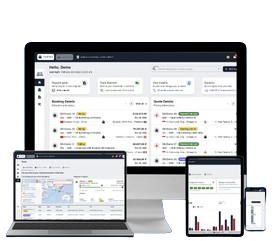
DocShipper Platform
One platform. Your entire supply chain
Sourcing, freight, customs & documents, all centralised, all visible, 24/7.
Packing, wooden packaging rules, and cargo preparation
Strong packing is not optional in Shipping in Thailand. It directly affects cargo safety, insurance claims, and even customs acceptance.
From experience, most cargo damage happens before the vessel even leaves port. Improper crating, weak pallets, or missing labels can create delays and unexpected costs.
Siam Shipping Alert
Validate crating, ISPM 15 marks, and labeling before sealing any container.
Export packing services for fragile and heavy goods
We once inspected a shipment of ceramic sanitary ware packed in thin cartons without internal bracing. After a quick vibration test, cracks appeared immediately. Repacking was mandatory.
If you’re exporting fragile or heavy items, professional export packing for Shipping in Thailand includes:
- Custom wooden crates with internal cushioning
- Shock-absorbing materials and moisture barriers
- Steel strapping for heavy equipment
- Vacuum or VCI packing for corrosion-sensitive goods
Before approving shipment, use this quick packing checklist:
- Are crates sized according to actual weight distribution?
- Is moisture protection adequate for sea transit?
- Are lifting points clearly marked?
- Does packaging comply with destination regulations?
A small investment in proper packing can save you from a full container claim later.
ISPM 15, fumigation, and compliant wooden packaging
Here’s a direct tip. If you use wooden pallets or crates for Shipping in Thailand, verify ISPM 15 compliance before the container is sealed.
The International Plant Protection Convention standards require heat-treated or fumigated wood with official markings. Customs authorities worldwide strictly enforce these rules.
Non-compliant packaging can lead to:
- Container rejection at destination
- Mandatory re-export or destruction
- Fines and storage charges
You should always check for the official IPPC stamp. No stamp, no shipment.
Palletization, labeling, and bill of lading essentials
Did you ever receive cargo with missing or incorrect marks?
In Shipping in Thailand, palletization and labeling are more strategic than they look. Proper marking reduces warehouse errors and speeds up customs inspections.
Make sure you include:
- Consignee and shipper details
- Gross and net weight
- Country of origin
- Handling symbols for fragile or hazardous goods
Your bill of lading must align perfectly with commercial invoices and packing lists. Even minor inconsistencies can trigger customs queries and delays.
Quality control, cargo insurance, and risk management
No matter how optimized your Shipping in Thailand strategy is, risk remains part of international trade. What you control is how you anticipate and mitigate it.
According to guidance from the ICC Incoterms Committee, responsibility and risk transfer depend entirely on the agreed Incoterm. You must align insurance and inspection strategies with that reality.
Siam Shipping Advice
Align inspections, insurance, and Incoterms to reduce exposure and control outcomes.
Inspection and QA/QC before shipping
We once stopped a container at the last minute because carton dimensions did not match the approved specification. That simple measurement avoided a rejected batch in Europe.
For Shipping in Thailand, you should consider:
- Pre-production inspection
- During production checks
- Pre-shipment inspection with AQL sampling
- Container loading supervision
These controls give you factual data before goods leave the country. After departure, corrective actions become far more expensive.
Freight insurance coverage, exclusions, and limits
Here’s the reality. Carrier liability is limited and rarely covers full cargo value.
In Shipping in Thailand, marine insurance typically follows Institute Cargo Clauses A, B, or C. You’ll need to understand what’s excluded, such as insufficient packing or inherent vice.
Before confirming coverage, review this checklist:
- Declared cargo value matches invoice
- Correct Incoterm referenced
- All-risk or named-peril policy selected
- Deductibles clearly stated
Insurance is not just paperwork. It’s your financial shield when something goes wrong at sea.
How a freight forwarder helps you reduce shipping risks
Why do experienced importers rarely manage international freight alone?
Because in complex Shipping in Thailand operations, a freight forwarder coordinates carriers, customs, warehouses, and insurers under one structured plan.
At DocShipper, we integrate:
- Route optimization and carrier vetting
- Documentation review before submission
- Inspection coordination and reporting
- Claims support if damage occurs
You gain visibility, accountability, and faster problem resolution. That’s how you turn risk into controlled exposure.
Working with a Thai freight forwarder: what you can expect
If you’re serious about optimizing Shipping in Thailand, partnering with a local freight forwarder changes your operational comfort level. You move from reactive problem-solving to structured execution.
Let’s break down what you should realistically expect.
Siam Shipping Info
Our Thai freight experts manage carriers, customs, and routing so you operate with clarity and control.
Core services a freight forwarder handles for you
We once onboarded a client who tried to manage trucking, customs, and sea freight separately. After three missed connections and mounting storage fees, coordination became the obvious issue.
In Shipping in Thailand, a forwarder typically manages:
- Carrier booking and rate negotiation
- Export and import customs brokerage
- Warehousing and consolidation
- Freight insurance arrangement
- Door-to-door delivery coordination
You work with one operational contact instead of juggling five service providers.
Choosing routes, transit times, and cost-saving options
Want to reduce costs without sacrificing reliability?
In Shipping in Thailand, route planning is not just about the cheapest ocean rate. You must factor inland haulage, port congestion, vessel frequency, and customs clearance speed.
We compare options side by side for you.
| Option | Transit Time | Cost Level | Best For |
| Direct FCL | Fast | Medium | Large volume, stable schedule |
| LCL consolidation | Moderate | Lower upfront | Small shipments |
| Sea + Air | Hybrid | Higher | Urgent partial cargo |
The right choice depends on your margin, customer expectations, and inventory strategy.
Documents and customs support for imports and exports
Paperwork can stop your cargo faster than any storm.
For Shipping in Thailand, you’ll typically need commercial invoices, packing lists, bills of lading, certificates of origin, and sometimes import licenses or HS code classifications.
Thai Customs procedures require accurate declarations and valuation. Errors can trigger inspections, penalties, or reassessments.
When we handle customs brokerage, you benefit from:
- HS code verification
- Duty and tax estimation
- Pre-clearance documentation checks
- Direct coordination with Thai Customs
You reduce uncertainty and gain smoother border crossings, whether you’re importing into Thailand or exporting abroad.
Conclusion
Shipping in Thailand offers you powerful regional and global connectivity, but only if you manage each step with precision. From container booking to customs clearance, every detail shapes your final cost and delivery performance.
Here are the key takeaways you should remember:
- Choose between FCL, LCL, or break bulk based on volume, risk, and cargo dimensions
- Ensure compliant packing and ISPM 15-certified wooden packaging
- Implement inspections and insurance aligned with your Incoterms
- Coordinate sea freight with inland trucking for full door-to-door efficiency
- Work with an experienced freight forwarder to centralize operations and reduce risk
If you approach Shipping in Thailand strategically, you turn logistics from a cost center into a competitive advantage across ASEAN and beyond.
FAQ | Shipping in Thailand: how to move goods efficiently across the kingdom and ASEAN
Most surprise charges come from poor timing and incomplete paperwork. To reduce these:
- Coordinate **truck pickup with port cut-off** (ask your forwarder for latest receiving time and work backwards).
- Build in **buffer time** for traffic and loading delays, especially from inland cities like Chiang Mai or Khon Kaen.
- Have the **SI, commercial invoice, packing list and VGM** ready before the truck leaves the factory.
- Ask your forwarder to confirm **all potential extra fees** upfront: pre‑pull, storage, demurrage, chassis, waiting time, amendments.
- Use a **single provider** for inland haulage + ocean so one party owns the schedule and penalties.
The same patterns appear again and again:
To avoid this, let your Thai broker **validate HS codes and documents before cargo moves**, not after it hits the border or port.
- **Wrong HS code** or overly generic product description (e.g. “parts” instead of “auto brake pads”).
- **Inconsistent data** between invoice, packing list, and bill of lading (quantities, weights, Incoterms).
- Missing or late **certificates of origin / specific licenses** for regulated goods.
- Under‑ or over‑declared **customs value** versus supporting documents.
- No clear agreement on **who is the importer of record** and who pays duties/taxes.
Capacity and lead times tighten fast around Songkran, New Year, Golden Week (China), and year‑end. Plan differently by:
- Booking **trucks, containers and space** at least 2–4 weeks earlier than usual.
- Avoiding factory loadings and border crossings on or right before **Thai public holidays**.
- Adding **extra days** to your normal transit assumptions for port congestion and customs queues.
- Splitting one big shipment into **two staggered departures** if missing a single date would be critical.
- Locking **cut-off times in writing** with your forwarder and sharing them with all suppliers involved.
Consolidation across suppliers is where shipments often derail. To keep control:
- Nominate **one coordinator** (your forwarder or lead supplier) to manage timing and docs.
- Standardize **carton sizes, pallet patterns and labeling** across all vendors.
- Set **hard delivery deadlines** to the consolidation warehouse, earlier than the port cut-off.
- Require each supplier to send a **pre‑alert** (packing list, dimensions, weights) before delivery.
- Have the consolidator issue a **master packing list** and photo record before container sealing.
You have a few practical options to limit damage:
- Move the shipment into a **bonded warehouse** instead of leaving it under port storage.
- Use bonded time to **correct HS codes, secure missing licenses, or adjust invoices** legally.
- Ask your forwarder to **estimate storage vs. duty/tax impact**, so you choose the cheaper path.
- If delays will be long, explore **partial clearance** (some lines now, some later) if regulations allow.
- Keep a **daily status update** with your broker so you don’t cross free‑time thresholds unnoticed.
Think “engineered protection,” not “more cardboard.” For a cost‑effective setup:
- Ask a local export packer to **design crate/pallet specs** for your exact product and route.
- Use **custom wooden crates or reinforced cartons** only where risk is highest (corners, stacking points).
- Add **internal bracing, foam, or air cushions** to stop movement inside the box.
- Define a **drop/vibration test** or simple handling protocol your suppliers must pass.
- Align packaging specs with **your insurance terms** (insurers often exclude “insufficient packing”).
A sea+air split can protect sales while controlling cost when:
In practice, define with your forwarder:
- You have a **product launch or promotion** and only a portion must arrive for the start date.
- A **production delay** means full sea freight would miss your customer’s deadline.
- Your buyer accepts a **phased delivery**: urgent SKUs by air, replenishment by ocean.
- Margins allow you to absorb a **small air premium** on 10–30% of the volume instead of on 100%.
- **Which SKUs or quantities** go by air vs. sea,
- **Target arrival dates** per batch,
- One **coordinated plan** so both legs (air and sea) still share the same documentation logic.
Need Help with
Logistics or Sourcing ?
First, we secure the right products from the right suppliers at the right price by managing the sourcing process from start to finish. Then, we simplify your shipping experience - from pickup to final delivery - ensuring any product, anywhere, is delivered at highly competitive prices.


Fill the Form
Prefer email? Send us your inquiry, and we’ll get back to you as soon as possible.
Contact Us