In short ⚡
Ocean freight prices are shaped by base ocean freight, surcharges, and operational choices, so the lowest “rate” is rarely the lowest total cost. To control what you pay, structure precise RFQs, compare full landed port costs (including origin/destination charges, fuel, and time-based fees), and align FCL/LCL, routing, and contract type with your volume and risk. In the full guide, you will find detailed cost component breakdowns, market forces behind rate volatility, methods to compare quotes, and practical tactics on shipment mode, routing, and port selection to reduce your real ocean freight spend.We hope you’ll find this article genuinely useful, but remember, if you ever feel lost at any step, whether it’s finding a supplier, validating quality, managing international shipping or customs, DocShipper can handle it all for you!
What drives ocean freight prices and recent rate increases?
Ocean freight prices aren’t “just a number”, they’re the output of capacity, risk, and timing colliding in your supply chain.
If you’ve felt whiplash since COVID, you’re not imagining it, ocean freight pricing and operations shifted fast, and some habits from that period still shape today’s quotes.
We’ve seen importers lock inventory plans based on a cheap rate, then get hit with a revised ocean freight quote once the cargo is gated in.
That’s the moment you realize the quote wasn’t wrong, it was incomplete.
Checklist before you accept any ocean freight quote
- Confirm the Incoterms (EXW, FOB, CIF, DAP) and who pays origin, ocean, and destination legs.
- Ask for a full surcharge list and whether they’re “subject to change”.
- Validate the equipment type (20GP, 40GP, 40HC) and containerization details.
- Check if customs clearance, freight insurance, and warehousing are included or separated.
- Request the validity date and whether the carrier space is actually booked.
Workflow to sanity-check a rate in 10 minutes
Step 1, match Incoterms to your responsibility, shipper vs consignee costs change immediately.
Step 2, split the offer into origin, ocean, and destination, then tag each line as fixed or variable.
Step 3, verify the “trigger events”, rollovers, demurrage, detention, and storage start counting on specific timestamps.
Step 4, confirm your bill of lading instructions and cut-off times, missed cut-offs often look like “price increases”.
Siam Shipping Alert
Request a full cost breakdown to avoid last-minute quote revisions and margin erosion.
Key cost components in an ocean freight quote (base rate, surcharges, hidden fees)
An ocean freight quote is basically a stack of mini-prices, and ocean freight prices jump when one layer changes.
You’ll notice fast that the base rate is only the headline, the rest is where margins and surprises hide.
Here’s a real scenario we see all the time, you negotiate FOB with your supplier, then the factory still bills “local handling”.
Now you’re paying origin charges twice, and your shipping container cost suddenly looks “higher than the market”.
What typically sits inside your ocean freight quote
- Base ocean freight, the carrier linehaul for the container or LCL volume.
- Bunker and fuel-related fees (often labeled BAF), sensitive to fuel and carrier formulas.
- Security and compliance charges (ISPS, documentation), especially on certain lanes.
- Origin charges, pickup, export docs, terminal handling, palletization, consolidation, VGM.
- Destination charges, THC, delivery order, customs brokerage, last-mile delivery, cross-docking.
- Time-based fees, demurrage and detention, the most painful “hidden” cost in practice.
During COVID, carriers and terminals changed cut-offs and appointments constantly, and the clock-related fees exploded when lead time became unpredictable.
That’s why we push clients to treat “free time” like a KPI, not a footnote.
Quick comparison table, what you think you’re paying vs what you’re actually paying
| Line item | Where it happens | Why it changes your ocean freight prices |
| Base rate | At sea | Moves with capacity planning and carrier pricing cycles. |
| THC (origin/destination) | Port terminals | Terminal tariffs shift, congestion adds operational cost. |
| BAF / fuel formulas | Carrier surcharge | Fuel volatility passes through quickly. |
| Documentation / bill of lading fees | Forwarder or carrier | Per shipment, easy to miss when you compare quotes. |
| Demurrage & detention | Port and carrier equipment | Pure time penalty, triggered by delays, holds, or slow pickup. |
From experience, the most expensive “fee” is the one you didn’t model in your inventory management plan.
So when you compare shipping container cost across providers, compare the total landed cost, not the ocean line only.
For references on standardized trade terms that impact who pays what in the quote, we align with ICC Incoterms guidance.
Main market forces behind ocean freight price increases and volatility
Ocean freight price increase cycles rarely come from one cause, they come from stacked shocks, capacity, demand spikes, port productivity, and policy.
COVID was the perfect storm, stop-start factory output, surging consumer demand, equipment imbalances, and port congestion, all at once.
We remember a shipper moving seasonal goods who assumed “blank sailings” were a rumor.
Then the carrier cut capacity, the booking rolled twice, and the retailer paid air freight to protect a launch date, that’s how volatility turns into real cash burn.
The big levers that move ocean freight prices
- Carrier capacity and blank sailings, fewer sailings means higher freight rates.
- Container and chassis availability, equipment shortages push up shipping container cost beyond the ocean leg.
- Port congestion and productivity, slow terminals increase dwell time and time-based fees.
- Demand surges, especially peak season and sudden procurement shifts.
- Regulatory and operational constraints, customs clearance delays, inspections, security measures.
- Geopolitics and routing changes, diversions reshape transit time and capacity.
Here’s the thing, even when the headline rates drop, the operational friction can keep your total cost elevated.
That’s why “cheaper freight” on paper still hurts if your consignee can’t pull containers fast enough.
How to reduce exposure when the market swings
- Build buffer into lead time planning, not into guesswork inventory.
- Use multimodal transport options when ports choke, rail plus truck can save a week.
- Pre-validate harmonized system code and documents to avoid customs holds.
- Align supplier readiness, cargo availability dates drive everything downstream.
For market context, we track how global supply chain disruptions feed into rates and service reliability, and we cross-check with commentary and datasets commonly cited by UNCTAD.
Siam Shipping Info
Model scenarios in advance and secure capacity before peak pressure hits your lane.
Looking for a Reliable Shipping & Sourcing Partner?


How to read ocean freight price trends and spot vs contract rates
Reading ocean freight price trends is less about predicting the future and more about recognizing patterns early.
Once you see how spot and contract behave, you’ll stop reacting to every headline and start making procurement decisions with intent.
During the pandemic, everyone chased spot when contracts failed to guarantee space.
Now we often see the reverse, importers overpay on long contracts because they’re traumatized by 2021, even when service is stable again.
Checklist to interpret ocean freight price trends correctly
- Separate rate movement from service movement, a cheap rate with rollovers is not cheap.
- Track both spot and contract benchmarks on your exact trade lane.
- Watch surcharges and destination costs, not only the ocean line.
- Monitor equipment availability and port dwell time, they forecast operational pain.
- Use the same container type and terms every time you compare data.
Workflow, turn “rate noise” into a decision signal
Step 1, pick two reference lanes that match your exports or imports.
Step 2, record weekly spot, monthly contract offers, and your actual all-in invoices.
Step 3, annotate disruptions from container shipping rates news and port conditions.
Step 4, decide your mix, what volume stays contract, what volume floats spot.
Using container shipping rates news and indexes to track market trends
Container shipping rates news is useful, but only if you treat it like a dashboard, not a verdict on your next shipment.
Ocean freight price trends in the media often reflect a benchmark lane that might not match your port pair, carrier, or service level.
We’ve seen a buyer celebrate a “rates are down” headline, then get a higher quote because their lane depended on a feeder network with tight space.
Different loop, different congestion, different reality.
What to track each week
- Spot index direction for your region, plus variance, not just the average.
- Capacity signals, blank sailings, new vessel deployments, schedule reliability.
- Port congestion indicators that predict dwell time and demurrage risk.
- Fuel movements that flow into surcharges.
If you want a practical starting point for benchmarks, you’ll often see global indexes referenced across the industry, including the Shanghai Containerized Freight Index.
Use it as a compass, then validate with real quotes for your shipper profile.
Siam Shipping Advice
Benchmark your exact port pair and validate with live quotes before adjusting procurement strategy.
Spot, long‑term, and index‑linked contracts: how they shape your ocean freight costs
Your ocean freight costs depend on how you buy freight, spot, long-term contract, or index-linked, and each behaves differently during an ocean freight price increase cycle.
Ocean freight prices also change based on what you’re really buying, price only, or price plus space, equipment, and priority.
A client once insisted on spot only to “stay flexible”.
Peak season hit, the carrier rolled the booking, and the inventory missed a promotion window, flexibility turned into lost revenue overnight.
Comparison table, which pricing model fits which situation
| Option | Best when | Main risk |
| Spot rates | You can adapt routing and timing, and volume is irregular. | Volatility, space risk, and surprise surcharges. |
| Long-term contract | You ship steady volumes and need budget stability for procurement. | Overpaying when the market drops, or weak performance clauses. |
| Index-linked contract | You want transparency tied to an agreed benchmark plus a service premium. | Wrong index selection, and misalignment with your lane reality. |
What we typically recommend when you’re balancing cost and reliability
- Lock a baseline volume on contract to protect core SKUs and fulfillment dates.
- Keep a spot “flex bucket” for non-urgent shipments and opportunistic rates.
- Add performance terms, rollover limits, transit time targets, and clear documentation rules.
- Make customs brokerage and delivery order handling explicit so the consignee isn’t stuck.
When you want to experiment without burning your operation, collaboration matters, you align your supplier, forwarder, and 3PL on cut-offs, docs, and tracking.
That’s also where we step in at DocShipper, we coordinate freight forwarding, customs clearance, and visibility so your next ocean freight quote reflects real execution, not just a theoretical rate.
Siam Shipping Info
Blend contract security with spot flexibility to protect margins and service levels.
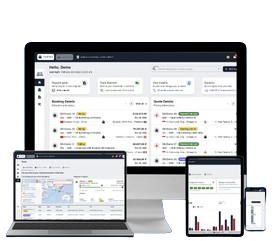
DocShipper Platform
One platform. Your entire supply chain
Sourcing, freight, customs & documents, all centralised, all visible, 24/7.
How to get a competitive ocean freight quote and compare shipping container costs
You do not control the market, but you control your strategy when requesting ocean freight prices. The way you structure your RFQ directly impacts the rates you receive.
If your brief is vague, forwarders will protect themselves with higher buffers. If your data is precise, you gain negotiating power immediately.
- Exact cargo details, HS code, weight, volume, dangerous or non-dangerous
- Preferred Incoterm, EXW, FOB, CIF, DDP
- Ready date and shipping window, flexibility reduces rates
- Origin and destination ports, including final delivery address
- Target transit time, standard or express service
You should always compare quotes on a like-for-like basis. Many importers compare only the base rate and ignore surcharges.
| Cost Component | Forwarder A | Forwarder B | What to Check |
| Ocean Freight | $1,200 | $1,050 | Carrier and transit time |
| BAF / CAF | Included | $150 | Fuel adjustment mechanism |
| Origin Charges | $300 | $450 | THC, documentation, handling |
| Destination Charges | Not included | Included | Risk of hidden fees |
| Total Landed Port Cost | $1,500+ | $1,650 | Real comparable figure |
The cheapest quote on paper is often the most expensive in reality. You must calculate the total landed port cost before making a decision.
At DocShipper, we negotiate directly with carriers and consolidate volumes to secure competitive allocations. You benefit from transparent breakdowns and no surprise destination markups.
- Carrier comparison across alliances
- Routing optimization to avoid congestion
- Clear breakdown of all surcharges
- Pre-alert of potential GRI or PSS increases
If you are launching or scaling, experimentation matters. Test different carriers, sailing days, and consolidation strategies to identify your optimal cost structure.
Siam Shipping Advice
Standardize data and compare total landed port cost before selecting any forwarder.
How shipment choices (FCL/LCL, routes, ports) impact your ocean freight price
Your operational decisions directly influence your ocean freight prices. Container type and routing strategy can shift your costs by thousands of dollars per shipment.
| Option | Best For | Cost Impact | Risk Level |
| FCL 20ft | Dense cargo | Lower per unit at scale | Low handling risk |
| FCL 40ft | High volume | Best economies of scale | Low handling risk |
| LCL | Small shipments | Higher per CBM | Higher damage risk |
| Direct Service | Time sensitive cargo | Higher freight rate | Low delay risk |
| Transshipment | Flexible cargo | Lower base rate | Higher delay risk |
If your cargo fills more than 15 CBM, you should systematically compare LCL versus FCL. In many trades, FCL becomes economically smarter faster than you expect.
Port selection also changes your final invoice. Major hubs often offer lower base freight but higher congestion and storage risks.
- Shanghai vs secondary Chinese ports
- Los Angeles vs Oakland
- Rotterdam vs Antwerp
- Main port vs inland rail terminal
You should analyze total supply chain cost, not just ocean freight. A slightly higher freight rate with a reliable port can reduce demurrage and detention exposure.
We regularly redesign routing strategies for clients facing volatile markets. Through collaboration with carriers and inland operators, we secure cost-stable corridors even during peak seasons.
Smart startups test hybrid models. For example, combining LCL for replenishment and FCL for bulk inventory reduces cash flow pressure.
Siam Shipping Info
Simulate FCL, LCL, and port scenarios to secure cost-stable corridors in volatile seasons.
Conclusion
Ocean freight prices remain volatile, but you are not powerless. Your preparation, negotiation strategy, and shipment design determine your real costs.
- Prepare precise RFQs to obtain accurate and competitive quotes
- Compare total landed port costs, not just base freight
- Test carriers and routing strategies to optimize performance
- Choose between FCL and LCL based on volume economics
- Optimize port selection to reduce congestion risks
- Partner with experts like DocShipper for transparent, negotiated rates
If you want full control over your ocean freight prices, we can manage sourcing, booking, customs, and delivery end to end. You focus on growth, we secure the freight capacity.
FAQ | How to understand and control ocean freight prices in today’s volatile market
There is no universal price per container, but you can get a realistic range quickly if you break it down by lane, equipment, and surcharges. For a standard dry 20ft or 40ft on a common trade (e.g. China–US West Coast, Europe–US East Coast), you’ll typically see all‑in port‑to‑port FCL costs range from a few hundred dollars at market lows to several thousand during tight capacity. The only way to know where you sit on that spectrum is to request detailed, like‑for‑like quotes for your exact ports, dates, and Incoterms, then compare the total landed port cost rather than the headline ocean freight line.
Most of the gap comes from what’s included or excluded—not from “mystery discounts.” One forwarder might bundle terminal handling, documentation, and destination fees, while another strips them out to show a very low base rate. Route design also matters: a slower transshipment option can be much cheaper than a direct service on the same lane. When you see big differences, ask each provider to confirm which origin and destination charges are included, whether fuel and security surcharges are fixed or “subject to change,” and if free time at the terminal is part of the quote.
You can build a quick rough budget by using public spot rate indices for your trade lane as a reference, then layering your own cost drivers. Look up an index that reflects your origin region and destination (for example, Asia–North Europe), add a realistic band on top for your size (small shippers usually pay above the index average), then add typical origin and destination handling ranges for your ports. Finally, factor in local trucking, customs brokerage, and a contingency for potential demurrage or detention so you’re not surprised when the first formal quotes arrive.
The most common trap is underestimating everything that happens outside the sea leg. Low ocean freight often comes with higher or less transparent destination charges, limited free time at port, or strict cut‑offs that, if missed, trigger storage, demurrage, or rollover fees. Another frequent issue is paying local charges twice when responsibilities under Incoterms aren’t clear with your supplier. To avoid that, make sure only one party handles each part of origin and destination, and always request a written breakdown of all charges that could be billed later.
No, and that difference can distort your cost per unit. An FCL rate is usually a flat price per container, so the more you load inside, the lower your cost per unit gets. LCL is priced per cubic meter or per weight/measure, and includes extra handling and consolidation, so the unit cost stays higher. That means a shipment that seems “too small” for a full container on volume can still be cheaper in FCL once you cross a certain CBM threshold, especially on high‑demand lanes where LCL surcharges are aggressive.
Beyond the visible surcharges, several time‑based costs can inflate your final invoice if your cargo doesn’t move as planned:
- Demurrage when your container stays too long inside the terminal before pickup.
- Detention when you hold carrier equipment outside the terminal beyond the free days.
- Storage or yard handling if customs inspections, missing documents, or late payments delay release.
A simple way to protect your budget is to confirm free time in writing, align trucking and customs brokers on earliest pickup dates, and treat these clocks as part of your planning, not as an afterthought.
You generally won’t match the absolute lowest mega‑shipper rates, but you can significantly narrow the gap by leveraging consolidation and predictability. Working with a forwarder who aggregates volumes on your trade lane gives you access to pre‑negotiated allocations that are often cheaper and more stable than one‑off spot bookings. If you also ship on consistent lanes, with accurate and timely cargo information, you become a lower‑risk customer for carriers and forwarders, which translates into better conditions, fewer emergency surcharges, and more willingness to hold a rate for longer.
Read more
Looking for more? Check out these articles.
Need Help with
Logistics or Sourcing ?
First, we secure the right products from the right suppliers at the right price by managing the sourcing process from start to finish. Then, we simplify your shipping experience - from pickup to final delivery - ensuring any product, anywhere, is delivered at highly competitive prices.


Fill the Form
Prefer email? Send us your inquiry, and we’ll get back to you as soon as possible.
Contact Us