In short ⚡
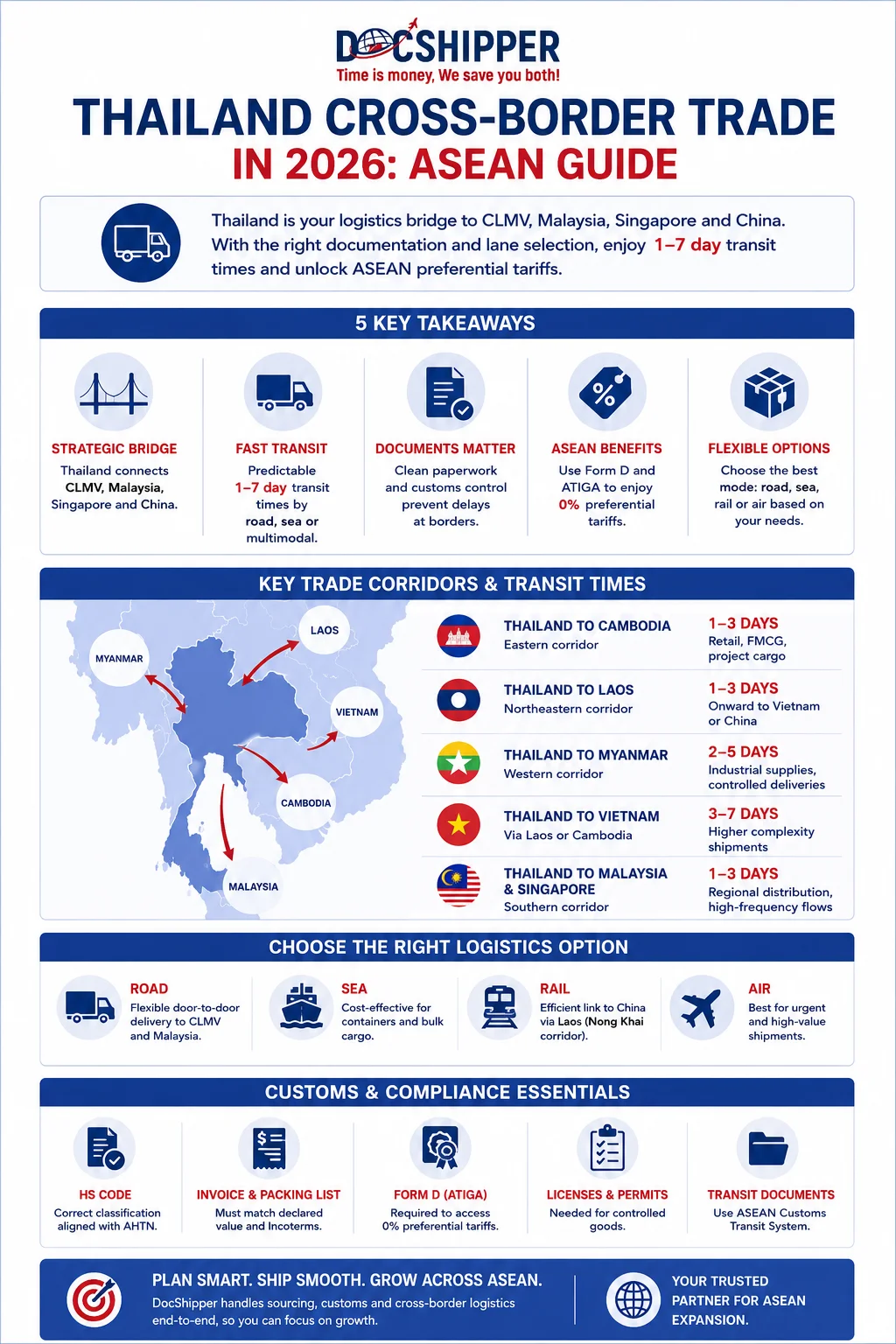
Cross border Thailand shipping uses Thailand as a logistics bridge to move goods by road, sea or multimodal between CLMV countries, Malaysia, Singapore and China, with predictable 1–7 day transit times when documentation, customs, and lane selection are tightly controlled to unlock ASEAN preferential tariffs and avoid delays at specific border crossings.In this article, you will find key trade corridors and transit times, planning workflows and checklists, customs and ATIGA duty rules, plus a comparison of road, sea, rail and air options for cross-border flows via Thailand.
We hope you’ll find this article genuinely useful, but remember, if you ever feel lost at any step, whether it’s finding a supplier, validating quality, managing international shipping or customs, DocShipper can handle it all for you!
How cross border shipping through Thailand powers ASEAN and GMS trade
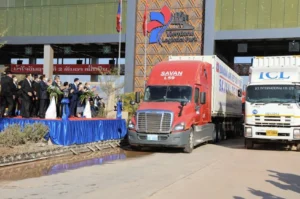
If you’re working with cross border thailand lanes, you’ll notice fast that Thailand isn’t just “another origin or destination”, it’s the hinge that keeps ASEAN and the Greater Mekong Subregion moving.
From experience, once your cargo hits Thailand’s road network, you can connect to CLMV markets, ports, and air hubs with predictable lead time, if you plan the paperwork, the routing, and the handoffs like a real supply chain project, not a simple booking.
We’ve seen importers get stuck not because the truck couldn’t move, but because one line on the commercial invoice didn’t match the packing list, or the cargo manifest didn’t reflect palletization reality after consolidation.
Here’s the thing, when you use Thailand as your logistics bridge, you’re managing freight forwarding, customs clearance, and transportation reliability all at once.
- Trade bridge: Thailand connects CLMV production and consumption to deep sea and air gateways, ideal for multimodal transport and tighter inventory management.
- Manufacturing + distribution: you can combine sourcing, warehousing, and cross-docking near Bangkok or the Eastern Economic Corridor, then dispatch to borders just-in-time.
- Flexibility: when ocean schedules slip, you can pivot to road plus sea, or road plus air, while keeping tracking and milestones clear.
Step-by-step workflow (how we typically structure a cross border shipping move via Thailand)
1) Confirm Incoterms, cargo readiness date, and who controls customs brokerage on each side.
2) Validate docs, commercial invoice, packing list, HS codes, origin claims, and insurance value.
3) Choose lane and mode, cross border trucking Thailand direct, or consolidation to a distribution center then dispatch.
4) Book truck, arrange pickup, palletization, labeling, cargo photos, then seal control where relevant.
5) Execute export clearance, border handoff, transit, then import clearance and last-mile delivery.
Checklist (before you commit your shipment)
- Incoterms confirmed in writing, plus who pays duties, tariffs, and VAT.
- Commercial invoice matches packing list, weights, carton count, and commodity description.
- Cross-border permits and driver documentation checked for your thailand border crossing.
- Freight insurance aligned with your risk tolerance and cargo value.
- Tracking and escalation contacts set, especially for weekends and border peak hours.
Siam Shipping Alert
Secure your cross-border plan with expert document control, brokerage coordination, and lane management through Thailand.
Why Thailand became a strategic crossroad for cross border trucking and trade
Cross border thailand works because Thailand gives you density, roads, and logistics services in one place, so you’re not improvising a fragile chain of subcontractors.
You can run cross border shipping with fewer breaks in responsibility, especially when you combine pickup, consolidation, warehousing, and customs clearance under one coordinated plan.
A quick real-world scenario we handled, a buyer in Phnom Penh needed urgent replenishment stock, but the supplier in Samut Prakan finished late and missed the planned linehaul.
We switched to overnight cross-docking near Bang Na, reissued the packing list after carton relabeling, then pushed a cross border trucking thailand dispatch before dawn, that one tactical move saved two days of lost shelf availability.
You’ll also benefit from Thailand’s role in ASEAN connectivity planning, and you’ll see guidelines and facilitation efforts referenced by the ASEAN Secretariat when you map regional trade integration.
| What you need | Why Thailand helps | What can still break |
| Reliable linehaul capacity | Large trucking ecosystem and predictable domestic legs to borders | Peak seasons, driver shortages, permit gaps |
| Document discipline | Experienced customs brokerage and mature freight forwarding market | Invoice value mismatch, HS misclassification, missing supporting docs |
| Multimodal options | Road to port or airport, plus consolidation and containerization | Mode switching without updating milestones, cost surprises in quotation |
Key trade corridors, border crossings and partner countries you should know
When you plan cross border thailand routes, you don’t just pick “Thailand to Cambodia”, you pick a corridor, a border point, and a compliance path that matches your cargo profile.
We’ve seen the same product sail through one thailand border crossing and get delayed at another, simply because the receiving side asked for a different supporting document set for the same HS code.
If you’re building cross border services around Thailand, these are the partner countries and directions you’ll keep coming back to, Cambodia, Laos, Myanmar, and Vietnam, plus onward links to Southern China and Malaysia.
- Eastbound: Thailand to Cambodia and Vietnam, often used for retail distribution and time-sensitive replenishment shipments.
- Northeast: Thailand to Laos, then onward to Vietnam or China, useful when you want road connectivity and controlled lead time.
- Westbound: Thailand to Myanmar, sensitive to local procedures and lane-specific restrictions.
- Southbound: Thailand to Malaysia and Singapore, common for regional distribution centers and higher-frequency shipments.
Mini routing story you’ll recognize
A shipper once tried to “save time” by changing the lane last minute, same exporter, same consignee, different crossing, and the cargo got held because the cargo manifest and trucking documents still referenced the original border point.
That’s why we lock the lane early, then manage booking, tracking, and document control like a production process, not an afterthought.
If you want help designing the right corridor and handoff model, we can run the full operation as your 3PL or 4PL, with pickup, consolidation, customs brokerage coordination, and delivery scheduling via DocShipper cross-border logistics services.
Looking for a Reliable Shipping & Sourcing Partner?
Planning cross border trucking from Thailand to CLMV and beyond
Planning cross border thailand trucking is where most shipments either become smooth and repeatable, or turn into a weekly firefight.
You’re coordinating vehicle availability, border cutoffs, customs clearance on both sides, and the reality that a “one-day transit” can become two if you miss a document detail or hit a congestion window.
We’ve had clients with just-in-time inventory management who thought the main risk was transportation, but the real bottleneck was customs compliance, especially when commodity descriptions were too vague for the officer reviewing the file.
Step-by-step workflow (planning a truck move from Thailand to CLMV)
1) Confirm cargo type, hazardous materials status, weights, dimensions, and pallet count.
2) Validate export and import requirements, invoice, packing list, certificates, and any permits.
3) Choose border crossing based on consignee location, lane reliability, and clearance behavior.
4) Build the schedule with buffer, include loading, border dwell time, and last-mile delivery window.
5) Lock quotation, define accessorials, waiting time, storage, and re-delivery rules.
Checklist (before dispatch)
- Final commercial invoice and packing list signed off, no last-minute edits.
- Clear Incoterms responsibilities for duties, VAT, and who handles customs brokerage.
- Truck type confirmed, curtain side, box, reefer, or flatbed, aligned with cargo protection.
- Loading plan and photos prepared, seal number recorded if applicable.
- Escalation plan set for border delays and rejected documents.
Siam Shipping Advice
Let us structure your trucking schedule, buffer times, permits, and clearance strategy before dispatch.
Main Thailand border crossings, road routes and transit times by lane
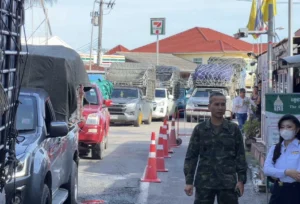
For cross border thailand trucking, you’ll choose your lane based on consignee location, border processing habits, and how tight your lead time really is.
We once supported a consolidated shipment where the buyer insisted on “fastest route”, but the lane with the shortest driving time had the longest queue, the result was a full day lost, plus extra warehousing fees because the distribution center missed the delivery appointment.
Below is a practical comparison you can use for early planning, then we refine after we confirm your cargo, paperwork, and delivery constraints for cross border shipping.
| Lane direction | Typical border area | Indicative transit (door-to-door) | Common use cases |
| Thailand to Cambodia | Eastern corridor thailand border crossing | 1-3 days depending on clearance and delivery city | Retail replenishment, FMCG, project cargo in pallets |
| Thailand to Laos | Northeastern corridor | 1-3 days depending on onward route | Onward trucking to Vietnam, regional distribution |
| Thailand to Myanmar | Western corridor | 2-5 days sensitive to local procedures | Industrial supplies, controlled deliveries |
| Thailand to Vietnam (via Laos or Cambodia) | Multicountry corridor | 3-7 days depending on borders crossed | Higher complexity shipments, planned schedules |
- Tip you can use immediately: lock your border and delivery appointment first, then reverse-plan pickup and loading time.
- Operational reality: cross border trucking Thailand lanes live and die by document readiness, not by horsepower.
What you must prepare before a cross border Thailand trip by truck
Before your cross border thailand truck even leaves the shipper, you need to treat documentation and compliance like part of the transport itself.
You can have a perfect truck, a perfect route, even a perfect quotation, and still lose 24 hours because your billable weight doesn’t match the packing list after last-minute repalletization.
One situation we see a lot, a supplier loads “extra cartons” as a courtesy, then your commercial invoice and packing list no longer reconcile, customs flags it, and the whole shipment gets held while you chase revisions across time zones.
- Shipping documents: commercial invoice, packing list, cargo manifest, and any certificates required by the destination.
- Trade terms: Incoterms clarity, who owns export clearance, import clearance, and duties.
- Cargo readiness: palletization plan, labeling, photos, and if needed, freight insurance coverage.
- Transport plan: booking confirmation, pickup window, border cutoff, and last-mile delivery appointment.
- Controls: tracking milestones, escalation contacts, and a plan for inspections or rework.
Step-by-step workflow (your pre-departure “ready to roll” routine)
1) Freeze final quantities, weights, and carton count, no changes after signoff.
2) Align invoice, packing list, and cargo description, then confirm HS code logic.
3) Confirm truck type and loading method, then record seal number if used.
4) Pre-check border and customs requirements for the receiving country, especially for controlled goods.
5) Dispatch with tracking, and keep a digital document pack ready for rapid sharing.
If you want this handled end-to-end, we run cross border services with document validation, pickup coordination, consolidation, and lane management, so you stay focused on sales and suppliers while we keep the cargo moving.
DocShipper Platform
One platform. Your entire supply chain
Sourcing, freight, customs & documents, all centralised, all visible, 24/7.
Customs, duties and compliance for cross border services in Thailand
When you manage cross border thailand flows, customs is where profit is protected or lost. You need to align Thai regulations with CLMV counterparts before your truck even approaches the checkpoint.
Thailand operates under the ASEAN Harmonized Tariff Nomenclature, but each neighboring country applies its own valuation practices and risk controls. You must treat customs as a regional strategy, not a single-country task.
- Correct HS classification aligned with AHTN and verified with Thai Customs.
- Commercial invoice and packing list matching declared value and Incoterms.
- Form D to benefit from ASEAN Trade in Goods Agreement preferential tariffs.
- Import and export licenses for controlled goods such as food, cosmetics, electronics or chemicals.
- Transit documents under the ASEAN Customs Transit System when moving beyond Thailand.
If you apply ATIGA correctly, many intra-ASEAN tariffs drop to 0% duty. However, you must prove origin with compliant documentation and regional value content calculations.
| Country | Main Authority | Common Risk Area | Typical Clearance Time |
| Thailand | Thai Customs Department | Undervaluation, wrong HS code | 1 to 2 days |
| Laos | Lao Customs | Transit bond issues | 1 to 3 days |
| Cambodia | GDCE | Informal fees, document mismatch | 2 to 4 days |
| Myanmar | Customs Department Myanmar | License requirements | 2 to 5 days |
| Vietnam | Vietnam Customs | Post-clearance audit | 1 to 3 days |
You should also anticipate non-tariff measures such as product registration, sanitary permits and labeling compliance. We support you with pre-shipment compliance audits to avoid border immobilization and storage penalties.
Siam Shipping Info
Optimize HS codes, Form D eligibility, and valuation strategy with pre-shipment compliance audits across Thailand and CLMV.
Practical options to ship across Thailand’s borders: road, sea and multimodal
Your transport mode directly impacts cost, transit time and customs complexity. Thailand gives you access to road corridors, deep-sea ports and multimodal rail links connecting the Greater Mekong Subregion.
- Cross border trucking for Thailand to Laos, Cambodia, Myanmar and Malaysia.
- Short sea shipping via Laem Chabang or Bangkok Port to Vietnam and beyond.
- Multimodal rail-road through Nong Khai linking to China via Laos.
- Sea-air solutions combining regional ports and Bangkok Suvarnabhumi Airport.
Road freight is the most flexible for CLMV distribution, especially for FMCG and industrial cargo. You benefit from faster door-to-door control but must manage bilateral transport permits.
| Mode | Best For | Cost Level | Transit Speed |
| Road | Thailand to CLMV direct delivery | Medium | Fast |
| Sea | Bulk and containerized cargo | Low | Medium |
| Rail Multimodal | China-ASEAN flows | Competitive | Medium to Fast |
| Air | High-value or urgent cargo | High | Very Fast |
If you plan expansion under the ASEAN Economic Community framework, multimodal solutions unlock regional scale advantages. We design optimized routes combining customs clearance, bonded transit and final-mile distribution.
Your choice should depend on cargo type, Incoterms, cash flow tolerance and customer lead time. We simulate total landed cost before you commit to a lane.
Siam Shipping Advice
Compare road, sea, rail, or multimodal solutions with a full cost and transit simulation before booking.
Conclusion
To succeed in cross border thailand operations, you must think regionally and execute locally. Compliance, documentation and route design define your margin.
- Align HS codes and origin documents to unlock ASEAN preferential tariffs.
- Prepare for non-tariff barriers across CLMV markets.
- Select the right transport mode based on total landed cost, not only freight rate.
- Leverage ASEAN Economic Community frameworks to scale regionally.
- Work with an integrated partner like DocShipper to control sourcing, customs and distribution end-to-end.
If you want to secure your ASEAN expansion, we structure your supply chain with full operational control. You focus on growth, we handle the borders.
FAQ | Cross-border Thailand: how to move goods across ASEAN borders smoothly and legally
Think of the decision as a balance between lead time, cargo value, and volume. For urgent, high-value goods or launches with a fixed date, combining Thailand road legs with air or fast sea often protects revenue better than saving a few dollars on freight. For stable, repeat orders with predictable demand, full road or road+sea via Laem Chabang usually wins on cost. The pivot point is when a delay of a few days costs you more in penalties, stock-outs, or lost sales than the extra transport spend, in that case, you upgrade the mode for at least the “bottleneck” leg.
You need to freeze and communicate the transport setup as clearly as the cargo details. Make sure your booking, manifest, and border documents all reflect the same truck type (box, curtain side, flatbed, reefer), license plate, and seal number when used. Any last-minute switch of vehicle should trigger a micro-review by your broker or 3PL, who updates the manifest and pre-alert before the truck reaches the checkpoint. That extra 15 minutes of coordination can easily save you a full day at the border.
The recurring problems are usually very basic: vague product descriptions like “spare parts” or “samples”, HS codes copied from old shipments without rechecking, and invoices that don’t match the actual packing after repacking or adding “free of charge” items. Another frequent trap is misusing ASEAN Form D, either with incomplete origin proof or applying it to products that don’t meet the regional value content. A quick pre-clearance review of HS, descriptions, quantities and origin proof before loading eliminates most of these headaches.
Customs in Thailand and CLMV still expect a customs value, even when the commercial invoice shows zero for promotionals. You should list those items separately with a realistic value for customs purposes and ensure they appear consistently on the invoice and packing list. If you mix sale goods and free items, clearly label them as such but maintain a declared value for all, so the officer can assess duties and taxes without assuming undervaluation or concealment.
Treat this as an escalation, not a routine query. First, have your broker or 3PL clarify in writing exactly which regulation or internal rule the officer is applying, so you know whether it’s a hard requirement or a negotiable interpretation. Then you gather and send the additional documents (product specs, certificates, licenses) through a single channel only, avoiding multiple versions. For recurring lanes, record these “surprise” requirements by border and HS code, so you can prepare that supporting doc set upfront on the next shipment and avoid repeat disruption.
Border posts and customs offices often run on reduced hours or close entirely on weekends and national holidays, which can turn a one‑day delay into three. When you build your schedule, you should always check holiday calendars on both sides of the border and treat Fridays and eves of holidays as high-risk days for crossing. The safest approach is to plan for the truck to arrive at the checkpoint early in the week, or at least 24 hours before any known closure window, so your cargo isn’t sitting in a queue with storage and security risk.
Read more
Looking for more? Check out these articles.
Need Help with
Logistics or Sourcing ?
First, we secure the right products from the right suppliers at the right price by managing the sourcing process from start to finish. Then, we simplify your shipping experience - from pickup to final delivery - ensuring any product, anywhere, is delivered at highly competitive prices.
Fill the Form
Prefer email? Send us your inquiry, and we’ll get back to you as soon as possible.
Contact Us