In short ⚡
Logistics demand is the total “pull” your operations place on freight, warehousing, and last‑mile delivery capacity, combining shipped volume with volatility, service level, and the exact timing customers expect orders to move. Understanding, measuring, and forecasting logistics demand helps you avoid premium transport costs, warehouse congestion, tracking gaps, and broken delivery promises.In this article, you will find clear definitions of logistics demand, key forces reshaping it in e‑commerce, practical forecasting methods from classical models to AI, and step‑by‑step guidance to build demand‑driven logistics across freight, warehousing, last mile, and omnichannel networks.
We hope you’ll find this article genuinely useful, but remember, if you ever feel lost at any step, whether it’s finding a supplier, validating quality, managing international shipping or customs, DocShipper can handle it all for you!
What is logistics demand and why does it matter for your business?
Logistics demand is the total “pull” your operations place on freight, warehousing, and delivery capacity, and you’ll feel it first when lead times stretch and carriers stop answering fast.
Here’s the thing, if you don’t name it and measure it, you end up paying for it twice, once in premium transport and once in customer churn.
From experience at DocShipper, you’ll notice fast that logistics demand isn’t just volume, it’s volatility, service level, and the exact moment your customers expect the package to move.
That’s why we treat logistics demand like a control tower metric, not a vague “busy season” feeling.
Quick checklist to see if logistics demand is already hurting you:
- You’re switching from sea to air “just this once”, and it keeps happening.
- Your warehouse hits congestion at predictable hours, but you still staff reactively.
- Your tracking updates go silent between handoffs, and support tickets spike.
- Your supplier ship dates slip, and your inbound plan collapses downstream.
- You can’t quote delivery promises with confidence, especially for promotions.
Simple workflow you can use this week:
1) Map where demand “shows up” (inbound, storage, outbound, returns). 2) Quantify peaks (daily cutoffs, promo weeks, regional surges). 3) Match each peak to a constraint (dock doors, linehaul space, last mile capacity). 4) Lock a playbook (pre-book, split shipments, overflow storage, alternate modes). 5) Review weekly and adjust with fresh order and supplier data.
Siam Shipping Info
Get a fast operational audit and turn volatility into a controlled, bookable plan with DocShipper.
Defining logistics demand across freight, warehousing, and last mile
Logistics demand covers three different arenas, and mixing them up is how budgets get burned.
You might have steady container volumes, but chaotic last mile drops, or the reverse.
Think of it like this, freight demand is about transport capacity and schedules, warehousing demand is about space and throughput, and last mile demand is about speed, density, and proof-of-delivery.
When you align the three, you stop firefighting and start negotiating from a position of control.
- Freight: lanes, modes, sailing frequency, airport uplift, customs clearance windows.
- Warehousing: pallet positions, pick faces, labor hours, value-added services like kitting.
- Last mile: delivery slots, failed deliveries, returns, tracking event quality.
Micro-story, a retail importer came to us after launching a flash sale, inbound containers arrived “on time”, yet orders shipped late because the 3PL’s pick lines couldn’t absorb the spike.
We split inbound flows, reserved overflow storage, and re-sequenced inbound arrivals to protect outbound SLAs, the result was fewer missed cutoffs and cleaner tracking events.
When you work with DocShipper, we connect these pieces, freight forwarding, warehousing options, and delivery orchestration, so you don’t optimize one leg while the other two collapse.
| Area | What “demand” really means | What you measure | Common hidden risk |
| Freight | Space and schedule reliability | TEU/CBM, booking lead time, dwell time | Rolling cargo when allocations tighten |
| Warehousing | Space + throughput (not just storage) | Pallet/day, picks/hour, dock-to-stock time | Congestion that delays outbound waves |
| Last mile | Service level by zone and time window | On-time %, first-attempt success, scan rate | Tracking gaps at handoffs |
Siam Shipping Advice
Align the three arenas with one coordinated execution plan and negotiate from strength, not urgency.
Key forces that shape logistics demand in the digital and e-commerce era
Logistics demand rises with e-commerce, but what really changes is the shape of demand, more SKUs, more parcels, more returns, more urgency.
You’re no longer shipping “weekly replenishment”, you’re shipping hundreds of micro-promises to end customers.
This is where on demand delivery logistics enters the picture, customers expect same day or next day, with live tracking and narrow delivery windows.
And if your network can’t flex, you’ll either overpay for speed or underdeliver on expectations.
From what we see across the logistics industry, technology is the accelerator, expanded warehousing near demand centers, robotics to stabilize labor throughput, and cloud platforms to keep data consistent across partners.
Even small upgrades, like logistics apps for drivers, wearables for pickers, or IoT sensors for temperature and shock, can raise scan quality and reduce exceptions.
Micro-story, one brand told us “our deliveries are late”, but the real issue was that the carrier scans happened only at depot in the evening.
We introduced a tighter milestone plan and app-based proof-of-pickup, and suddenly customer support tickets dropped because tracking became believable.
One framework that helps is to separate demand drivers you can influence from those you can only absorb, and align it with guidance you’ll often see referenced by bodies like APICS in planning best practices.
Checklist, forces you should watch monthly:
- Promo calendar impact on order spikes and cutoffs.
- SKU proliferation, especially slow movers that still consume pick faces.
- Returns rate and reverse logistics workload.
- Regional demand shifts driven by ads and marketplace ranking.
- Carrier capacity and surcharge behavior in peak periods.
Siam Shipping Info
Stress-test your network monthly against these forces before peak season exposes hidden constraints.
Looking for a Reliable Shipping & Sourcing Partner?


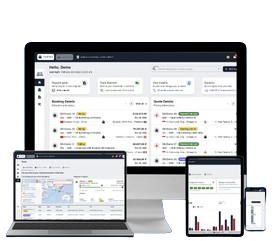
DocShipper Platform
One platform. Your entire supply chain
Sourcing, freight, customs & documents, all centralised, all visible, 24/7.
How to forecast logistics demand with modern methods and data
Forecasting logistics demand isn’t about guessing volumes, it’s about predicting constraints, where you’ll run out of space, labor, or transport capacity first.
If your forecast can’t translate into bookings, labor plans, and buffer stock decisions, it’s not a forecast, it’s a spreadsheet ritual.
This is where demand planning logistics becomes operational, you connect sales signals to shipment plans, then to warehouse throughput and delivery promises.
At DocShipper, we help you turn that signal chain into actions, booking strategies, supplier readiness checks, and the right mode mix.
Step-by-step forecasting workflow (practical, not academic):
1) Gather signals (orders, promos, supplier ETDs, marketplace trends). 2) Convert to logistics units (CBM, pallets, parcels, delivery zones). 3) Apply lead times by Incoterm and lane. 4) Stress-test capacity (warehouse throughput, carrier allocations, last mile SLAs). 5) Decide actions (pre-book, split, defer, reposition inventory). 6) Monitor weekly with exceptions and reforecast.
Siam Shipping Advice
Turn projections into capacity reservations before constraints turn into premium costs.
Core indicators and data sources that signal future logistics activity
Your logistics demand indicators live in multiple systems, and the trick is to reconcile them before they contradict each other in operations.
Sales might look flat while inbound explodes because suppliers pulled production forward, you’ve probably seen that kind of mismatch.
- Commercial signals: promo calendar, pre-orders, marketplace ranking changes, paid media spend.
- Supply signals: supplier production status, inspection dates, booking requests, ready-to-ship notices.
- Transport signals: carrier blank sailings, rate movements, port congestion, cutoff changes.
- Warehouse signals: inbound appointments, dock schedules, labor roster, pick rate trends.
- Last mile signals: parcel volume by zone, first-attempt delivery rate, scan compliance.
Micro-story, an importer shared a “perfect” forecast, then we noticed their supplier had quietly changed packaging, cartons got bigger, CBM jumped, and suddenly they were short on container space.
We corrected the master carton dimensions, re-ran the load plan, and avoided a last-minute LCL scramble.
Checklist, your minimum data set for reliable demand planning logistics:
- Order forecast by SKU, channel, and region.
- Master carton and pallet specs, kept up to date.
- Supplier lead times, including inspection and consolidation time.
- Incoterms and responsibility split (pickup, export, import, delivery).
- Warehouse throughput limits and cutoffs.
- Carrier performance by lane and seasonality.
Siam Shipping Alert
Validate carton specs and supplier signals before confirming space with carriers.
From classical models to AI: practical approaches to logistics demand prediction
To predict logistics demand, you don’t need fancy AI on day one, you need a model you’ll actually use and update.
Then, once your data stops lying, automation becomes worth it.
Classical approaches still work well, moving averages for stable SKUs, seasonal indices for predictable peaks, and scenario planning for promos.
AI helps when you have many variables, like multi-channel demand, weather effects on delivery, or marketplace-driven volatility.
Micro-story, a client tried a machine-learning forecast, but their on-time supplier dates were unreliable, the model learned the wrong lesson and underbooked space.
We fixed the input first, added inspection milestones and supplier scorecards, then the forecast finally stabilized enough to support capacity reservations.
| Approach | Best for | What you need | Typical pitfall |
| Moving average, seasonality | Stable replenishment flows | Clean shipment history | Misses promo-driven spikes |
| Scenario planning | Promotions, launches, peak season | Promo calendar and constraints map | Too optimistic on lead times |
| AI and machine learning | High-SKU, multi-channel volatility | Integrated data across systems | Garbage-in, garbage-out |
Checklist, how you choose the right method quickly:
- If volumes are stable, start classical and focus on exception management.
- If promos drive chaos, build scenarios and pre-book capacity early.
- If you run omnichannel at scale, invest in AI only after data governance.
- If delivery promises matter most, forecast by zone and cutoff, not just total volume.
And yes, if you’re working with an on demand logistics company model, your prediction must include delivery-time promises, courier capacity, and scan-level tracking quality, not just shipment counts.
This is exactly where demand-driven logistics solutions for retail become practical, you plan inventory positioning, cross-dock options, and fast fulfillment lanes together, so your “demand forecast” becomes a service-level plan.
Siam Shipping Advice
Clean inputs first, align supplier reliability and milestones before investing in advanced AI forecasting.
How on-demand logistics transforms service levels and customer expectations
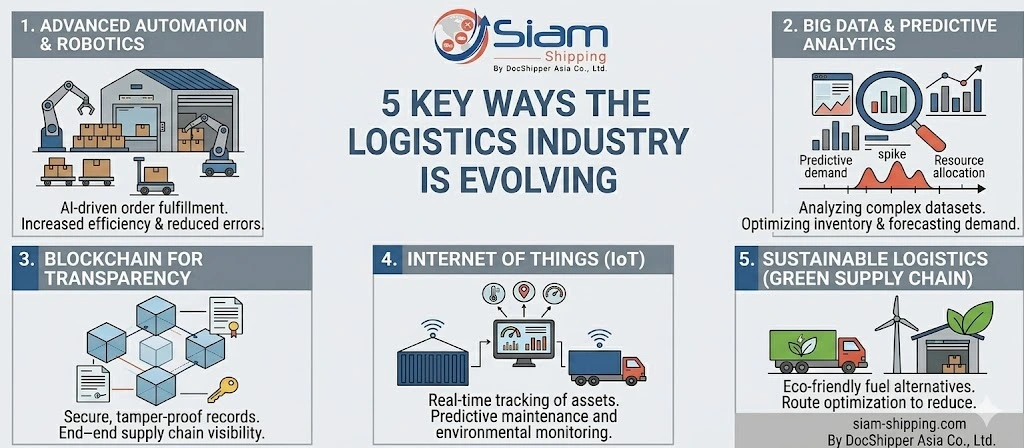
On-demand models are reshaping logistics demand by shifting from forecast-push to real-time pull execution. You are no longer competing on price alone, you are competing on delivery speed, transparency, and flexibility.
E-commerce growth, same-day expectations, and marketplace competition force you to operate with near-instant fulfillment logic. Customers expect accurate tracking, dynamic delivery slots, and zero friction returns.
- Expanded urban warehousing to position inventory closer to end customers and reduce last-mile distance.
- Robotics and automated picking systems to increase order processing speed and reduce labor dependency.
- Drones and autonomous delivery pilots to test faster last-mile coverage in dense or remote areas.
- Cloud-based TMS and WMS platforms to centralize data and enable real-time coordination.
- Logistics mobile apps to give customers live tracking and delivery control.
- Wearables and IoT sensors to monitor inventory accuracy, shipment condition, and fleet performance.
When you deploy these technologies correctly, you compress order-to-delivery cycles from days to hours. You also reduce error rates and increase delivery predictability.
| Technology | Operational Impact | Customer Benefit |
| Robotic picking | Higher throughput per hour | Faster dispatch |
| IoT shipment tracking | Real-time visibility | Live delivery updates |
| Cloud TMS | Dynamic route optimization | More accurate ETA |
| Micro-fulfillment centers | Reduced last-mile distance | Same-day delivery options |
You must understand that service level is now data-driven, not promise-driven. If your systems are not synchronized, your brand credibility suffers instantly.
At DocShipper, we integrate supplier coordination, freight execution, and last-mile solutions into one synchronized workflow. You gain end-to-end visibility without managing multiple intermediaries.
Siam Shipping Info
Synchronize freight, warehousing, and last mile data to protect brand credibility and real-time visibility.
Building demand-driven logistics for retail, e-commerce, and omnichannel networks
Demand-driven logistics means you align inventory, transport capacity, and fulfillment operations with real consumption signals. You stop reacting late and start anticipating volume spikes.
Retail and omnichannel networks require synchronized flows between suppliers, warehouses, marketplaces, and physical stores. If one node fails, your entire fulfillment promise weakens.
- Step 1: Consolidate sales data from marketplaces, POS systems, and B2B channels.
- Step 2: Segment SKUs by velocity, margin, and seasonality.
- Step 3: Position safety stock strategically across regional warehouses.
- Step 4: Secure flexible freight capacity for peak periods.
- Step 5: Implement real-time tracking dashboards for operational control.
You should treat warehousing as a strategic lever, not a storage cost center. Distributed inventory reduces delivery lead time and improves resilience against disruption.
| Model | Inventory Location | Best For |
| Centralized warehouse | Single national hub | Low SKU complexity |
| Regional distribution centers | Multiple domestic hubs | Fast-growing e-commerce |
| Micro-fulfillment centers | Urban proximity | Same-day delivery |
You also need strong supplier alignment, especially when sourcing from Asia. Production delays directly amplify downstream logistics volatility.
We help you bridge sourcing and distribution through supplier audits, quality control, freight booking, and customs clearance coordination. This integrated approach strengthens your supply chain agility across continents.
Conclusion
Logistics demand is evolving under the pressure of e-commerce acceleration and digital transparency. You must adapt your infrastructure, technology, and partnerships accordingly.
- You need real-time data integration across freight, warehousing, and last mile.
- You should invest in robotics, IoT, and cloud platforms to increase operational speed and accuracy.
- You must position inventory closer to consumption zones to meet faster delivery expectations.
- You should secure flexible transport capacity to absorb seasonal peaks.
- You benefit from a single logistics partner capable of managing sourcing, shipping, and distribution under one coordinated strategy.
At DocShipper, we design logistics systems aligned with your growth objectives and customer expectations. Your competitive advantage depends on how effectively you master modern logistics demand.
FAQ | Logistics demand: how to understand, forecast, and meet today’s supply chain needs
A simple way is to trace where delays first appear. If containers depart late or get rolled, you have a freight capacity or booking lead time issue. If inbound is on time but orders wait on shelves or docks, the bottleneck is warehousing throughput or labor planning. If orders leave the warehouse on schedule but customers complain about late or “lost” parcels, your last mile network, scan discipline, or delivery density is the root cause. The key is to tag every delay to a specific step, not just the final delivery date.
You need to treat every promo as a mini “project” for logistics, not just a marketing event. Before launch, ask for a realistic order volume range, then translate it into containers, pallets, and parcels by day and region. Share this with your 3PLs and carriers, pre-book freight space, and lock extra warehouse capacity or extended shifts for the planned peak days. Finally, tighten tracking milestones and cutoffs during the event so you can react fast if any node (supplier, port, warehouse, or courier) starts to slip.
The most common mistake is assuming speed will “fix” structural issues. If your product data, packaging specs, and stock accuracy are wrong, an on-demand carrier will only move bad orders faster. Another frequent error is not reserving capacity for peak windows, then discovering that “on demand” still has limits when everyone is busy. To avoid this, you should stabilize master data, align lead times with reality, and negotiate clear surge rules (volumes, zones, time slots) before relying on instant fulfillment.
In this case, you don’t just forecast volumes, you forecast supplier reliability. Start by tracking each supplier’s promised vs. actual ship dates and any changes to carton dimensions or packing configurations. When you detect a pattern of delays or size changes, adjust your planning assumptions per supplier, not globally. It’s often worth introducing simple supplier scorecards and mandatory notification rules for any packaging change, so you can re-run load plans and warehouse capacity models before cargo hits the network.
The best approach is to target one painful, measurable issue. For example, if you lose high-value or temperature-sensitive goods, start with IoT trackers or condition sensors on only those SKUs or lanes. If picking errors are your main cost, pilot wearables for a single fast-moving zone and compare pick accuracy and time per order against the old process. By looking at one KPI improvement (claims, mispicks, or dwell time) you can decide quickly whether to scale or stop, instead of deploying gadgets everywhere.
Instead of locking into oversized long-term facilities, combine a core warehouse footprint with flexible options. You can keep base stock in a central or regional hub and use short-term overflow storage, pop-up facilities, or 3PL shared warehouses for peak periods or new markets. This way, you align fixed costs with stable demand and cover volatility with variable capacity. The crucial step is to define clear thresholds: at what forecasted volume or service level requirement you activate extra space, and when you release it again.
AI becomes useful when three conditions are met: your data from sales, suppliers, freight, and warehouses is reasonably clean and connected; your demand patterns are complex (multi-country, multi-channel, heavy promo influence); and you are ready to act operationally on what the model predicts (pre-book space, reposition stock, or adjust delivery promises). If you can’t yet trust your basic lead times, carton data, or shipment history, it’s smarter to improve those foundations first, using simpler models and strong exception management.
Read more
Looking for more? Check out these articles.
Need Help with
Logistics or Sourcing ?
First, we secure the right products from the right suppliers at the right price by managing the sourcing process from start to finish. Then, we simplify your shipping experience - from pickup to final delivery - ensuring any product, anywhere, is delivered at highly competitive prices.


Fill the Form
Prefer email? Send us your inquiry, and we’ll get back to you as soon as possible.
Contact Us