Airports in Thailand: Guide for 2026

  • admin 16 Min
  • Published on September 14, 2019 Updated on May 12, 2026
img

In short ⚡

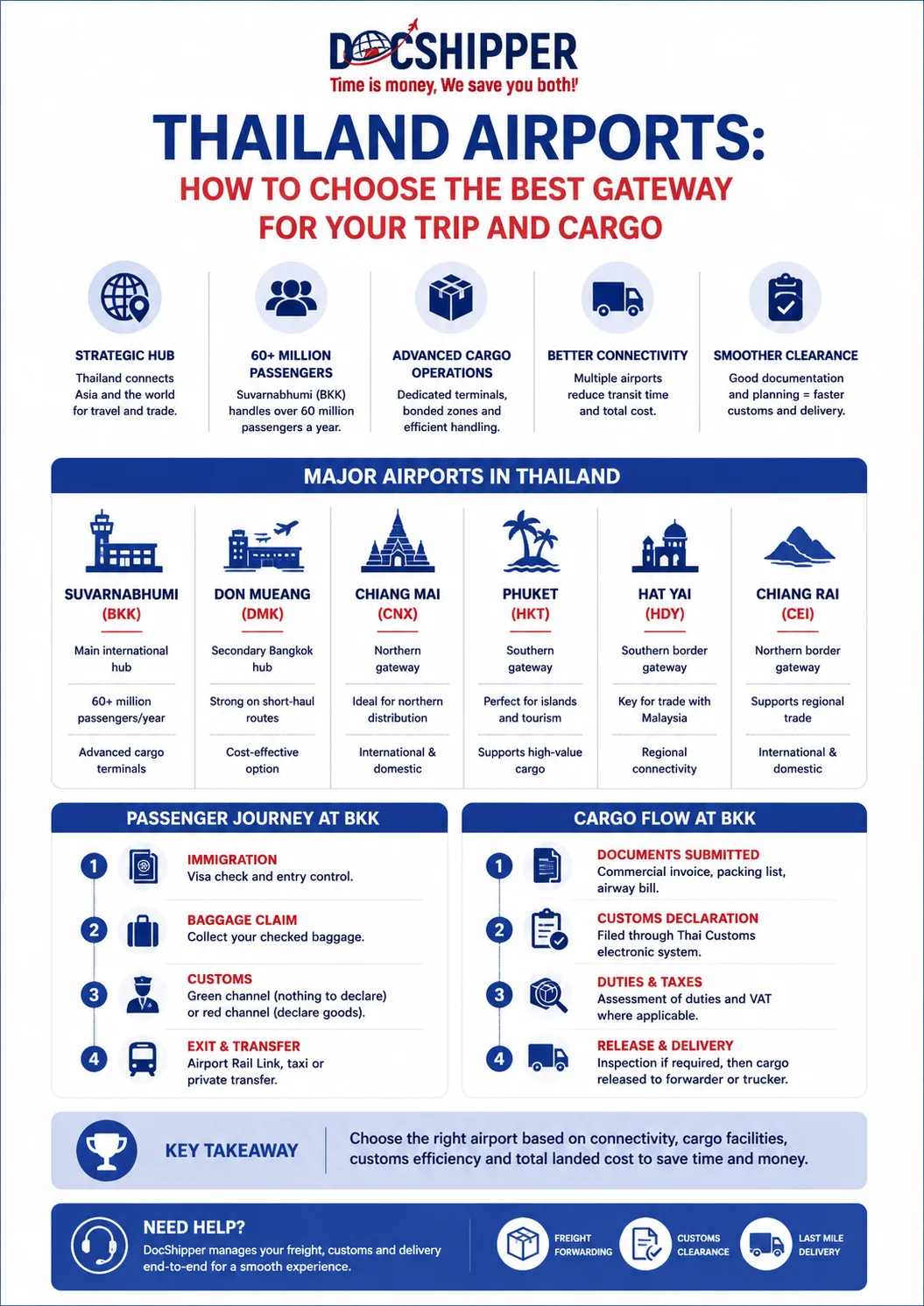
Thailand airports are a network of international and domestic gateways led by Bangkok Suvarnabhumi (BKK), the main hub handling over 60 million passengers a year and advanced cargo operations, with secondary and regional airports like Don Mueang, Chiang Mai, Phuket, Hat Yai, Chiang Rai, and U-Tapao optimizing connectivity, inland transit time, and total landed cost for both travelers and shippers.

In this article, you will find a comparison of major and regional airports, details on Suvarnabhumi’s passenger and cargo workflows, and step‑by‑step guidance to align airport choice with customs, trucking, and overall supply chain strategy.

We hope you’ll find this article genuinely useful, but remember, if you ever feel lost at any step, whether it’s finding a supplier, validating quality, managing international shipping or customs,  DocShipper can handle it all for you!

Free shipping quote 24h      I want to talk to a sourcing expert

How Thailand’s main airports shape travel and trade

If you’re looking up thailand airports, you’re probably thinking “Which airport gets me in fastest?”, or “Which hub keeps my cargo moving without surprises?”.

Here’s the thing, Thailand’s airport network isn’t just about passenger convenience, it’s a live piece of regional supply chains, with capacity, routing, and customs clearance all tied together.

From experience, the airport you pick can change everything, from air freight rates and warehouse cut-off times to whether your shipment gets stuck on a compliance detail.

We’ve seen import export teams nail procurement and tendering, then lose two days because they picked the wrong gateway for cargo handling and onward distribution.

Quick checklist, before you choose an airport:

  • Purpose: passenger arrival, air freight, or multimodal transport handoff (air to road haulage, sometimes rail freight connections inland).
  • Capacity management: flight frequency, peak-hour congestion, and warehouse throughput for consolidation and deconsolidation.
  • Customs clearance reality: risk of inspections, document checks, and how smoothly customs brokerage runs at that station.
  • Total landed cost: freight rates, tariffs, duties and taxes, storage, demurrage-style airport storage fees, and last mile delivery costs.
  • Incoterms clarity: who’s paying what, and where responsibility flips, especially when you mix air freight with ocean freight or domestic trucking.

Workflow we use to choose the right gateway fast:

1) Map your origin, destination, and dispatch deadlines, then shortlist airports by routing and frequency.

2) Verify cargo terminal capabilities, cross docking options, and WMS or TMS handoffs with your forwarder.

3) Validate compliance, trade regulations, and documentation flow, including commercial invoice, packing list, and airway bill (and bill of lading if you’re combining with ocean freight).

4) Compare end-to-end transit time, tracking and tracing visibility, and inventory management impact.

5) Lock carrier selection and freight insurance, then confirm cut-offs for consolidation and warehouse acceptance.

Airports in Thailand

Why airports matter for tourism, business, and logistics in Thailand

Thailand airports do more than land travelers, they set the tempo for tourism, sourcing, and transportation across the country.

You’ll notice fast that one missed connection in Bangkok can ripple into missed loading slots, higher storage costs, and a messy fulfillment plan.

On the passenger side, airport choice affects how quickly you clear immigration and get moving.

On the cargo side, it determines whether your shipment slides into a smooth consolidation lane, or gets stuck waiting for capacity and load planning to open up.

Micro-story that happens more often than you’d think, you book air freight into Bangkok for “speed”, but your supplier ships late and your cargo arrives Friday night.

Now your warehousing handoff doesn’t align with your trucker’s dispatch window, and your last mile delivery turns into Monday, not “next-day”, with extra fees.

This is why we treat airport selection as supply chain management, not a travel detail.

When you work with us at DocShipper, we coordinate freight forwarding, customs clearance, and onward distribution so you don’t juggle three different teams and conflicting cut-offs.

What you gain by picking the right airport early:

  • Better routing options and more predictable capacity during peak seasons.
  • Smoother customs brokerage and fewer compliance surprises.
  • Less storage exposure, faster cross docking, and cleaner inventory management.
  • More leverage on freight rates when you can offer carriers flexibility on schedules.

Industry context matters too, airports sit inside a regulated ecosystem overseen in practice by agencies like the International Civil Aviation Organization (ICAO), which influences standards that show up in day-to-day operations.

Key facts about the major airports in Thailand and who manages themKey-facts-about-the-major-airports-in-Thailand-and-who-manages-them
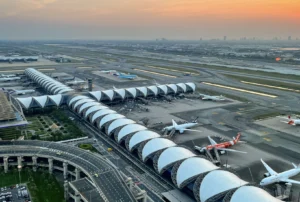
When people ask about the major airports in Thailand, they usually mean the big gateways that anchor international traffic and high-volume cargo handling.

For you, the practical question is who runs the infrastructure, because that often correlates with terminal capacity, expansion pace, and service consistency.

A lot of Thailand’s flagship hubs are operated by Airports of Thailand (AOT), which manages several of the country’s best-known gateways.

That’s relevant when you’re evaluating everything from warehousing footprints to how quickly landside transport can feed road haulage distribution.

Here’s a scenario we’ve handled, a buyer negotiates Incoterms loosely, “deliver to Bangkok airport”, and the supplier picks a terminal and timing that looks fine on paper.

At arrival, the consignee learns the handling agent and storage rules differ, and the customs clearance queue is longer than expected, suddenly you’re paying extra and rebooking trucking.

Operational facts you should keep in mind across thailand airports:

  • Passenger hubs and cargo hubs overlap, but cargo acceptance cut-offs and warehouse processes can vary a lot.
  • Peak periods drive capacity crunches, which can inflate freight rates and extend dwell time.
  • Multimodal matters, the airport is only one node, what counts is how fast you connect to trucking, consolidation points, and distribution centers.
  • Documentation discipline wins, clean paperwork reduces inspection risk and supports faster customs clearance.
What you’re decidingWhy it matters in practiceWhat we verify with you
Main gateway vs regional airportTransit time, storage exposure, and trucking distance to your final destinationRouting, dispatch plan, and last mile delivery constraints
Carrier and scheduleCapacity management impacts cost and reliabilityCarrier selection, cut-offs, and tracking and tracing expectations
Customs approachCompliance issues can create delays and extra chargesCustoms brokerage readiness, duties and taxes estimate, document set

Looking for a Reliable Shipping & Sourcing Partner?

We handle the entire sourcing process, supplier research, negotiation, production, and inspections, so you can focus on what matters most: growing your business.

Comparing the major international airports in Thailand

If your focus is international airports in thailand, you’re really comparing speed, connectivity, and how predictable the ground operation feels once the aircraft lands.

And yes, your experience can differ wildly depending on whether you’re arriving as a traveler, shipping urgent samples, or managing repeat import export flows.

We’ll keep it practical, which hubs behave like high-throughput engines, and which ones are better for specific regions, industries, or time-critical distribution.

Pick right, and your transportation plan stays clean, pick wrong, and you’ll spend your week chasing storage invoices and re-routing trucks.

Checklist for comparing international gateways:

  • Connectivity: direct flights, feeder options, and frequency for routing resilience.
  • Cargo terminal maturity: handling speed, warehouse capacity, and consolidation lanes.
  • Landside access: distance to industrial zones, road haulage reliability, and congestion patterns.
  • Customs behavior: typical inspection rates, document scrutiny, and clearance timing.
  • Cost profile: not just freight rates, also storage, handling, and waiting-time risk.

Bangkok’s main airport vs secondary hub: Suvarnabhumi and Don MueangBangkok’s-main-airport-vs-secondary-hub-Suvarnabhumi-and-Don-Mueang
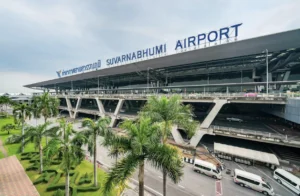
When you ask about the main airport in Thailand, you’re almost always talking about Bangkok Suvarnabhumi (BKK).

It’s the headline gateway for international connectivity, and for many lanes it’s also the default choice for air freight into central Thailand.

Don Mueang (DMK) is Bangkok’s secondary hub, and it plays a different role, often tied to specific airline networks and price-sensitive routes.

For cargo, that difference can translate into different handling setups, warehouse processes, and timing for trucking connections.

Micro-story, we once had a buyer flying in to inspect a supplier’s pre-shipment batch, while the urgent spare parts shipped separately to Bangkok.

The passenger landed at one airport, the cargo arrived at another, and the team lost half a day just syncing pickup, customs clearance, and the road haulage run to the factory.

How to decide between BKK and DMK for your plan:

  • If you need maximum international connectivity and flexible routing, BKK often gives you more options.
  • If your lane is airline-specific or you’re optimizing a narrow schedule window, DMK can be a tactical choice.
  • If you’re combining with distribution and fulfillment around Greater Bangkok, compare landside congestion and warehouse acceptance cut-offs.
FactorSuvarnabhumi (BKK)Don Mueang (DMK)
Role in thailand airportsMain international gateway, major hub for long-haul networksSecondary Bangkok hub, strong on specific short-haul networks
Best forTime-sensitive air freight, diversified routing, central distribution planningTargeted routes, schedule-specific moves, some price-driven flows
Operational watch-outsPeak-hour congestion can affect pickup slots and warehousing dwell timeCoordination risk if your passenger and cargo arrive at different airports

Either way, if you want less friction, we can manage the full chain, freight forwarding, cargo handling coordination, customs clearance, and delivery scheduling, so your supplier, carrier, and trucker stop blaming each other.
Other international airports in Thailand: Chiang Mai, Phuket, Hat Yai, Chiang Rai and more

Beyond Bangkok, several international airports in thailand give you smarter entry points when your destination sits far from the capital.

You can save days by avoiding unnecessary domestic trucking, especially when your goods need tight temperature control, careful handling, or fast deployment.

Chiang Mai (CNX) supports the north, useful when your suppliers or projects are in Chiang Mai, Lamphun, or nearby industrial zones.

Phuket (HKT) is a major tourism gateway and can make sense for southern deliveries where last mile delivery speed matters.

Hat Yai (HDY) is a strategic southern node, especially when you’re thinking cross-border flows and regional distribution.

Chiang Rai (CEI) can be relevant for northern border-adjacent movements, depending on your routing and compliance constraints.

Micro-story, a brand importing POS materials for a Phuket store launch shipped everything into Bangkok “because that’s what they always do”.

It looked safe until road haulage hit delays, the launch team started doing reverse logistics on the fly, and the storage bill climbed while they waited for the right truck slots.

When a regional international airport beats Bangkok:

  • Your final destination is far from Bangkok and trucking adds risk or cost.
  • You need faster deployment for projects, events, or retail rollouts.
  • You’re managing inventory management tightly and want to reduce in-transit time.
  • Your cargo profile needs careful handling and shorter inland transportation legs.

Step-by-step workflow to pick the right regional gateway:

1) Identify where your goods will actually be used, not just where the paperwork says they’re “delivered”.

2) Compare routing options and carrier schedules into CNX, HKT, HDY, or CEI, then pressure-test backup routes.

3) Model total cost, including duties and taxes, handling, storage, and inland transport.

4) Confirm customs clearance capabilities and document requirements with your broker.

5) Plan pickup, cross docking if needed, and final distribution with clear cut-offs and tracking and tracing.

If you want, we can run this comparison with your exact constraints, deadlines, Incoterms, and supplier readiness, then execute pickup, consolidation, customs clearance, and delivery under one DocShipper-managed plan.

DocShipper Platform

One platform. Your entire supply chain

Sourcing, freight, customs & documents, all centralised, all visible, 24/7.

Main airport in Thailand: what you need to know about Bangkok SuvarnabhumiMain-airport-in-Thailand-what-you-need-to-know-about-Bangkok-Suvarnabhumi
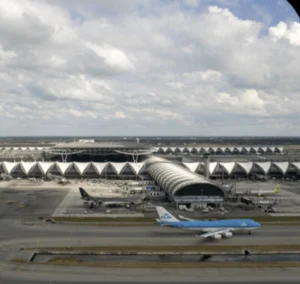
When you talk about thailand airports, Suvarnabhumi Airport, BKK, is the country’s primary international gateway. If you are flying long haul, moving high value cargo, or connecting to regional hubs, this is where you will likely land.

Located about 30 kilometers east of central Bangkok, Suvarnabhumi is designed as a mega hub with ongoing expansion phases. Its capacity has surpassed 60 million passengers per year, and further upgrades aim to push that number significantly higher.

Airport CodeBKK
Main RolePrimary international hub
RunwaysMultiple, supporting high traffic wide body aircraft
Key AirlinesThai Airways, Bangkok Airways, Emirates, Qatar Airways, Singapore Airlines
Cargo FacilitiesDedicated freight terminals and bonded warehouses

If you are importing or exporting goods, Suvarnabhumi offers advanced cargo handling, cold chain areas, and customs bonded zones. We regularly coordinate with airlines and ground handlers here to secure uplift space and manage customs clearance smoothly.

On arrival as a passenger, the process is structured and efficient if you are prepared. You should expect the following workflow:

  • Immigration control, with visa on arrival or e-visa verification depending on nationality.
  • Baggage claim in clearly marked international halls.
  • Customs declaration, green channel for nothing to declare, red channel for declared goods.
  • Public transport or private transfer via Airport Rail Link, taxi, or pre-booked vehicle.

For cargo shipments, the operational flow is different but just as structured. You need correct documentation before the aircraft even lands.

  • Pre-arrival document submission, commercial invoice, packing list, airway bill.
  • Customs entry filing through Thai Customs electronic system.
  • Duties and VAT assessment where applicable.
  • Inspection, if required, then cargo release to your forwarder or trucker.

If you want to minimize delays, you must align Incoterms, HS codes, and declared values correctly from the start. This is where we step in to secure compliance and avoid unnecessary storage or demurrage costs.

Siam Shipping Alert

BKK offers scale, but congestion and paperwork gaps create costly dwell time.
Secure uplift space and compliant documentation early to avoid storage and rebooking fees.

Domestic and regional airports: how they connect Thailand’s cities and borders

Beyond Bangkok, thailand airports form a dense network that supports tourism, manufacturing zones, and border trade. If you are moving goods to the north, south, or islands, regional airports often reduce transit time dramatically.

Key domestic and regional international airports include:

  • Chiang Mai International Airport, northern logistics and tourism hub.
  • Phuket International Airport, major gateway for southern islands and high value hospitality imports.
  • Hat Yai International Airport, strategic for southern border trade with Malaysia.
  • Chiang Rai International Airport, supporting northern economic corridors.
  • U-Tapao Rayong Pattaya International Airport, growing alternative hub for Eastern Economic Corridor.
Airport Primary Function Best For
Chiang Mai International and domestic Northern distribution, tourism cargo
Phuket International leisure hub Hotel supplies, perishables
Hat Yai Regional trade Cross border Malaysia flows
U-Tapao Emerging logistics hub Eastern Economic Corridor projects

If you are planning a multi city supply chain, you should evaluate airport proximity to industrial zones and seaports. For example, U-Tapao is increasingly integrated with Laem Chabang Port and the Eastern Economic Corridor.

From a strategic sourcing perspective, choosing the right airport affects:

  • Total landed cost, including inland trucking.
  • Lead time reliability during peak seasons.
  • Air freight rates based on capacity and competition.
  • Customs workload and inspection frequency.

Low cost carriers such as AirAsia and Nok Air dominate many domestic routes, while full service airlines connect major cities internationally. If you are shipping urgent samples or high value goods, direct regional flights can save critical days.

We often design hybrid solutions, combining regional airports with Bangkok consolidation. This approach helps you balance cost, speed, and operational risk.

Siam Shipping Advice

Regional airports can cut inland trucking and lead time dramatically.
We design hybrid air solutions combining regional hubs and Bangkok consolidation to balance speed, cost, and risk.

Conclusion

If you want to choose the right gateway among thailand airports, you must think beyond the ticket price. You should align airport selection with your travel objective or your supply chain strategy.

  • Suvarnabhumi Airport is the primary international hub for passengers and cargo.
  • Regional airports like Chiang Mai and Phuket reduce inland transport time.
  • Emerging hubs such as U-Tapao support Thailand’s expanding industrial zones.
  • Correct customs preparation is essential to avoid delays and extra costs.
  • Working with an experienced logistics partner ensures smooth coordination from arrival to final delivery.

If you are planning to move goods through any of these gateways, we can manage freight booking, customs clearance, and last mile delivery for you. With the right airport strategy, you turn infrastructure into a competitive advantage.

FAQ | Thailand airports: how to choose the best gateway for your trip and cargo

Thailand has roughly 40–50 operational airports, depending on how you count seasonal and military-use fields. Only a portion of these are full international gateways like Bangkok, Chiang Mai or Phuket. The rest are domestic or regional airports serving specific provinces, islands, or border zones, often with shorter runways and limited cargo facilities.

Ask us anything!

Need Help with
Logistics or Sourcing ?

First, we secure the right products from the right suppliers at the right price by managing the sourcing process from start to finish. Then, we simplify your shipping experience - from pickup to final delivery - ensuring any product, anywhere, is delivered at highly competitive prices.

Component-15.png

Live Chat

Get instant assistance from our team - just click and start chatting!

Chat now
image

Fill the Form

Prefer email? Send us your inquiry, and we’ll get back to you as soon as possible.

Contact Us
image

Call us

Reach out to us on WhatsApp for a quck and personal support.

Call us
image