In short ⚡
Bangkok textile sourcing is the process of buying Thai silk and fabrics in Bangkok’s wholesale ecosystem by combining supplier selection, strict specifications, and controlled logistics to move from swatches to shipped cargo within days. It focuses on fabric composition, MOQ, lead time, Incoterms, inspection, and export documentation to secure consistent, scalable supply.In this article, you will find Bangkok’s key textile districts and Thai silk hotspots, trip planning advice, sourcing-agent support, operational checklists, and inspection and freight tips to structure your fabric procurement like a professional.
We hope you’ll find this article genuinely useful, but remember, if you ever feel lost at any step, whether it’s finding a supplier, validating quality, managing international shipping or customs, DocShipper can handle it all for you!
Bangkok textile overview: why the city is a hub for fabric sourcing
If you’re serious about Bangkok textile sourcing, you’ll notice fast that the city isn’t just “a place to buy fabric”, it’s a full ecosystem where procurement, sampling, consolidation, and export shipping can happen in the same week.
Here’s the thing, Bangkok rewards buyers who think like supply chain people, not tourists, because lead time, minimum order quantity, and Incoterms matter as much as color and handfeel.
At DocShipper, we see the same pattern over and over, the buyers who plan customs clearance, HS code classification, and cargo handling early end up paying lower freight rates and avoiding last-minute “warehouse panic”.
Bangkok textile workflow (from first contact to shipped cargo)
1) Shortlist suppliers and markets, 2) Request swatches and confirm specifications, 3) Negotiate price, MOQ, lead time, and Incoterms (EXW, FOB, CIF, DAP, DDP), 4) Place order with clear packing list requirements, 5) Pre-shipment inspection and carton count, 6) Book transportation (air freight, ocean freight, or multimodal transport), 7) Issue commercial invoice, packing list, bill of lading, 8) Customs brokerage and import duties management, 9) Tracking and tracing to final delivery.
Bangkok textile buyer checklist
- Confirm fabric composition and GSM, then match it to the right HS code before you ship.
- Ask for a proforma invoice that mirrors the future commercial invoice, no “generic fabric” descriptions.
- Lock your Incoterms in writing, especially who pays inland trucking to port, export clearance, and cargo insurance.
- Plan consolidation or cross-docking if you’re buying from multiple stalls or workshops.
- Schedule inspection before final payment, and verify carton markings and packing list accuracy.

What makes Bangkok’s textile market unique for buyers and brands
The Bangkok textile scene is built for speed, you can move from first meeting to confirmed sampling in a day, especially around the main wholesale zones and the bigger bangkok textile market clusters.
From experience, the “unique” part isn’t only variety, it’s how easy it is to mix channels, wholesalers for fast stock, small workshops for customization, and factory networks if you’re doing manufacturer sourcing bangkok at scale.
We once handled a buyer who negotiated a great EXW price in Bangkok, then froze when the supplier asked, “Who’s doing export customs clearance?”. That’s the moment many importers get stuck, because EXW quietly pushes you into managing cargo handling, export documents, and a freight forwarding agent on your side.
If you’re building a brand, Bangkok also lets you test quickly, small runs, quick replenishment, and short procurement cycles, as long as you control your inventory management and don’t let “available now” replace quality specs.
For credibility checks, you’ll hear serious suppliers mention the Department of International Trade Promotion (DITP) when talking about export readiness and trade support, it’s a useful signal when you’re filtering who actually ships overseas regularly.
Quick comparison: buying modes in the Bangkok textile market
| Buying mode | Best for | Typical Incoterms | Main risk | How we mitigate it |
| Wholesalers (ready stock) | Fast sampling, small production, trend testing | EXW, sometimes FOB | Inconsistent lots, unclear labeling | Lot-based inspection, packing list validation, consolidation plan |
| Workshops / small makers | Custom colors, trims, small MOQ | EXW, FOB | Lead time slips, spec drift | Written specs, milestone QC, buffer in transit time |
| Factory network (manufacturer sourcing bangkok) | Scale, recurring orders, compliance | FOB, CIF, DAP, DDP | Complex documentation, multiple SKUs | Document control, WMS-ready packing, customs brokerage support |
Key textile types in Bangkok: from Thai silk to cotton, linen and rayon
In the Bangkok textile supply chain, fabric choice affects more than design, it changes your procurement timeline, inspection points, and even the way customs may look at your shipment.
If you’re hunting thai silk material, you’ll usually face bigger price dispersion than cotton or rayon, because weave quality, dye stability, and “silk content” claims vary a lot between sellers.
We’ve seen buyers fall in love with a roll labeled “100% silk” in thai silk bangkok zones, then fail a simple burn test and lab check later, the shipment still moved, but the brand had to re-label and eat the cost.
Cotton and linen are more straightforward for specs and repeatability, while rayon and blends often need tighter inspection for shrinkage and color bleeding, especially if you plan to cut and sew after import.
For shipping, delicate textiles usually benefit from cleaner packing standards, polybagging, moisture control, and carton strength checks, because ocean freight humidity plus weak cartons is a classic recipe for claims.
Fabric-specific QC checkpoints (use these on-site)
- Thai silk material: verify weave consistency, slubs, colorfastness, and composition claims.
- Cotton: check GSM tolerance, shrinkage, and roll length accuracy.
- Linen: inspect for uneven yarn, pilling, and shade variation between rolls.
- Rayon/blends: test for bleeding, snagging, and handfeel consistency across lots.
Plan your Bangkok textile trip: when to go, where to stay, how to move around
A productive Bangkok textile trip is basically a field operation, you’re collecting quotes, validating lead times, saving supplier contacts, and lining up logistics like warehousing and export booking, all under time pressure.
You don’t want to be the buyer who finds the perfect fabric on day four, then realizes your flight is tomorrow and you still haven’t arranged consolidation, a packing list format, or a freight forwarding quotation.
We typically suggest you plan the trip like a mini project sprint, day blocks for markets, day blocks for factory visits, and a fixed slot to sit down and confirm shipping, Incoterms, and document requirements.
Bangkok textile trip workflow (simple, repeatable)
1) Before arrival, build a supplier shortlist and request swatches, 2) On day 1, confirm availability and negotiate price structure, 3) On day 2, place sample orders and lock lead time, 4) On day 3, verify packing standards and discuss Incoterms, 5) On day 4, confirm inspection date and book transportation, 6) After purchase, consolidate, label, and prepare commercial invoice and packing list for customs clearance.
Trip-ready checklist (so you don’t lose momentum)
- Create a contact sheet with supplier name, booth location, WhatsApp/LINE, MOQ, lead time, and payment terms.
- Bring a simple spec template for each fabric, composition, width, GSM, color code, and tolerance.
- Prepare a standard request for quotation, including EXW and FOB price, carton dimensions, and total volume for freight rates.
- Decide early if you need a 3PL provider for temporary storage or inventory management before export.
- Keep a photo log of labels, roll tags, and pricing boards, it saves you later during reconciliation.
Looking for a Reliable Shipping & Sourcing Partner?
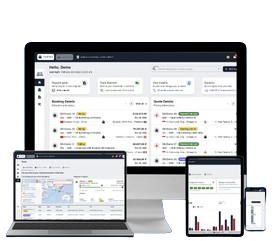
DocShipper Platform
One platform. Your entire supply chain
Sourcing, freight, customs & documents, all centralised, all visible, 24/7.
Best time of year and neighbourhoods for Bangkok textile shopping
For Bangkok textile shopping, you’ll get the most done when you’re not fighting heat, rain, and traffic at the same time, because supplier meetings slip and your inspection schedule collapses.
Dry season usually makes movement easier, and you’ll feel it when you’re carrying swatch books and bouncing between wholesale zones, but the real timing lever is supplier workload and holiday closures.
We once supported a client who arrived right before a long holiday period, the seller took the deposit, then production paused, and the buyer missed a retail launch because the transit time plus the dead week ate the buffer.
Pick accommodation close to your core buying area so you can drop samples, update your contact database, and send RFQs without wasting half the day in transportation.
If you’re coordinating with sourcing agents in bangkok, schedule a morning “walk-through” together, you’ll negotiate better when you’ve seen price ranges and fabric grades with your own eyes.
Transport, safety and money tips for fabric buyers in Bangkok
Moving around for Bangkok textile sourcing sounds simple until you’re juggling cash payments, supplier appointments, and cartons that suddenly need to be picked up and stored.
Here’s a practical rule, don’t let purchases accumulate in random locations, arrange a single consolidation point with proper warehousing and carton control, or you’ll lose track of SKUs and quantities fast.
We’ve seen a buyer pay two different drivers to move the same cartons because there was no pickup plan, no carton count, and no shared packing list, the freight forwarding agent then received mismatched goods and the bill of lading data became a mess.
On payments, keep receipts and align the numbers to your future commercial invoice, your customs brokerage will thank you when import duties and tariffs are calculated from clean documentation.
If you want fewer surprises, we can handle pickup, consolidation, export customs clearance, and shipping by air freight or ocean freight, plus tracking and tracing end-to-end through our freight forwarding network at DocShipper.
For a sanity check on document discipline, even experienced exporters in Thailand take guidance from the Thai Customs Department on declarations and clearance requirements, and you should too if you want smooth cargo release.
Siam Shipping Alert
We help you negotiate real MOQ tiers and bulk rates, then organize pickup and export without costly missteps.
Where to find Bangkok textile markets and Thai silk hotspots
When you start sourcing Bangkok textile, you need to know exactly where serious wholesalers operate, not just tourist fabric shops. You want volume, consistency, and real negotiation power.
The key districts below are where you should focus your time if you are sourcing textiles or ready-made garments at scale.
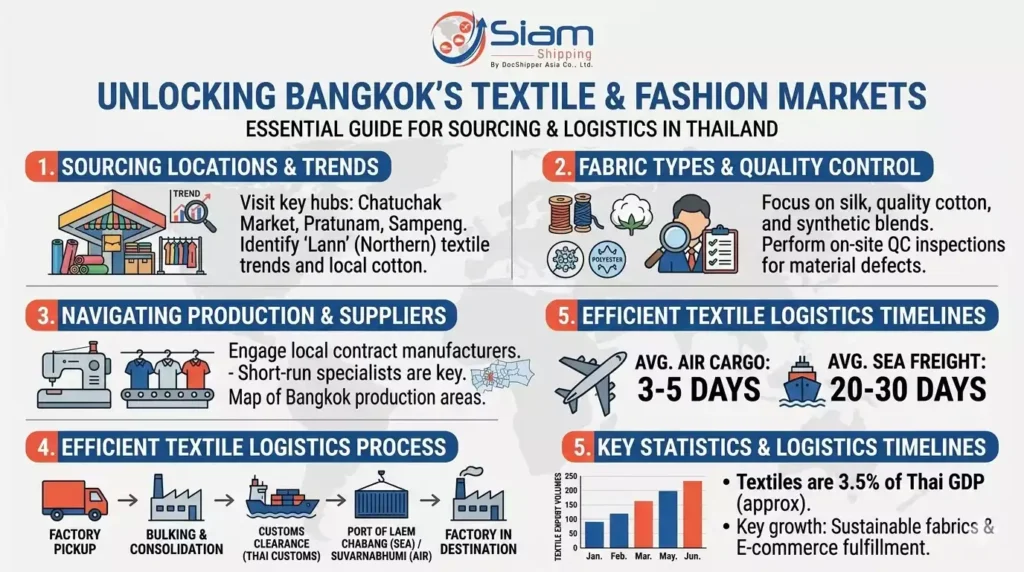
- Phahurat Market, also called Little India, dense network of fabric wholesalers, cotton, polyester, lace, embroidery.
- Sampeng Market, strong for accessories, trims, packaging, and small garment suppliers.
- Pratunam Wholesale Market, ready-made fashion, fast fashion, private label opportunities.
- Chatuchak Weekend Market, more for design inspiration and niche textile suppliers.
- Jim Thompson boutiques, reference point for premium Thai silk quality benchmarks.
You should always separate tourist retail pricing from real wholesale pricing. If the supplier does not clearly state MOQ and bulk price tiers, you are not yet in the right negotiation zone.
| Area | Best For | MOQ Level | Negotiation Margin |
| Phahurat | Fabric rolls and bulk textiles | Medium to High | High if volume committed |
| Pratunam | Ready-made garments | Low to Medium | Medium |
| Sampeng | Accessories and trims | Low | Low to Medium |
If you are building a brand, you should combine at least two of these areas to secure supply redundancy. We often recommend mapping 3 to 5 backup suppliers before confirming any production run.
Siam Shipping Info
We verify factories, structure negotiations, and manage freight so you focus on margins, not misunderstandings.
Work with sourcing agents in Bangkok and local manufacturers
You can approach suppliers directly, but if you do not speak Thai or understand local practices, you will face friction quickly. This is where a local sourcing agent becomes strategic.
An experienced agent helps you filter factories, verify legitimacy, and structure negotiations professionally. At DocShipper, we support you from supplier identification to freight coordination.
- Supplier background verification and business license check.
- Factory audit and capacity assessment.
- Sample validation and material testing coordination.
- Price benchmarking against market standards.
- Production follow-up and quality inspection.
When you negotiate directly with a Bangkok textile manufacturer, focus on structure, not just price. You should always clarify these core elements before paying any deposit.
| Negotiation Point | Why It Matters |
| MOQ flexibility | Reduces your inventory risk |
| Lead time | Impacts your launch schedule |
| Payment terms | Controls your cash flow exposure |
| Quality tolerance level | Avoids disputes at inspection stage |
| Incoterm used | Defines logistics responsibility |
You should avoid paying 100 percent upfront, even if the supplier insists. A standard structure is 30 percent deposit and 70 percent after inspection, before shipment.
If you need full sourcing and freight management support, you can coordinate with our team through DocShipper sourcing services. We handle supplier management and international shipping end to end.
Siam Shipping Advice
Our team coordinates inspection, HS codes, and freight booking to prevent delays and protect your cash flow.
Practical sourcing checklist for Bangkok textile buyers
You should never source Bangkok textile products without a clear operational checklist. Small oversights create expensive delays.
- Define exact fabric composition and GSM requirements.
- Request physical samples before bulk confirmation.
- Validate supplier registration and export capability.
- Confirm production lead time in writing.
- Book third-party inspection before final payment.
- Clarify HS code and import duties in your destination country.
- Select a reliable freight forwarder early.
Your inspection stage is critical, especially for silk and dyed fabrics where color variance risk is high. A pre-shipment inspection can reduce defective shipment risk by up to 30 to 40 percent.
| Inspection Control Point | What to Check |
| Fabric width and weight | Matches specification sheet |
| Color consistency | Batch alignment and dye stability |
| Weaving defects | No holes, pulls, or uneven texture |
| Packing quality | Moisture protection for export |
You should also align early with your freight forwarder regarding shipping mode. Sea freight is cost-efficient for volume, air freight is faster but impacts margin significantly.
Siam Shipping Info
We compare air and sea freight scenarios, optimize customs clearance, and secure cargo insurance for predictable landed costs.
FAQ about Bangkok textile, Thai silk and local fabric markets
How do you verify a Bangkok textile supplier?
You request company registration documents and check export history. You can also mandate a third-party factory audit before confirming large orders.
- Business license verification.
- Factory site visit or audit report.
- Reference clients if possible.
Is Thai silk always authentic in Bangkok markets?
No, many products are silk blends or synthetic alternatives. You should request burn test samples or laboratory fiber composition testing.
What is the safest way to ship textiles internationally?
You should work with an experienced freight forwarder who understands customs classification and fabric compliance rules. We typically recommend FOB or EXW combined with controlled freight management.
- Confirm HS code accuracy.
- Prepare commercial invoice and packing list properly.
- Insure cargo against moisture and damage.

Conclusion
Sourcing Bangkok textile products can be highly profitable if you structure each step professionally. You need supplier discipline, inspection rigor, and logistics control.
- Target the right wholesale districts, not tourist shops.
- Negotiate MOQ, payment terms, and incoterms clearly.
- Inspect before final payment.
- Choose freight mode based on margin and timeline.
- Work with a reliable logistics partner to secure your supply chain.
If you want to reduce risk and streamline your Bangkok textile sourcing, we can manage sourcing, inspection, and freight under one coordinated process. You stay focused on growing your brand while we secure your supply chain.
FAQ | Bangkok textile guide: how to source Thai silk and fabrics like a pro
For genuine Thai silk in Bangkok, you’ll usually see a clear gap between tourist souvenirs and export-grade fabric. As a rough guide, you should expect street-level “silk” scarves at very low prices to be blends or synthetic, while true Thai silk sold by reputable shops or exporters is significantly higher per meter and comes with precise composition details. Focus less on the absolute price and more on consistency: if the “100% Thai silk” rate is far below what serious boutiques or trade-oriented shops quote, that’s a strong sign you’re not looking at full-grade silk suitable for a brand.
The key is to behave like a buyer, not a shopper. Identify areas where suppliers clearly state their MOQ and have tiered pricing sheets for different volumes, then ask directly for their wholesale list, not the walk-in price. Once you show that you’re prepared to place a repeat or consolidated order and talk in terms of cartons, rolls, styles and lead times, sellers usually move you out of tourist retail mode and into real wholesale conversations.
You can pre-structure your wholesale sourcing from abroad by shortlisting suppliers online, requesting clear photos and basic spec sheets, then moving quickly to physical samples shipped to you. As soon as you’ve validated quality, you should push the conversation toward proforma invoices, MOQ per style or fabric, and standard payment terms, so that by the time you land in Bangkok, you’re only doing final checks and negotiations instead of starting from zero.
One frequent mistake is acting like a one-time tourist buyer while claiming to be wholesale, promising “big future orders” without committing to a realistic first volume. Thai suppliers hear that every day. A more effective approach is to present a concrete trial order plan, including quantities, target delivery window and intended reorder pattern, so the supplier sees you as a structured client and opens up better pricing and flexibility.
When your garments come from multiple markets or stalls, the main challenge is coordination rather than customs law. You’ll need a single consolidation point where all cartons are counted, labeled and listed on one coherent packing list before export. A local forwarder or sourcing partner can collect from each seller, unify everything under one commercial invoice and packing list, then route it under a single shipment so your customs broker at destination can clear it smoothly.
For apparel imports, your forwarder will typically request a clean commercial invoice, a detailed packing list that breaks down quantities by style or SKU, and any product descriptions necessary to assign the right HS code. Depending on your destination and product type, they may also ask for origin statements or specific compliance documents, so it’s worth aligning on document expectations before you confirm your garment orders.
Need Help with
Logistics or Sourcing ?
First, we secure the right products from the right suppliers at the right price by managing the sourcing process from start to finish. Then, we simplify your shipping experience - from pickup to final delivery - ensuring any product, anywhere, is delivered at highly competitive prices.
Fill the Form
Prefer email? Send us your inquiry, and we’ll get back to you as soon as possible.
Contact Us